 Laisha
AI Operating System for Agriculture
Ask Laisha
Laisha
AI Operating System for Agriculture
Ask Laisha
Maize streak virus ICTV species: Mastrevirus storeyi · formerly or also: MSV
Maize streak is the most important virus disease of maize in Africa. Leaves of infected plants show fine, broken yellow streaks along the veins, and plants infected young are stunted and give little or no grain. The virus is carried by small Cicadulina leafhoppers that breed on wild grasses, so epidemics are worst when maize is planted late or next to grassland. Resistant varieties carrying the Msv1 gene have greatly reduced losses.
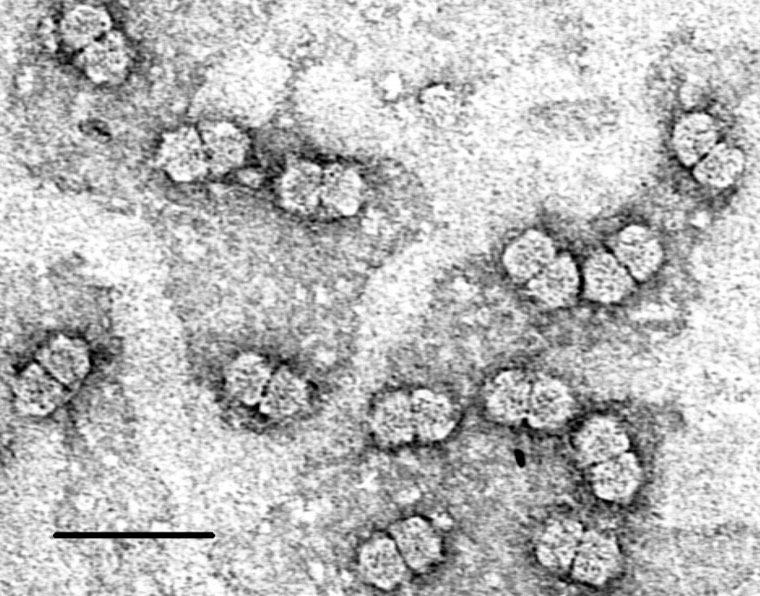
Maize streak disease is caused by Maize streak virus, a virus (mastrevirus with a single-stranded DNA genome), spread by leafhoppers (order Geplafuvirales, family Geminiviridae).
Older or alternative scientific names: MSV.
Endemic throughout sub-Saharan Africa and on Indian Ocean islands (Madagascar, Mauritius, Réunion), and recorded in parts of the Arabian Peninsula. It does not occur in the Americas, Europe or most of Asia, where it is a quarantine concern.
| Region | Status |
|---|---|
| Sub-Saharan Africa | Endemic; recurrent epidemics |
| Indian Ocean islands | Present |
| Arabian Peninsula | Recorded |
| Other regions | Absent; regulated |
A small geminate (twinned) virus particle detected by laboratory tests. It is transmitted by leafhoppers of the genus Cicadulina, especially C. mbila, in a persistent, circulative way; it is not seed-transmitted or spread by touch.
| Crop stage | What you see |
|---|---|
| Seedling (first few weeks) | Small, pale, round spots on the youngest leaves that join into fine, broken yellow streaks along the veins; severe stunting if infected early. |
| Vegetative growth | New leaves increasingly streaked, sometimes almost completely yellow; plants stunted and spindly. |
| Tasselling and ear formation | Small, poorly filled or no ears in plants infected early; late infections cause streaks on upper leaves with little yield loss. |
Leafhoppers acquire the virus from infected grasses or maize and carry it to young maize. Grassland drying at the end of the rains or a new maize planting near older infected maize sends leafhoppers into fields. Symptoms appear on new leaves about a week after infection. Leafhoppers breed mainly on grasses; when grasses dry at the end of the rains or are cut, large numbers move into maize, and young maize sown late or beside older infected maize receives the most infective insects.
| Stage | Duration | Notes |
|---|---|---|
| Acquisition by leafhopper | From about 15 seconds; efficiency rises with feeding time | Persistent, circulative. |
| Latent period in leafhopper | About 6-12 hours | Leafhopper then remains infective for life. |
| Transmission and symptom development | About 3-7 days to first symptoms | Young plants suffer most. |
| Survival | Year-round | Wild grasses and irrigated or off-season maize. |
Leafhopper populations build up in warm conditions; dry spells during the rainy season and the transition from wet to dry season often bring epidemics.
Spread continues while leafhoppers and infected grasses are present.
Late planting, overlapping and off-season maize, grassy field margins, drought spells that move leafhoppers from grasses into crops, and susceptible varieties. Irrigated dry-season maize near rainfed fields can bridge the virus and its vector between seasons.
There is no economic threshold for the virus or its vector; management is preventive through variety choice and planting date.
Thresholds are local. They depend on crop price, control cost, variety and natural-enemy activity, so use the figure your local extension service publishes where one exists.
Yield losses range from small to total in plants infected within the first few weeks; epidemic years have cost many African countries a large share of their maize harvest. Losses are greatest in late-planted crops and where local, susceptible varieties are grown; resistant varieties usually limit losses to a few per cent even in epidemic years.
Control works best as a sequence: prevent, monitor, then act only when a threshold or a risk forecast says so, using the least disruptive option that works.
No chemical controls the virus. Seed treatments against leafhoppers can reduce early infection where registered, but are rarely economic in smallholder maize. What is registered differs by country and changes over time; follow the label and your local plant-protection authority.
| Scheme | Group | Mode of action | Notes |
|---|---|---|---|
| IRAC | 4A | Nicotinic acetylcholine receptor competitive modulators (neonicotinoids), seed treatment against the vector | Early protection where registered. |
Maize is the most damaged crop; strains of the virus infect sugarcane, millets, wheat, barley, rice and more than 80 wild grasses, which are the main reservoirs. Strains differ in host range; the maize-adapted strain (MSV-A) causes the serious disease of maize.
How to grow the crop well is the first line of defence. Laisha's free grow guides cover each crop from sowing to harvest:
Written by Laisha from the sources above, in its own words. This page is general reference, not a prescription: confirm identification locally and follow the label and your plant-protection authority.