 Laisha
AI Operating System for Agriculture
Ask Laisha
Laisha
AI Operating System for Agriculture
Ask Laisha
Heterodera glycines Heterodera glycines Ichinohe, 1952 · formerly or also: SCN
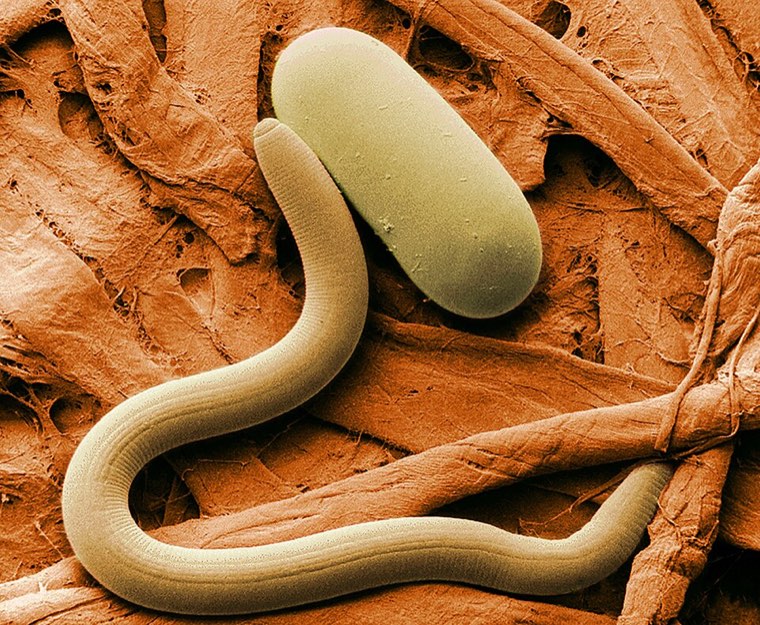
The soybean cyst nematode is a microscopic roundworm that feeds inside soybean roots. Females swell into tiny white lemon-shaped bodies on the roots, then die and turn into brown cysts full of eggs that can survive in soil for many years. It is the most damaging soybean pathogen in the United States and is important in Brazil, Argentina, China and other soybean regions. Much of the yield loss happens without obvious symptoms, so soil testing is the best way to find it.
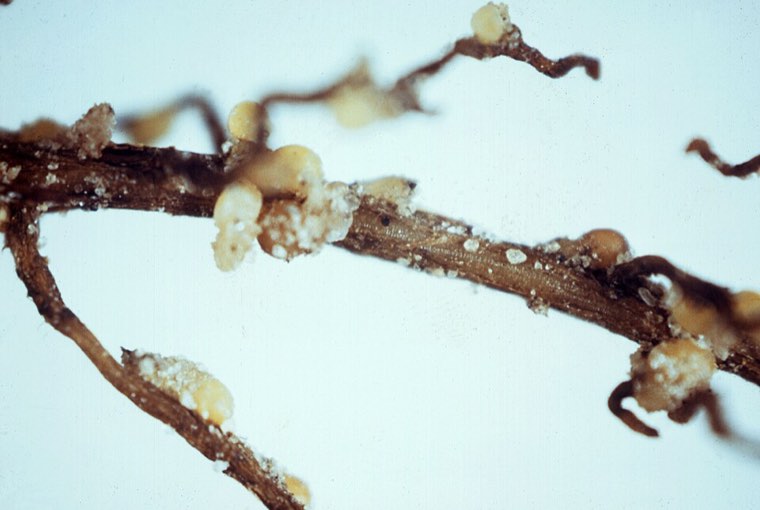
The scientific name of soybean cyst nematode is Heterodera glycines Heterodera glycines Ichinohe, 1952, in the order Rhabditida (Tylenchina), family Heteroderidae.
Older or alternative scientific names: SCN.
Native to East Asia; found in the United States since 1954, and in Canada, Brazil (since 1992), Argentina and other soybean-growing countries.
| Region | Status |
|---|---|
| East Asia | Native; widespread in China, Japan and Korea |
| North America | Widespread in soybean areas |
| South America | Present in Brazil, Argentina and neighbouring countries |
| Elsewhere | Recorded in some other countries |
Juveniles hatch from eggs in the soil and enter roots, where they set up feeding sites. Females become swollen, white to yellow and lemon-shaped, about 0.5 mm across, breaking through the root surface; they are much smaller than nitrogen-fixing nodules. Dead females become brown cysts containing 200-400 eggs. Populations are described by HG types, which show which sources of resistance they can overcome.
| Crop stage | What you see |
|---|---|
| Early season | Often no visible symptoms even when yield is being lost. |
| Mid-season | Patches of stunted, yellow plants, often in oval areas along the direction of tillage; fewer nodules; tiny white females on roots from about 4-6 weeks after planting. |
| Late season | Early maturity in patches; brown cysts on roots and in soil. |
Juveniles hatch from eggs in cysts or egg masses, enter the root and establish a feeding site. Males leave the root to mate; females swell, lay some eggs outside in a gel and keep most inside their bodies, then die to form cysts. A generation takes about three to four weeks in warm soil. Cysts spread with soil on equipment, by wind and water erosion, and by animals.
| Stage | Duration | Notes |
|---|---|---|
| Egg (in cyst) | Survive many years in soil | Hatch over several seasons. |
| Juvenile (in soil then root) | Days | Infective second-stage juvenile. |
| Feeding female | About 2-3 weeks | White lemon-shaped female on root. |
| Cyst | Years | Brown, full of eggs. |
Development is fastest at about 24-28 °C; one generation takes about 24-30 days in warm soil.
Three to six generations per soybean season, depending on temperature.
Continuous soybean, susceptible varieties, repeated use of the same resistance source, light and well-drained soils, high soil pH, and moving soil between fields on equipment.
There is no single international threshold. Programmes classify fields by soil egg counts into risk categories that guide rotation and variety choice; categories differ between regions and laboratories.
Thresholds are local. They depend on crop price, control cost, variety and natural-enemy activity, so use the figure your local extension service publishes where one exists.
Yield losses of 10-30% can occur without visible symptoms, and higher losses in heavily infested fields; in the United States it causes the largest yield loss of any soybean pathogen.
Control works best as a sequence: prevent, monitor, then act only when a threshold or a risk forecast says so, using the least disruptive option that works.
Nematode-protectant seed treatments give some early-season protection; they are used with, not instead of, rotation and resistant varieties. What is registered differs by country and changes over time; follow the label and your local plant-protection authority.
| Scheme | Group | Mode of action | Notes |
|---|---|---|---|
| IRAC | N-3 | Nematicides: mitochondrial complex II electron transport inhibitors, seed treatment | Where registered. |
Soybean is the main host; common bean, some other legumes and weeds such as henbit and purple deadnettle can also support reproduction.
How to grow the crop well is the first line of defence. Laisha's free grow guides cover each crop from sowing to harvest:
Written by Laisha from the sources above, in its own words. This page is general reference, not a prescription: confirm identification locally and follow the label and your plant-protection authority.