 Laisha
AI Operating System for Agriculture
Ask Laisha
Laisha
AI Operating System for Agriculture
Ask Laisha
Eurygaster integriceps Eurygaster integriceps Puton, 1881
Sunn pest is a shield bug that is the most important insect pest of wheat and barley across West and Central Asia, the Middle East and parts of eastern Europe. Adults fly from mountain overwintering sites into cereal fields in spring, and their young feed on developing grain. Enzymes in their saliva break down the gluten in the grain, so even a few percent of damaged kernels can make flour unfit for bread.
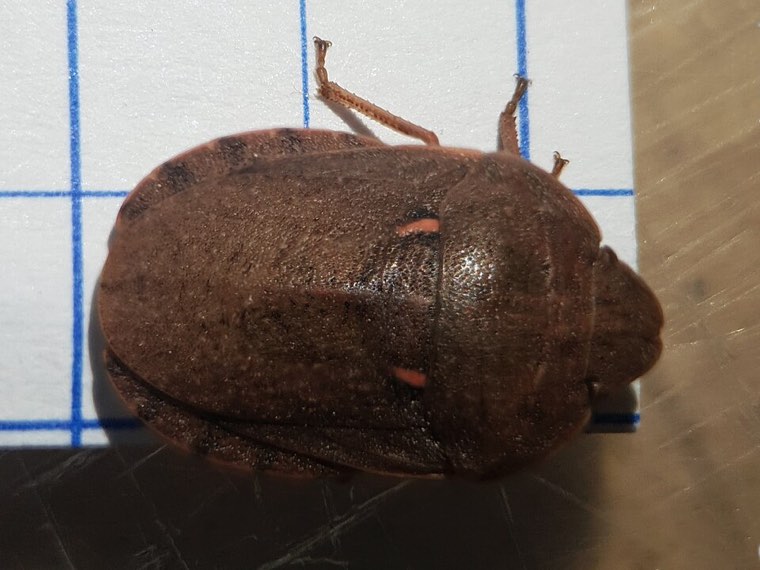
The scientific name of sunn pest is Eurygaster integriceps Eurygaster integriceps Puton, 1881, in the order Hemiptera, family Scutelleridae.
From the Balkans and southern Russia through Türkiye, the Caucasus, Syria, Iraq, Iran, Afghanistan and the Central Asian countries to Pakistan.
| Region | Status |
|---|---|
| West Asia and the Middle East | Widespread; major pest |
| Central Asia | Widespread; major pest |
| Caucasus, southern Russia and the Balkans | Present; periodic outbreaks |
| South Asia | Present in Afghanistan and Pakistan |
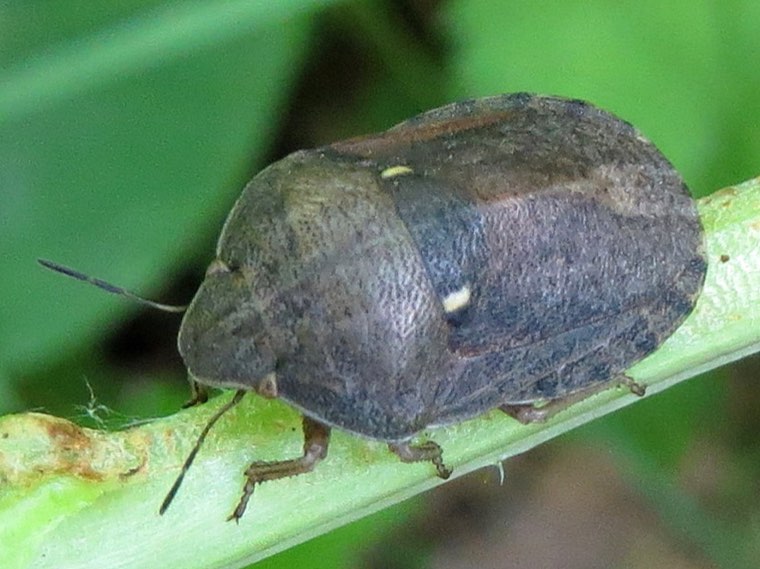
Adults are about 10-13 mm long, broad and shield-shaped, with a large scutellum covering most of the abdomen; colour varies from pale grey-brown to dark brown. Eggs are round, green and laid in clusters, usually of 14 in two rows, on leaves. Nymphs are rounded and wingless.
| Crop stage | What you see |
|---|---|
| Tillering and stem elongation (overwintered adults) | Wilting and death of central shoots ('dead hearts'); white, empty heads where stems are pierced below the head. |
| Grain filling (nymphs and new adults) | Small dark puncture marks on kernels with a pale, chalky area around them; shrivelled grain. |
| Flour and dough | Sticky, weak dough that collapses during fermentation because gluten is digested by the bugs' enzymes. |
Sunn pest has one generation a year. Adults spend summer, autumn and winter in diapause under leaf litter and shrubs in mountains, sometimes far from cereal fields. In spring, when temperatures rise, they fly to the plains to feed and lay eggs on cereals. Nymphs pass through five instars and feed on developing grain; the new adults feed intensively on ripening grain and then fly back to the mountains before or soon after harvest.
| Stage | Duration | Notes |
|---|---|---|
| Overwintering adult (in mountains) | About 8-9 months | Diapause in leaf litter. |
| Spring migration and egg laying | Spring | Eggs in clusters of about 14. |
| Nymph (5 instars) | About 4-6 weeks | Feeds on developing grain. |
| New adult | Feeds 2-3 weeks before migrating | Builds reserves for diapause. |
Spring migration starts when mean temperatures rise above roughly 12-14 °C; warm, dry springs favour fast development.
One generation per year.
Mild winters with high survival in overwintering sites, warm springs, cereal fields close to mountain overwintering areas, and late harvest that lets new adults feed longer on grain.
There is no single international threshold. National programmes set thresholds for overwintered adults and nymphs per square metre, which differ between countries and are lower for high-quality bread wheat; check with your national plant-protection service.
Thresholds are local. They depend on crop price, control cost, variety and natural-enemy activity, so use the figure your local extension service publishes where one exists.
In outbreaks, yield losses can reach 50-100% in barley and wheat. Even when yield loss is small, more than 2-5% of bug-damaged kernels can make wheat unsuitable for bread, cutting its price. Several countries run large national control campaigns every year.
Control works best as a sequence: prevent, monitor, then act only when a threshold or a risk forecast says so, using the least disruptive option that works.
Sprays target nymphs at young instars when counts exceed national thresholds; spraying only against overwintered adults kills parasitoids and is discouraged in integrated programmes. What is registered differs by country and changes over time; follow the label and your local plant-protection authority.
| Scheme | Group | Mode of action | Notes |
|---|---|---|---|
| IRAC | 3A | Sodium channel modulators (pyrethroids) | Harmful to egg parasitoids. |
| IRAC | 1B | Acetylcholinesterase inhibitors (organophosphates) | Highly toxic; use only where advised. |
Wheat (bread and durum) and barley; also rye, oats and wild grasses.
How to grow the crop well is the first line of defence. Laisha's free grow guides cover each crop from sowing to harvest:
Written by Laisha from the sources above, in its own words. This page is general reference, not a prescription: confirm identification locally and follow the label and your plant-protection authority.