 Laisha
AI Operating System for Agriculture
Ask Laisha
Laisha
AI Operating System for Agriculture
Ask Laisha
Myzus persicae (Sulzer, 1776) · formerly or also: Aphis persicae
A small, soft-bodied aphid found on hundreds of crops worldwide. Colonies curl leaves and leave sticky honeydew, but its greatest cost is as the most important insect carrier of plant viruses, including potato leafroll, potato virus Y and the beet and turnip yellows viruses. It is also one of the insects that has evolved resistance to the most insecticide groups.
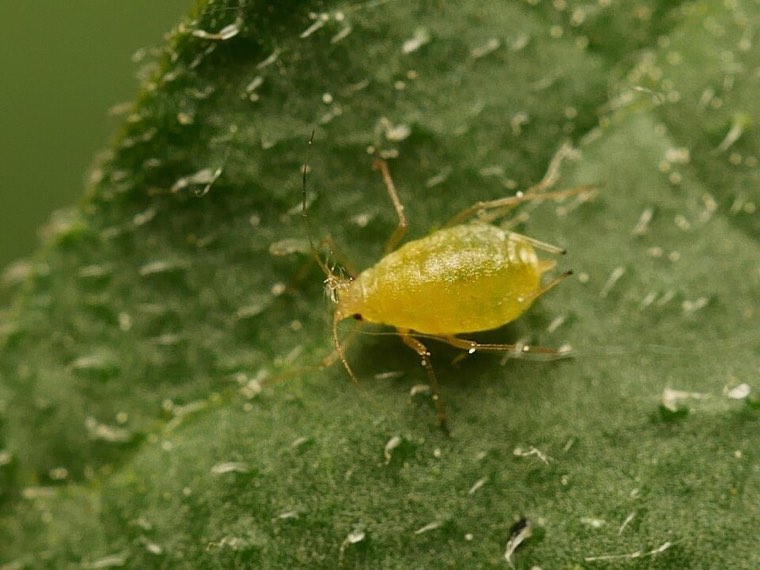
The scientific name of green peach aphid is Myzus persicae (Sulzer, 1776), in the order Hemiptera, family Aphididae.
Older or alternative scientific names: Aphis persicae.
Cosmopolitan: found in temperate, subtropical and tropical regions on every continent where crops are grown, outdoors and in greenhouses.
| Region | Status |
|---|---|
| Europe | Widespread; key virus vector in potato, sugar beet and oilseed rape |
| Asia | Widespread |
| Americas | Widespread |
| Africa and the Middle East | Widespread |
| Oceania | Widespread |
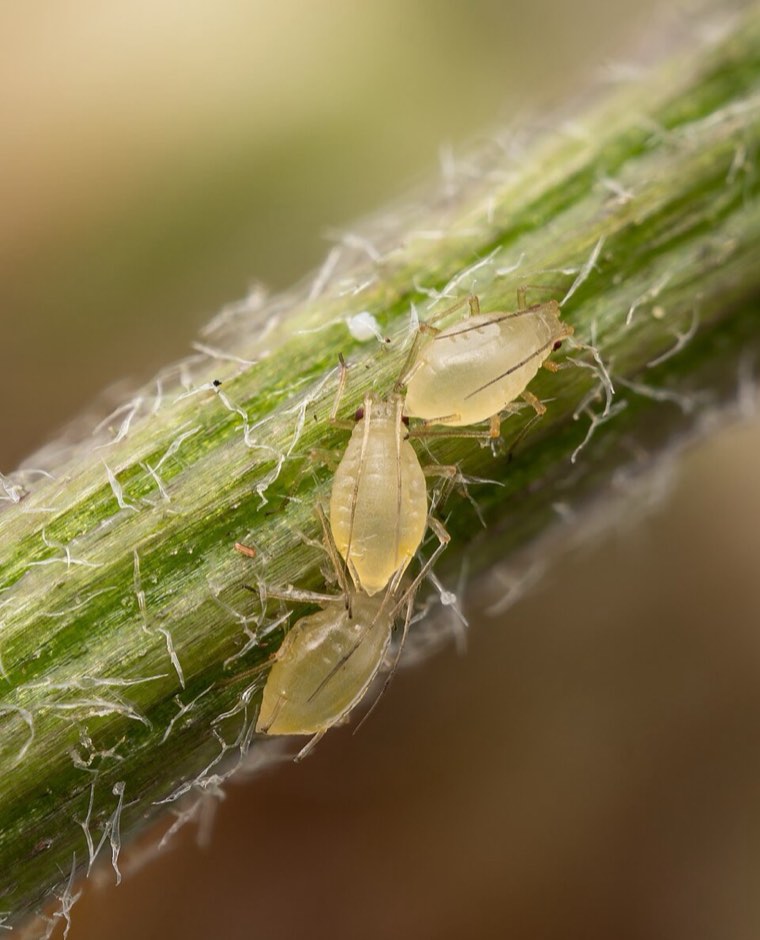
Wingless adults are 1.5-2.5 mm, oval, usually pale yellowish green (sometimes pink or red), with moderately long, slightly swollen cornicles ('tail pipes') and inward-pointing bumps (tubercles) between the antennae, which help separate it from other aphids. Winged adults have a dark patch on the top of the abdomen. Nymphs look like small wingless adults.
| Crop stage | What you see |
|---|---|
| Seedling and early growth | Aphids on the undersides of lower leaves and growing tips; slight curling; early virus infection that stunts plants. |
| Vegetative growth | Yellowing, curled or distorted leaves, honeydew and sooty mould; in potato and sugar beet, yellowing virus symptoms appear in patches weeks after aphids fed. |
| Peach in spring | Tightly curled, reddened leaves on new shoots of peach and nectarine trees. |
In cold regions the aphid overwinters as eggs on peach, hatches in spring and, after a few generations, produces winged forms that fly to summer hosts. Where winters are mild it skips the egg stage entirely and females give birth to live young all year without mating. Each female produces 50-80 nymphs, and at warm temperatures a new generation begins about every week to ten days.
| Stage | Duration | Notes |
|---|---|---|
| Egg (cold climates only) | Through winter on Prunus buds | Only stage that survives hard frost. |
| Nymph (4 instars) | About 6-10 days at 20-25 °C | Born live from wingless or winged mothers. |
| Wingless adult | About 2-3 weeks | Asexual reproduction; builds colonies. |
| Winged adult | About 2-3 weeks | Produced when crowded or as hosts age; spreads viruses. |
Development continues from about 4 °C and is fastest at about 20-25 °C; heat above about 30 °C suppresses populations. Mild winters allow active forms to survive and lead to earlier and larger spring flights.
Up to 20 or more generations a year where reproduction is continuous.
Mild winters (earlier and larger flights), warm springs, lush crops with high nitrogen, protected cropping and broad-spectrum spraying that removes natural enemies.
Where the aphid only feeds, thresholds based on colony counts can be used. Where it spreads viruses (seed potatoes, sugar beet, oilseed rape) the threshold is set very low, or at first colonisation, because a few winged aphids can transmit virus quickly; regional suction-trap and forecast networks guide timing.
| Crop | Threshold | Unit | Crop stage | Region | Source |
|---|---|---|---|---|---|
| Sugar beet | 1 green wingless aphid per 4 plants | aphids per plant | Emergence to 12-leaf stage | North-western Europe (UK) | British Beet Research Organisation (BBRO) virus yellows guidance |
| Potato | First colonisation of seed crops | presence of colonising aphids | Emergence to haulm destruction (seed crops) | Seed-potato regions generally | AHDB potato aphid and virus guidance |
Thresholds are local. They depend on crop price, control cost, variety and natural-enemy activity, so use the figure your local extension service publishes where one exists.
Direct feeding causes leaf curling and honeydew contamination; losses from feeding alone are usually modest. Virus losses are larger: potato leafroll can reduce yields by more than half in heavily infected stocks and leads to rejection of seed lots; beet yellows viruses have cut sugar beet yields by up to about 50% in outbreak years in Europe; turnip yellows virus reduces oilseed rape yields by up to about 25%.
Control works best as a sequence: prevent, monitor, then act only when a threshold or a risk forecast says so, using the least disruptive option that works.
Choose groups to which the local population is still susceptible and that spare natural enemies; in virus-spreading situations remember that sprays do not stop non-persistent viruses such as potato virus Y being transmitted in seconds of probing. What is registered differs by country and changes over time; follow the label and your local plant-protection authority.
| Scheme | Group | Mode of action | Notes |
|---|---|---|---|
| IRAC | 9B | Chordotonal organ TRPV channel modulators | Feeding inhibitor; selective. |
| IRAC | 29 | Chordotonal organ modulators, undefined target site | Feeding inhibitor; selective. |
| IRAC | 23 | Inhibitors of acetyl CoA carboxylase (tetramic acid derivatives) | Systemic; slow-acting. |
| IRAC | 4D | Nicotinic acetylcholine receptor competitive modulators (butenolides) | Check local resistance to 4A. |
| IRAC | 9D | Chordotonal organ TRPV channel modulators (pyropenes) | Newer selective group. |
Feeds on several hundred plant species in more than 40 families. Peach and other Prunus species are the winter (primary) hosts in cold climates; summer hosts include potato, sugar beet, oilseed rape, brassicas, tomato, pepper, lettuce, tobacco, many ornamentals and weeds.
How to grow the crop well is the first line of defence. Laisha's free grow guides cover each crop from sowing to harvest:
Written by Laisha from the sources above, in its own words. This page is general reference, not a prescription: confirm identification locally and follow the label and your plant-protection authority.