Livestock Parasite Control: Deworm Smarter (Barber's Pole Worm, FAMACHA, Resistance, Ticks)
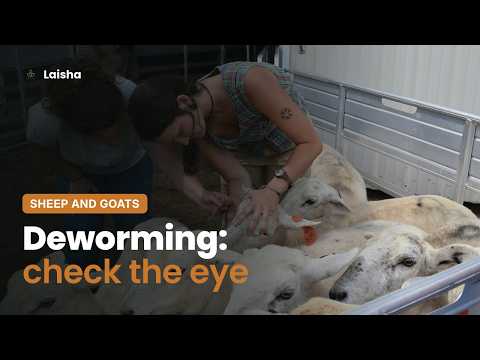
For decades, worms were controlled by treating every animal several times a year, and that bred resistance: in many sheep and goat flocks worldwide, some or all of the main worming drugs no longer work. This guide covers the main internal and external parasites of livestock, the barber's pole worm (Haemonchus contortus: anaemia, bottle jaw, a fast life cycle, most worms on the pasture), how resistance develops and the worming drug classes, refugia, targeted selective treatment with the FAMACHA eyelid chart, faecal egg counts and the reduction test (worked example), correct dosing (dose for the heaviest, calibrate, quarantine bought-in animals, withdrawal periods), grazing management, breeding and nutrition, and integrated tick control.
Chapters
- 0:00Why parasite control has changed
- 1:00Know the parasites
- 2:01The barber's pole worm
- 3:20How resistance develops
- 4:41Check before you treat
- 6:06Dose correctly
- 7:14Grazing, breeding and nutrition
- 8:33Ticks and external parasites
- 9:30Recap
Transcript
Worms, flukes, ticks, mites and flies are among the most costly problems in livestock farming worldwide, especially for grazing sheep and goats in warm, humid regions.
For decades, they were controlled mainly with cheap, effective drugs, given to every animal several times a year. That approach bred resistance.
In many sheep and goat flocks around the world, some or all of the main worming drugs no longer work.
In this video: the main parasites, the barber's pole worm, how resistance develops and why untreated worms matter, how to check before you treat, how to dose correctly, grazing, breeding and nutrition, and ticks.
We name drug classes only, never products or doses. Your veterinarian and the label always come first.
Start by knowing what you are fighting.
Inside the animal, the most important are the roundworms of the stomach and gut.
In ruminants, they include the barber's pole worm, Haemonchus, and its relatives.
There are also lungworms, tapeworms, and protozoa such as coccidia. And there are liver flukes, which need water snails to complete their life cycle, so they thrive on wet, poorly drained pasture.
On the outside are ticks, mites, lice and flies.
Ticks do more than suck blood.
They also carry serious diseases of cattle, such as East Coast fever, babesiosis, anaplasmosis and heartwater.
Mites cause mange and scab, and flies cause blowfly strike. Different parasites need different drugs, at different times of year. So a correct diagnosis, by your veterinarian or a laboratory, is the first step.
In warm, wet regions, one worm causes more losses in sheep and goats than any other: Haemonchus contortus, the barber's pole worm. It sucks blood from the lining of the fourth stomach.
Heavy infections cause anaemia, with pale gums and pale inner eyelids.
Fluid collects under the jaw, which farmers call bottle jaw. The animals become weak and can die, often without any diarrhoea, so do not wait for scouring.
Its life cycle is direct, and fast.
Each female worm lays thousands of eggs a day. In warm, moist weather, the eggs develop into infective larvae on the pasture in about a week, and swallowed larvae are laying eggs themselves about three weeks later. So the problem explodes in warm, wet weather.
And here is the key fact.
Most of the worm population is not inside the animals at all. It is on the pasture, as eggs and larvae.
Young animals in their first grazing season suffer most,
and ewes and does shed more eggs around lambing and kidding, which seeds the pasture for the new lambs and kids.
Every treatment kills the susceptible worms,
and leaves any resistant survivors to breed.
Resistance builds faster in four situations.
When animals are treated often.
When all the animals are treated at once, especially just before moving them to clean pasture, because the next generation on that pasture then comes almost entirely from resistant survivors.
When animals are under-dosed, by guessing their weight or using a faulty dosing gun.
And when the same drug class is used again and again.
The worming drugs fall into a few classes: the benzimidazoles, or white drenches, the imidazothiazoles, or clear drenches, the macrocyclic lactones, and two newer classes, with separate products for liver flukes.
Resistance to the benzimidazoles is now very common.
The way to slow resistance has a name: refugia.
Refugia are the worms that are not exposed to the drug, those on the pasture and in untreated animals.
Their susceptible genes dilute the resistant survivors.
Leaving some healthy animals untreated slows resistance dramatically.
So treat only the animals that need it. This is called targeted selective treatment,
and it works because worms are unevenly spread.
Most animals carry few worms, and a minority carry most of them.
For the barber's pole worm, the simplest tool is the FAMACHA chart, developed in South Africa.
You pull down the lower eyelid and compare its colour with a five-point card, from red, score one, to almost white, score five.
Animals scoring four or five are treated, and often score three in high-risk groups such as young or pregnant animals.
FAMACHA only works for anaemia caused by this worm, not for other parasites.
Faecal egg counts tell you when a group needs treatment, and whether a drug still works.
In the reduction test, you count eggs before treatment and again ten to fourteen days after.
Take an example.
A group of goats has twelve hundred eggs per gram before treatment,
and two hundred and forty after. That is a reduction of eighty per cent. Below about ninety-five per cent indicates resistance, so that drug class is no longer effective on this farm.
Test each farm at least once, so drug choice is based on evidence.
When you do treat, dose correctly.
Under-dosing kills the weakest worms and leaves the tougher ones to breed.
Weigh the animals, or group them by weight.
Dose for the heaviest animal in the group, not the average. If a group averages thirty-five kilograms, but the heaviest goat weighs fifty,
dosing by the average under-doses the heavier animals by up to thirty per cent. Check and calibrate your dosing gun. Goats break down many worming drugs faster than sheep, so follow your veterinarian's advice for each species.
Never let bought-in animals bring resistant worms onto your farm.
Treat newly purchased animals on arrival with an effective treatment chosen with your veterinarian, and hold them off pasture before turning them out.
And respect withdrawal periods.
Record every treatment: the product, the animal, the date, and when the withdrawal period for meat and milk ends, counted from the last dose.
Drugs are only one tool.
The pasture is where most worms live, so manage the pasture.
Rotate paddocks, and rest them long enough for larvae to die, longer in cool, moist climates than in hot, dry ones.
Alternate or mix grazing with cattle or horses, because most stomach worms of sheep are not shared with cattle. Give young animals the cleanest pasture, use hay fields or crop stubble after harvest, and avoid grazing very short grass, where larvae are concentrated near the ground.
Breed for resistance.
Some breeds, such as Red Maasai sheep and St Croix hair sheep, resist worms better, and so do some individuals within every breed.
Cull animals that need treatment again and again.
Feed well, especially protein, which improves resilience and immunity.
Some plants rich in condensed tannins, such as sericea lespedeza, can reduce worm burdens.
And a fungus fed to livestock, which grows in the dung and traps larvae, is used in some countries.
These help, but rarely replace effective drugs entirely.
Ticks follow the same logic.
Resistance to the chemicals used against them, called acaricides, is also widespread.
So integrate.
Use acaricides only when needed, choosing registered products, at the label dose, and rotating between chemical classes, usually once a year. Keep cattle breeds that resist ticks, such as zebu and their crosses, where they suit your system. Manage pasture to break the tick life cycle,
and use tick vaccines where available.
Inspect animals regularly for ticks, mites and lice, and treat outbreaks of mange or scab promptly, because they spread quickly through a flock.
And handle every product safely: wear what the label asks for, and keep treated animals out of the food chain until the withdrawal period ends.
To recap.
Monthly deworming of every animal breeds resistance.
Most worms live on the pasture, so manage the pasture as well as the animal. Know your parasites, and watch for pale eyelids and bottle jaw. Check before you treat: FAMACHA for the barber's pole worm, egg counts for the group, and a reduction test to see whether your drugs still work. Leave some healthy animals untreated to keep refugia.
Dose for the heaviest animal, quarantine bought-in stock, and respect withdrawal periods.
And breed, feed and graze for fewer worms.
For more on animal health and farming, visit laisha.ai. Thank you for watching.
Last updated · How Laisha writes and checks its pages · Report a mistake
Go further with Laisha Smarter
US$10 a month · one price worldwide · cancel any time
- Ask Laisha about what you watched — up to 1,000 questions a month
- Your own crop calendar and pest alerts
- Every calculator and tool