 Laisha
AI Operating System for Agriculture
Ask Laisha
Laisha
AI Operating System for Agriculture
Ask Laisha
Botrytis cinerea Pers., 1794 (sexual stage Botryotinia fuckeliana (de Bary) Whetzel) · formerly or also: Botryotinia fuckeliana
Grey mould is a fluffy grey fungus that rots strawberries, grapes, tomatoes, flowers and hundreds of other crops in cool, humid conditions, both in the field and after harvest. It often infects flowers and wounds and waits unseen until fruit ripen. It is one of the most important pathogens in the world and one of the quickest to resist fungicides.
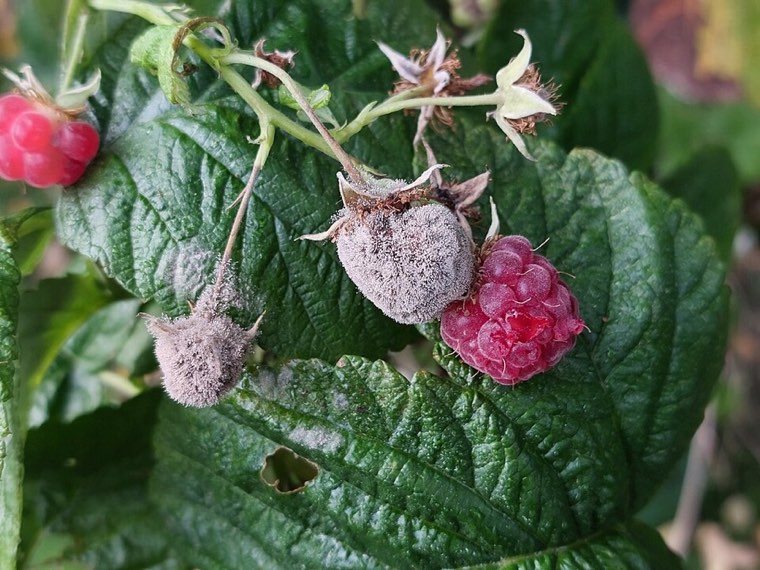
Grey mould is caused by Botrytis cinerea Pers., 1794 (sexual stage Botryotinia fuckeliana (de Bary) Whetzel), a fungus (ascomycete) (order Helotiales, family Sclerotiniaceae).
Older or alternative scientific names: Botryotinia fuckeliana.
Found worldwide, in every climate where crops are grown, and especially important in greenhouses and in humid, cool growing seasons.
| Region | Status |
|---|---|
| Europe | Widespread; major in vineyards, berries and greenhouses |
| Americas | Widespread |
| Asia | Widespread; major in protected vegetables |
| Africa and the Middle East | Widespread, especially in protected crops and export flowers |
| Oceania | Widespread |
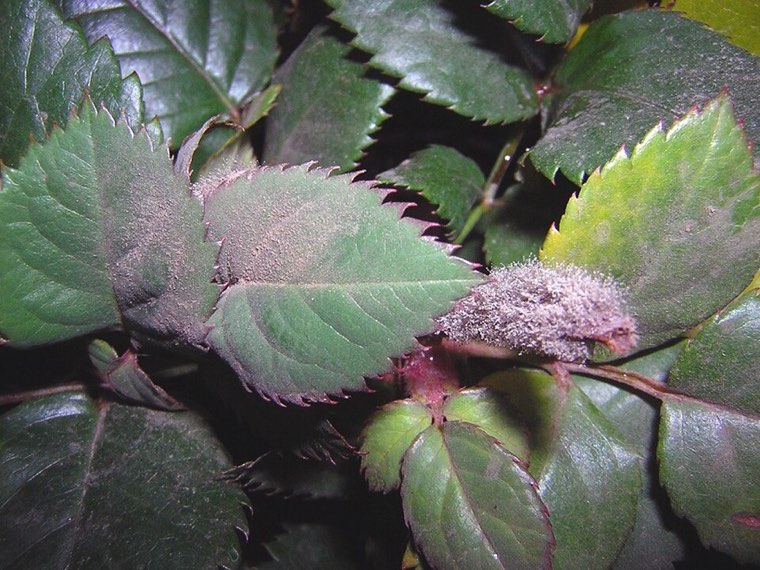
The fungus produces dense, grey to grey-brown, velvety or fluffy masses of spores on tree-like stalks (the name means 'grape-like', after the spore clusters). It forms hard black sclerotia on dead tissue, which survive in soil and debris.
| Crop stage | What you see |
|---|---|
| Flowering | Brown, rotting petals and flowers; infection of stamens and flower parts that later spreads into fruit; 'ghost spots' (pale rings) on tomato fruit where spores germinated without causing rot. |
| Fruit development and ripening | Soft, light brown rot spreading from the calyx or a wound, soon covered by grey fuzzy spores; in grapes, rotting berries that spread through tight bunches; stem cankers on greenhouse tomato. |
| Harvest and storage | Rot develops on fruit and flowers in transit and storage, spreading by contact (nesting). |
Spores from rotting tissue, debris and sclerotia are carried by air currents and water splash. They germinate on wet surfaces and invade mainly through flowers, wounds and senescent tissue. Infection of flowers can stay latent until fruit ripen and sugars rise, so rot appears later, often after harvest.
| Stage | Duration | Notes |
|---|---|---|
| Survival | Months to years | Sclerotia and mycelium in debris. |
| Spore release | Continuous in humid weather | Airborne conidia. |
| Infection of flowers and wounds | Needs several hours of wetness or humidity above about 90% | May remain latent. |
| Rot and sporulation | A few days in favourable conditions | New spores spread to other fruit. |
Grows from about 0 °C (it can rot fruit in cold storage) to about 30 °C, with an optimum near 15-25 °C; long periods of high humidity and free water drive infection.
Many cycles through the season wherever humid conditions and susceptible tissue occur.
Cool, humid or rainy weather during flowering and ripening, dense canopies, tight grape bunches, wounds from hail, insects or handling, excessive nitrogen, condensation in greenhouses and storage at high humidity.
There is no numeric economic threshold based on disease counts; programmes are preventive, timed to flowering and pre-harvest periods, and adjusted by weather-based risk models in some crops (for example strawberry and grape).
Thresholds are local. They depend on crop price, control cost, variety and natural-enemy activity, so use the figure your local extension service publishes where one exists.
Pre- and post-harvest losses of 20-50% occur in strawberries, grapes and other soft fruit in wet seasons; in grapes, rot also lowers wine quality. Global losses are estimated in the billions of US dollars a year.
Control works best as a sequence: prevent, monitor, then act only when a threshold or a risk forecast says so, using the least disruptive option that works.
Fungicides are applied mainly at flowering and before harvest, and the number of applications per group is limited because resistance develops quickly. Post-harvest treatments differ by country. What is registered differs by country and changes over time; follow the label and your local plant-protection authority.
| Scheme | Group | Mode of action | Notes |
|---|---|---|---|
| FRAC | 9 | Anilinopyrimidines (methionine biosynthesis) | Resistance documented. |
| FRAC | 12 | Phenylpyrroles (signal transduction) | Often mixed with Group 9. |
| FRAC | 17 | Hydroxyanilides (KRI, sterol biosynthesis class III) | Specific to Botrytis and relatives. |
| FRAC | 7 | Succinate dehydrogenase inhibitors (SDHI) | Resistance widespread in some regions. |
| FRAC | 2 | Dicarboximides | Resistance common. |
| FRAC | M04 | Phthalimides (multi-site) | Protectant partner. |
| FRAC | BM02 | Microbial biologicals with multiple modes of action | Biological partner. |
More than 1,000 plant species. Major crops include strawberry, grape, tomato, cucumber, pepper, lettuce, beans, berries, kiwifruit, stone fruit, onion and many cut flowers and ornamentals; it is a leading cause of post-harvest rot of fruit and flowers.
How to grow the crop well is the first line of defence. Laisha's free grow guides cover each crop from sowing to harvest:
Written by Laisha from the sources above, in its own words. This page is general reference, not a prescription: confirm identification locally and follow the label and your plant-protection authority.