 Laisha
AI Operating System for Agriculture
Ask Laisha
Laisha
AI Operating System for Agriculture
Ask Laisha
Clavigralla tomentosicollis and other pod-sucking bugs Clavigralla tomentosicollis Stål, 1855; also Anoplocnemis curvipes (Fabricius, 1781), Riptortus dentipes (Fabricius, 1787) and Nezara viridula (Linnaeus, 1758) · formerly or also: Acanthomyia tomentosicollis
A group of true bugs suck the developing seeds of cowpea through the pod wall. Attacked pods shrivel and dry early, and seeds become shrunken, spotted and poor at germinating. In Africa, Clavigralla tomentosicollis is the most important species, together with Anoplocnemis, Riptortus and stink bugs. With flower thrips and the pod borer Maruca, they make up the main pests of cowpea after flowering.
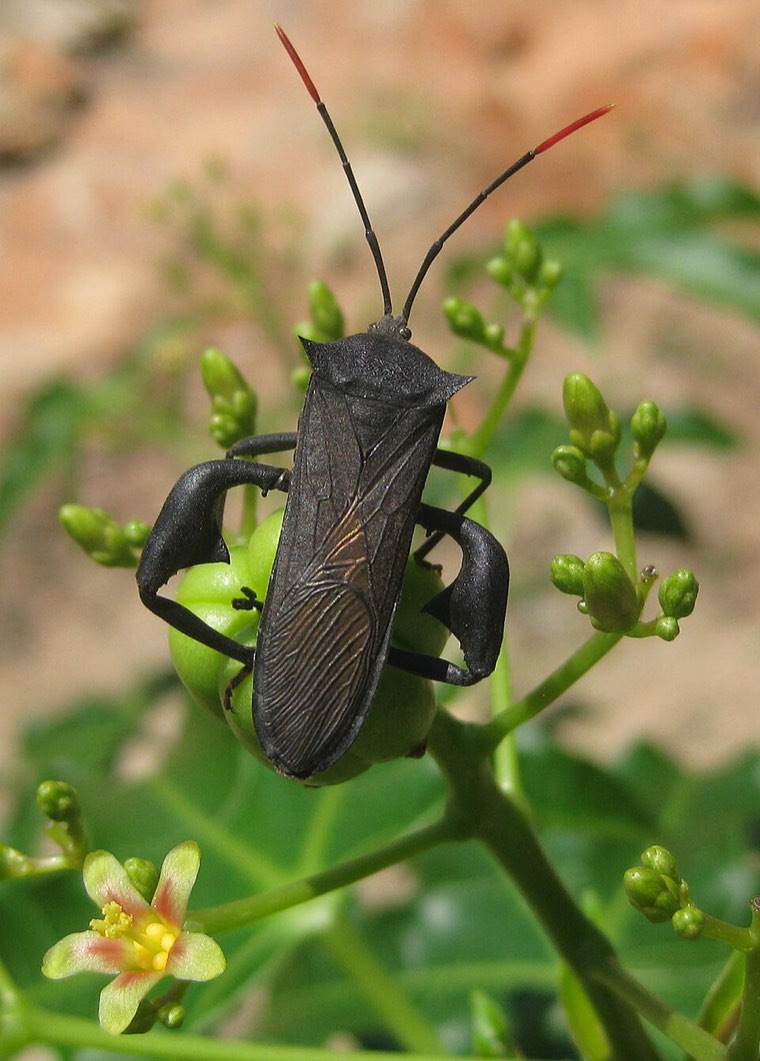
The scientific name of pod-sucking bugs of cowpea is Clavigralla tomentosicollis and other pod-sucking bugs Clavigralla tomentosicollis Stål, 1855; also Anoplocnemis curvipes (Fabricius, 1781), Riptortus dentipes (Fabricius, 1787) and Nezara viridula (Linnaeus, 1758), in the order Hemiptera, family Coreidae (with Alydidae and Pentatomidae).
Older or alternative scientific names: Acanthomyia tomentosicollis.
Clavigralla tomentosicollis is widespread in sub-Saharan Africa; other Clavigralla species and related pod bugs occur across Africa and South Asia; Nezara viridula is worldwide.
| Region | Status |
|---|---|
| West Africa | Widespread; major in cowpea |
| East and southern Africa | Widespread |
| South Asia | Related species on pigeon pea |
| Worldwide | Nezara viridula present |
Clavigralla tomentosicollis adults are about 10-12 mm long, brown and densely hairy, with a spiny edge to the thorax. Anoplocnemis curvipes is a large dark brown bug about 2.5 cm long; Riptortus species are slender and brown with long legs. Nymphs feed together in groups on pods. The bugs fly off or drop when disturbed, so counts are best made gently and early in the day.
| Crop stage | What you see |
|---|---|
| Young pods | Pods shrivel, turn yellow or brown and dry prematurely. |
| Developing pods | Dark feeding spots on pod walls; empty or partly filled pods. |
| Seeds | Shrunken, wrinkled seeds with dark puncture spots; poor germination and market quality. |
Adults move into cowpea fields at flowering and podding. Females lay eggs in clusters on pods, leaves and stems. Nymphs pass through five instars, feeding in groups on pods, and become adults in about three weeks. Several generations develop during the podding period and on later hosts. Between cowpea seasons, adults survive on wild legumes and other hosts and move back into the crop at podding.
| Stage | Duration | Notes |
|---|---|---|
| Egg (in clusters) | About 5-7 days | On pods and leaves. |
| Nymph (5 instars) | About 2-3 weeks | Gregarious on pods. |
| Adult | Several weeks | Strong fliers; move between hosts. |
Development is fastest in warm weather; numbers build up during podding and late in the season.
Several generations per year on cowpea and other legumes.
Late-planted or long-duration cowpea with extended podding, sole cropping, nearby legume hosts and broad-spectrum spraying that removes natural enemies.
There is no single international threshold. Some programmes base action on numbers of bugs per plant at podding; check with your local extension service.
Thresholds are local. They depend on crop price, control cost, variety and natural-enemy activity, so use the figure your local extension service publishes where one exists.
Pod-sucking bugs can cause large yield losses in unprotected cowpea, often reported between a third and more than half of the grain, and reduce the quality and germination of seed. Seeds that survive attack often germinate poorly, so damaged lots are poor seed for the next season.
Control works best as a sequence: prevent, monitor, then act only when a threshold or a risk forecast says so, using the least disruptive option that works.
Sprays at early podding control pod bugs together with the pod borer, but repeated broad-spectrum use harms natural enemies. What is registered differs by country and changes over time; follow the label and your local plant-protection authority.
| Scheme | Group | Mode of action | Notes |
|---|---|---|---|
| IRAC | 3A | Sodium channel modulators (pyrethroids) | Harmful to natural enemies. |
| IRAC | 4A | Nicotinic acetylcholine receptor competitive modulators (neonicotinoids) | Toxic to pollinators. |
Cowpea is the main host; pigeon pea, beans, lablab, soybean and wild legumes are also attacked. In South Asia, Clavigralla gibbosa is a pod bug of pigeon pea.
How to grow the crop well is the first line of defence. Laisha's free grow guides cover each crop from sowing to harvest:
Written by Laisha from the sources above, in its own words. This page is general reference, not a prescription: confirm identification locally and follow the label and your plant-protection authority.