 Laisha
AI Operating System for Agriculture
Ask Laisha
Laisha
AI Operating System for Agriculture
Ask Laisha
Aphis craccivora Aphis craccivora Koch, 1854 · formerly or also: Aphis leguminosae, Aphis medicaginis (misapplied)
The cowpea aphid is a small, shiny black aphid that forms dense colonies on the growing tips, flowers and pods of cowpea, groundnut, beans, lentil, faba bean, alfalfa and many other legumes. Heavy colonies stunt and distort plants and cover them with honeydew, but the aphid is even more important as a carrier of viruses, including groundnut rosette and cowpea aphid-borne mosaic virus. It thrives in warm, dry weather.
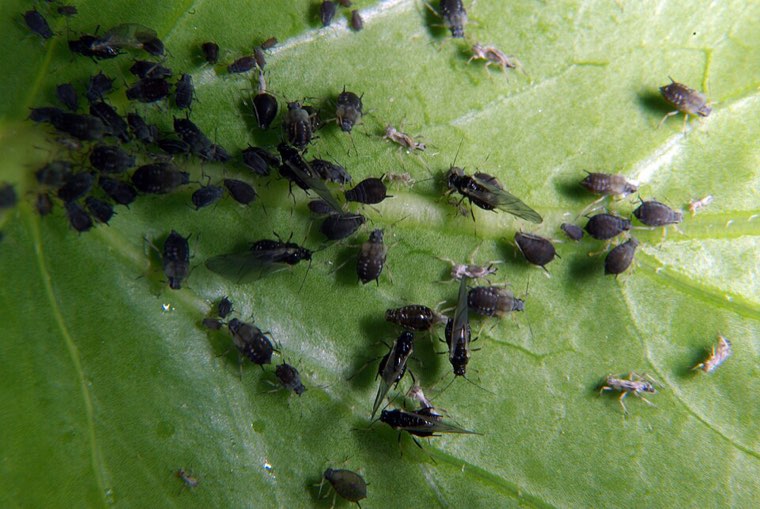
The scientific name of cowpea aphid is Aphis craccivora Aphis craccivora Koch, 1854, in the order Hemiptera, family Aphididae.
Older or alternative scientific names: Aphis leguminosae, Aphis medicaginis (misapplied).
Found worldwide, especially in warm temperate, subtropical and tropical regions.
| Region | Status |
|---|---|
| Africa | Widespread; key vector of groundnut rosette |
| Asia | Widespread |
| Americas and Europe | Widespread |
| Oceania | Widespread |
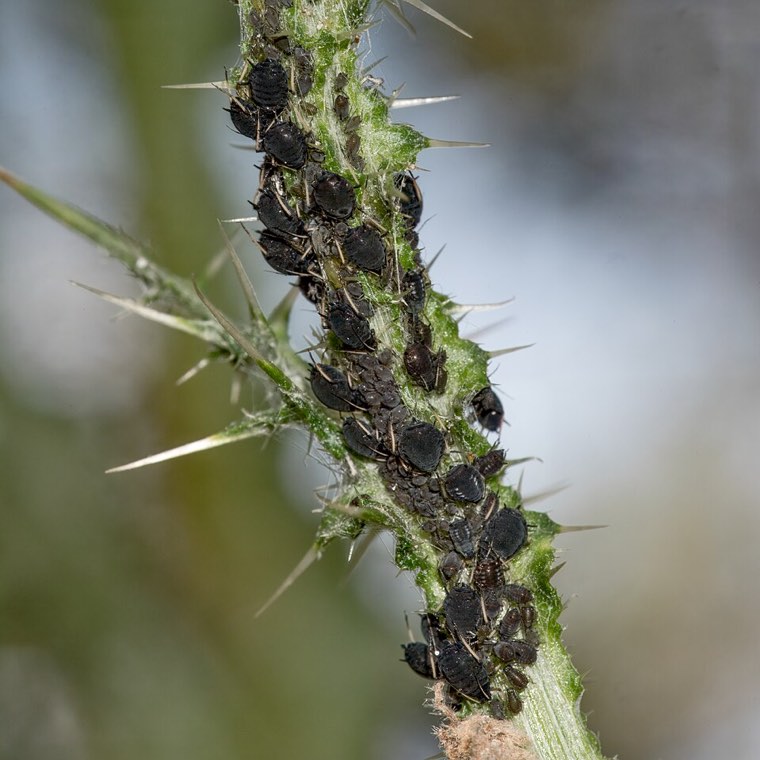
Adult wingless females are about 1.5-2 mm long and shiny black, with black-and-white legs and black cornicles; nymphs are dull grey to black with a light waxy dusting. Winged adults have a black abdomen with dark patches. Colonies are almost entirely female and reproduce by live birth. Ants often tend colonies for their honeydew and protect them from predators.
| Crop stage | What you see |
|---|---|
| Seedlings | Dense black colonies on growing points; stunted, twisted shoots; seedlings may wilt and die in dry weather. |
| Flowering and podding | Colonies on flower stalks and young pods; flower drop and malformed pods; honeydew, sooty mould and ants. |
| Virus symptoms | Mosaic, yellowing or rosetting in the crop, often spreading from aphid hotspots. |
In warm regions, females give birth to live young without mating all year round, and a nymph can become an adult in about a week. Winged forms develop when colonies are crowded or plants decline, and fly to new crops, spreading viruses. In cold regions the aphid may survive winter on perennial legumes. Because colonies can double in a few days in warm weather, early detection matters more than for most pests.
| Stage | Duration | Notes |
|---|---|---|
| Nymph (4 instars) | About 5-8 days | Fast development in warm weather. |
| Wingless adult female | About 2-3 weeks | Gives birth to several young per day. |
| Winged adult | When crowded | Disperses and spreads viruses. |
Populations grow fastest in warm, dry weather (about 25-30 °C); heavy rain washes colonies off plants.
Many overlapping generations; continuous in warm regions.
Warm, dry spells, drought-stressed crops, late planting, ant attendance, wild legume hosts and loss of natural enemies after broad-spectrum sprays.
There is no single international threshold. Local action levels are based on the share of infested plants or colony size at seedling and flowering stages; where viruses such as groundnut rosette are important, management is preventive.
Thresholds are local. They depend on crop price, control cost, variety and natural-enemy activity, so use the figure your local extension service publishes where one exists.
Direct feeding can kill seedlings and reduce flowering and pod set in dry seasons; virus transmission causes large losses, notably groundnut rosette in Africa, which can destroy entire groundnut crops in epidemic years. In seed crops of beans and cowpea, aphid-borne viruses can also be passed on through seed.
Control works best as a sequence: prevent, monitor, then act only when a threshold or a risk forecast says so, using the least disruptive option that works.
Seed treatments protect seedlings; foliar sprays are used when colonies are large, but they do not stop non-persistent virus transmission. What is registered differs by country and changes over time; follow the label and your local plant-protection authority.
| Scheme | Group | Mode of action | Notes |
|---|---|---|---|
| IRAC | 4A | Nicotinic acetylcholine receptor competitive modulators (neonicotinoids), seed treatment | Toxic to pollinators. |
| IRAC | 9B | Chordotonal organ TRPV channel modulators | Feeding inhibitor. |
| IRAC | 29 | Chordotonal organ modulators, undefined target site | Selective. |
Mainly legumes, including cowpea, groundnut, beans, lentil, faba bean, pea, chickpea, alfalfa, clover and many wild legumes, and some plants of other families.
How to grow the crop well is the first line of defence. Laisha's free grow guides cover each crop from sowing to harvest:
Written by Laisha from the sources above, in its own words. This page is general reference, not a prescription: confirm identification locally and follow the label and your plant-protection authority.