 Laisha
AI Operating System for Agriculture
Ask Laisha
Laisha
AI Operating System for Agriculture
Ask Laisha
Helicoverpa zea Helicoverpa zea (Boddie, 1850) · formerly or also: Heliothis zea
The corn earworm is the American relative of the Old World cotton bollworm. Its caterpillars feed on the developing ears of maize, the fruit of tomato and pepper, the bolls of cotton, the heads of sorghum and the pods of soybean and beans, which is why it has a different common name in each crop. It is one of the most costly crop pests in the Americas and has evolved resistance to several insecticides and to some Bt crop proteins.
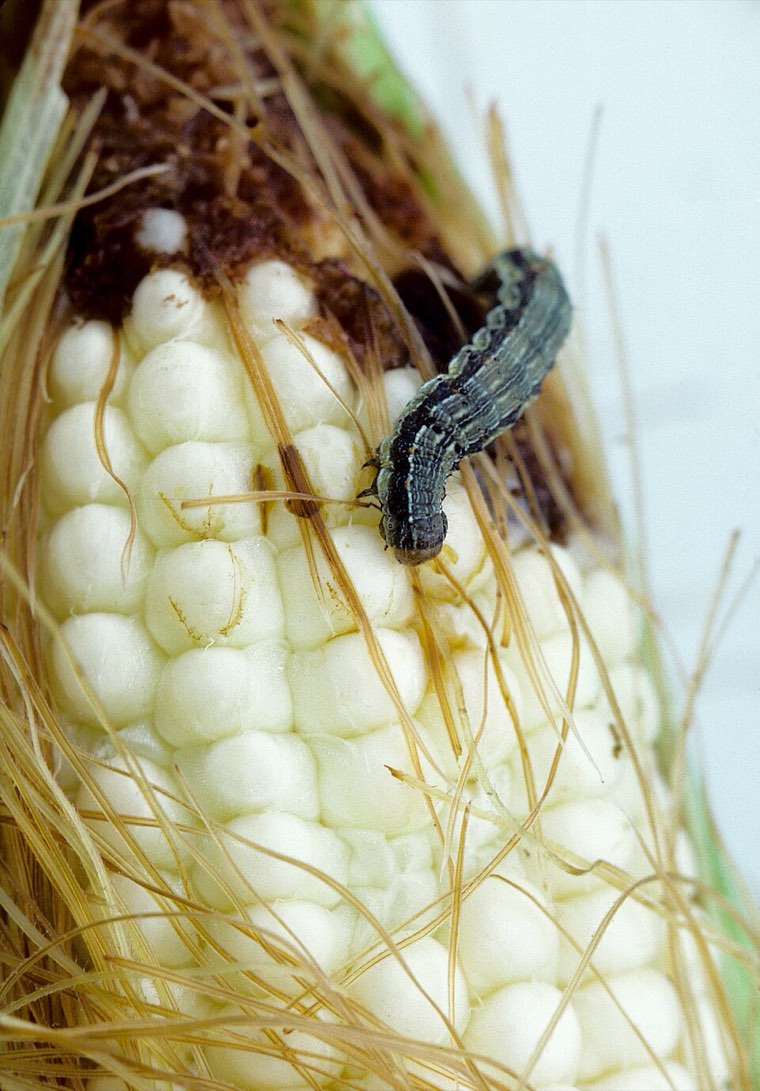
The scientific name of corn earworm is Helicoverpa zea Helicoverpa zea (Boddie, 1850), in the order Lepidoptera, family Noctuidae.
Older or alternative scientific names: Heliothis zea.
Native to the Americas, from Canada to Argentina, including the Caribbean, and also found in Hawaii. In cold regions it cannot survive winter and moths migrate north each year; the related Helicoverpa armigera has invaded South America since 2013, and the two species can be told apart reliably only in the laboratory.
| Region | Status |
|---|---|
| North America | Widespread; resident in the south, seasonal migrant further north |
| Central America and the Caribbean | Widespread |
| South America | Widespread; overlaps with invasive H. armigera |
| Pacific | Present in Hawaii |
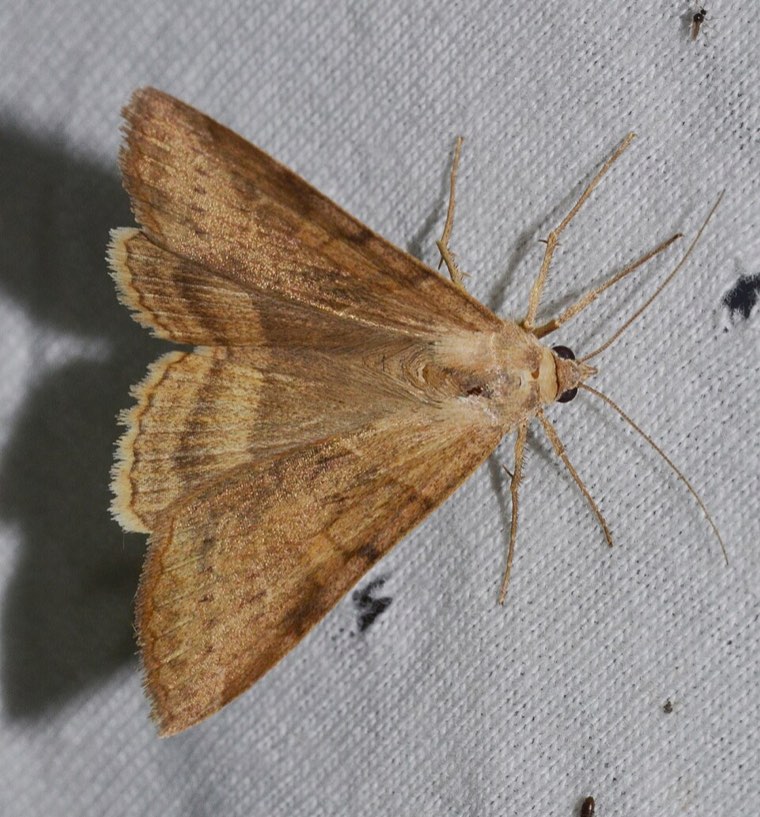
Moths are light tan to olive-brown, with a wingspan of about 3.5-4 cm and a darker band near the edge of the forewings. Eggs are laid singly, are dome-shaped with fine ribs, and turn from white to having a brown ring before hatching. Caterpillars grow to about 4 cm, vary in colour from green to pink, brown or nearly black, with light and dark stripes, and their skin is covered with tiny spines that make it feel rough.
| Crop stage | What you see |
|---|---|
| Maize ears | Silks clipped; caterpillars and moist droppings at the ear tip; kernels eaten at the tip; usually only one large caterpillar per ear, because they eat each other. |
| Tomato and pepper fruit | Round holes, often near the stem end, leading to watery cavities and rot. |
| Cotton, soybean and sorghum | Holes in squares and bolls; flared, dropped squares; holes in soybean pods; grain eaten in sorghum heads. |
Moths lay eggs singly on fresh silks, leaves, flower buds and young fruit. Caterpillars feed for about two to three weeks, passing through five or six instars, then drop to the soil to pupate. In warm regions the insect breeds all year; in cooler regions it survives winter only as a pupa in the soil in milder areas, and moths migrate northward each season.
| Stage | Duration | Notes |
|---|---|---|
| Egg | About 2-4 days | Single, on silks and young growth. |
| Caterpillar (5-6 instars) | About 2-3 weeks | Cannibalistic. |
| Pupa (in soil) | About 10-14 days in summer; months in winter | Overwintering stage. |
| Adult moth | About 1-2 weeks | Lays 500-3,000 eggs; strong migrant. |
Egg to adult takes about four weeks in summer; pupae do not survive cold winters, which limits year-round residence to warmer areas.
One to two generations in northern regions, and up to seven in the tropics and subtropics.
Warm weather, large areas of maize that build up populations before moths move to cotton, tomato and soybean, late-planted crops, and resistance to commonly used insecticides and Bt traits.
There is no single international threshold. Extension services set action levels by crop, such as moth catches in pheromone traps for sweet corn, eggs or larvae per number of plants in cotton and tomato, and larvae per length of row in soybean; values differ by region and market.
Thresholds are local. They depend on crop price, control cost, variety and natural-enemy activity, so use the figure your local extension service publishes where one exists.
In sweet corn, any caterpillar in the ear can make it unsaleable; in tomato, cotton and soybean, fruit, boll and pod damage cause yield losses that are often large in late-planted crops. Damaged maize ears are also more prone to mould and mycotoxins.
Control works best as a sequence: prevent, monitor, then act only when a threshold or a risk forecast says so, using the least disruptive option that works.
Sprays must reach caterpillars before they enter ears, fruit or bolls. Resistance to pyrethroids is widespread. What is registered differs by country and changes over time; follow the label and your local plant-protection authority.
| Scheme | Group | Mode of action | Notes |
|---|---|---|---|
| IRAC | 28 | Ryanodine receptor modulators (diamides) | Rotate. |
| IRAC | 5 | Nicotinic acetylcholine receptor allosteric modulators, site I (spinosyns) | Selective. |
| IRAC | 22A | Voltage-dependent sodium channel blockers (oxadiazines) | Rotate. |
| IRAC | 3A | Sodium channel modulators (pyrethroids) | Resistance widespread; harmful to natural enemies. |
More than 100 cultivated and wild plants, especially maize (sweet corn and field corn), cotton, tomato, sorghum, soybean, beans, pepper, lettuce, okra and many weeds.
How to grow the crop well is the first line of defence. Laisha's free grow guides cover each crop from sowing to harvest:
Written by Laisha from the sources above, in its own words. This page is general reference, not a prescription: confirm identification locally and follow the label and your plant-protection authority.