 Laisha
AI Operating System for Agriculture
Ask Laisha
Laisha
AI Operating System for Agriculture
Ask Laisha
Agrotis ipsilon Agrotis ipsilon (Hufnagel, 1766) · formerly or also: Agrotis ypsilon
The black cutworm is a moth found on every inhabited continent. Its plump, greasy-looking grey caterpillars hide in the soil by day and come out at night to cut young plants off at ground level. One caterpillar can cut several seedlings, so stands of maize, cotton, tobacco, vegetables and many other crops can have large gaps. The moths migrate long distances each spring in North America and East Asia.
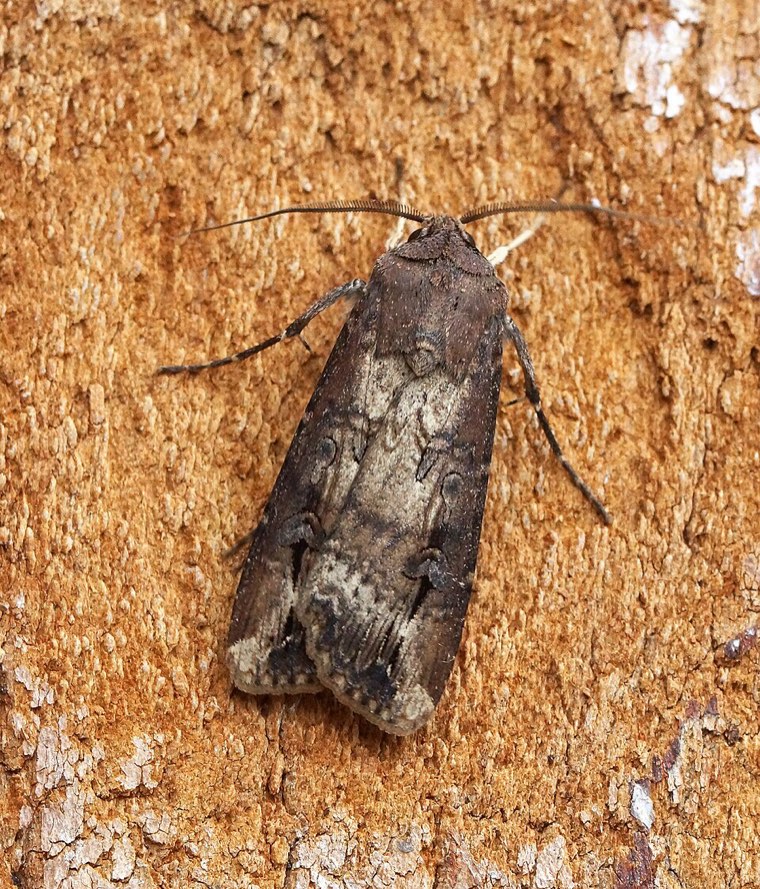
The scientific name of black cutworm is Agrotis ipsilon Agrotis ipsilon (Hufnagel, 1766), in the order Lepidoptera, family Noctuidae.
Older or alternative scientific names: Agrotis ypsilon.
Found almost worldwide in temperate, subtropical and tropical regions, except the coldest areas. In northern regions of North America and East Asia it does not survive winter and arrives each spring with migrating moths.
| Region | Status |
|---|---|
| Asia | Widespread; major pest in China and South Asia |
| Americas | Widespread; spring migrant in the north |
| Europe and Africa | Widespread |
| Oceania | Present |
Moths have dark brown forewings with a lighter band near the edge and a small black dagger-shaped mark next to the kidney-shaped spot; wingspan about 4-5 cm. Caterpillars grow to about 4-5 cm, are grey to almost black with a greasy sheen and faint stripes, have coarse granules on the skin, and curl into a C shape when disturbed. Caterpillars are most active on warm, humid nights.
| Crop stage | What you see |
|---|---|
| Young caterpillars | Small holes or 'windows' in leaves of weeds and seedlings. |
| Older caterpillars (seedling stage) | Seedlings cut off at or just below the soil surface, often several in a row; wilted or dead plants; caterpillars curled in the soil nearby. |
| Larger plants and tubers | Holes chewed in stems at soil level; feeding on potato tubers and roots of vegetables. |
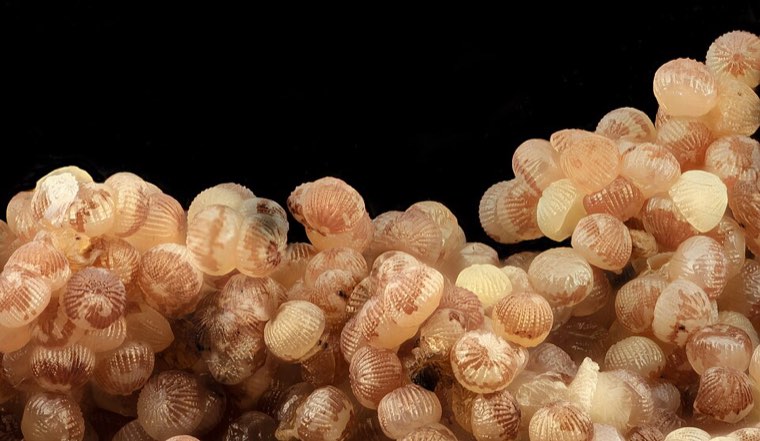
Moths lay eggs singly or in small groups on low-growing weeds, crop residues and seedlings. Caterpillars pass through six or seven instars: young ones feed on leaves, while older ones hide in the soil by day and cut plants at night. They pupate in the soil.
| Stage | Duration | Notes |
|---|---|---|
| Egg | About 3-6 days | On weeds and residues, often before planting. |
| Caterpillar (6-7 instars) | About 3-5 weeks | Cutting begins from about the fourth instar. |
| Pupa (in soil) | About 2 weeks | Several centimetres deep. |
| Adult moth | About 1-2 weeks | Lays 1,000 or more eggs; strong migrant. |
Egg to adult takes about five to seven weeks depending on temperature; development is fastest in warm weather.
Two to four generations in temperate regions and more in warm regions.
Weedy fields before planting, reduced or no tillage with crop residues, low-lying fields that flooded earlier in the season, early spring migrant flights, and young, slow-growing crops.
There is no single international threshold. Extension services set action levels for seedling crops, usually based on the percentage of plants cut or damaged with caterpillars present; check with your local extension service.
Thresholds are local. They depend on crop price, control cost, variety and natural-enemy activity, so use the figure your local extension service publishes where one exists.
Stand losses in maize, cotton, tobacco and vegetables can require replanting; damage is usually patchy but can be severe in weedy or low-lying fields.
Control works best as a sequence: prevent, monitor, then act only when a threshold or a risk forecast says so, using the least disruptive option that works.
Treatments are applied as sprays directed at the soil surface or as baits in the evening when caterpillars are active, and only when action levels are reached. What is registered differs by country and changes over time; follow the label and your local plant-protection authority.
| Scheme | Group | Mode of action | Notes |
|---|---|---|---|
| IRAC | 3A | Sodium channel modulators (pyrethroids) | Rescue treatment; harms natural enemies. |
| IRAC | 28 | Ryanodine receptor modulators (diamides) | Soil and seedling uses. |
Very wide: maize, cotton, tobacco, potato, tomato, pepper, crucifers, lettuce, onion, beans, soybean, sugar beet, sunflower, groundnut and many weeds, especially low-growing weeds on which eggs are laid.
How to grow the crop well is the first line of defence. Laisha's free grow guides cover each crop from sowing to harvest:
Written by Laisha from the sources above, in its own words. This page is general reference, not a prescription: confirm identification locally and follow the label and your plant-protection authority.