 Laisha
AI Operating System for Agriculture
Ask Laisha
Laisha
AI Operating System for Agriculture
Ask Laisha
Alternaria brassicae and Alternaria brassicicola Alternaria brassicae (Berk.) Sacc., 1880; Alternaria brassicicola (Schwein.) Wiltshire, 1947
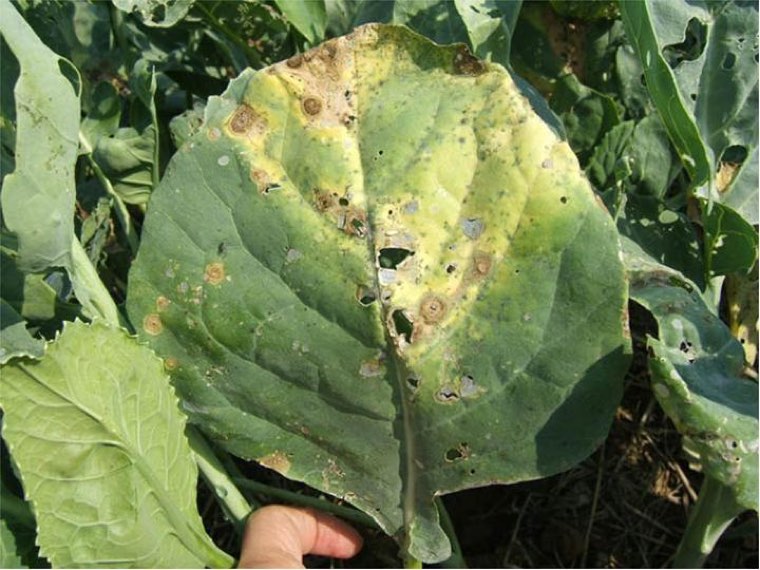
Alternaria blight causes dark brown to black spots with concentric rings, often with a yellow halo, on the leaves, stems and pods of mustard, rapeseed, cabbage, cauliflower, broccoli and other crucifers. On pods, spots lead to early shattering and small, shrivelled seed; on vegetables, spots on heads and curds make them unmarketable. Alternaria brassicae is most important on oilseed brassicas, especially rapeseed-mustard in South Asia, and A. brassicicola on vegetable brassicas.
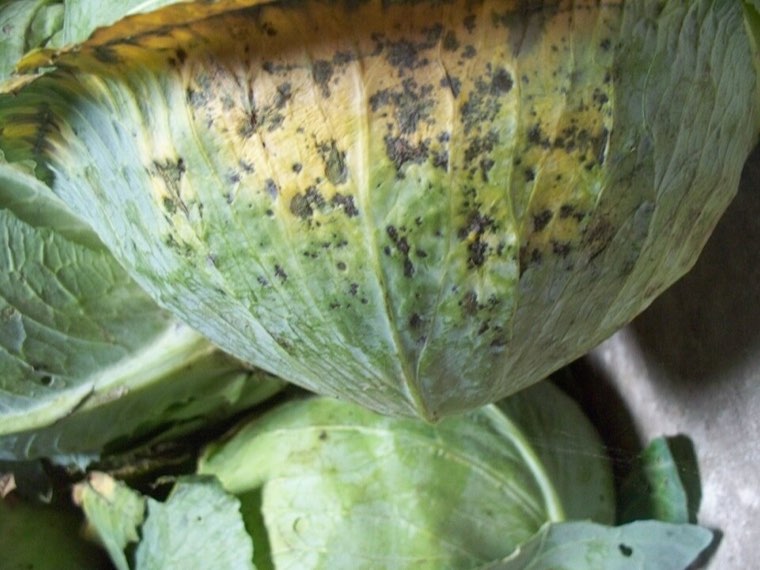
Alternaria blight of brassicas is caused by Alternaria brassicae and Alternaria brassicicola Alternaria brassicae (Berk.) Sacc., 1880; Alternaria brassicicola (Schwein.) Wiltshire, 1947, a fungus (ascomycete) (order Pleosporales, family Pleosporaceae).
Found worldwide wherever brassicas are grown; most damaging in humid conditions and in rapeseed-mustard in South Asia.
| Region | Status |
|---|---|
| South Asia | Widespread; major disease of rapeseed-mustard |
| Europe and North America | Widespread in oilseed and vegetable brassicas |
| East Asia | Widespread |
| Africa, South America and Oceania | Present |
Fungi that produce chains of large, dark, many-celled spores on the lesions in humid weather, giving spots a sooty appearance. A. brassicae has longer spores and is favoured by cooler weather; A. brassicicola has shorter spores in longer chains and is favoured by warmer weather. Spores are produced most heavily at night after warm, humid days, and are spread the next day by wind and splashing rain.
| Crop stage | What you see |
|---|---|
| Leaves | Small dark spots that enlarge into round brown to black lesions with concentric rings and often a yellow halo; older leaves affected first. |
| Stems and pods | Dark, elongated lesions on stems; dark spots on pods that cause early ripening, shattering and shrivelled seeds. |
| Heads and curds of vegetables | Dark spots on cabbage heads and cauliflower and broccoli curds; spots can develop further in storage. |
The fungi survive on infected seed, crop residues and cruciferous weeds. Spores are spread by wind and rain splash and infect leaves after long periods of wetness. New lesions produce spores within days, giving repeated cycles. Pod infection leads to infected seed. Wild crucifers along field margins can keep the fungi alive between crops.
| Stage | Duration | Notes |
|---|---|---|
| Survival on seed, debris and weeds | Between seasons | Seed is important for long-distance spread. |
| Infection | After many hours of leaf wetness | Humid weather. |
| Lesion development and sporulation | About 5-10 days | Repeated cycles. |
| Pod and seed infection | Late season | Carries the fungus forward. |
A. brassicae is favoured by about 18-24 °C and A. brassicicola by about 25-30 °C, both with high humidity, rain or heavy dew.
Several cycles per season.
Infected seed, crop residue and cruciferous weeds, frequent rain or dew, dense crops, late sowing of rapeseed-mustard in South Asia, and nutrient-stressed plants.
There is no numeric economic threshold; protection begins when the first spots appear on susceptible crops under humid weather, following local advice.
Thresholds are local. They depend on crop price, control cost, variety and natural-enemy activity, so use the figure your local extension service publishes where one exists.
Yield losses in rapeseed-mustard can be large in humid seasons through leaf loss, pod shattering and shrivelled seed, and seed quality and oil content fall; in vegetables, spotted heads and curds are unmarketable. Infected seed can also cause damping-off and dark lesions on seedlings in nurseries.
Control works best as a sequence: prevent, monitor, then act only when a threshold or a risk forecast says so, using the least disruptive option that works.
Protectant and systemic fungicides applied from the first symptoms reduce leaf and pod infection. What is registered differs by country and changes over time; follow the label and your local plant-protection authority.
| Scheme | Group | Mode of action | Notes |
|---|---|---|---|
| FRAC | M03 | Dithiocarbamates and relatives (multi-site) | Protectant. |
| FRAC | 3 | Demethylation inhibitors (DMI) | Systemic. |
| FRAC | 7 | Succinate dehydrogenase inhibitors (SDHI) | Usually in mixtures. |
| FRAC | 11 | Quinone outside inhibitors (QoI) | Resistance risk; use in mixtures. |
Cultivated and wild plants of the cabbage family, including rapeseed, mustards, cabbage, cauliflower, broccoli, kale, radish, turnip and cruciferous weeds.
How to grow the crop well is the first line of defence. Laisha's free grow guides cover each crop from sowing to harvest:
Written by Laisha from the sources above, in its own words. This page is general reference, not a prescription: confirm identification locally and follow the label and your plant-protection authority.