 Laisha
AI Operating System for Agriculture
Ask Laisha
Laisha
AI Operating System for Agriculture
Ask Laisha
Albugo candida Albugo candida (Pers.) Roussel, 1806 · formerly or also: Cystopus candidus
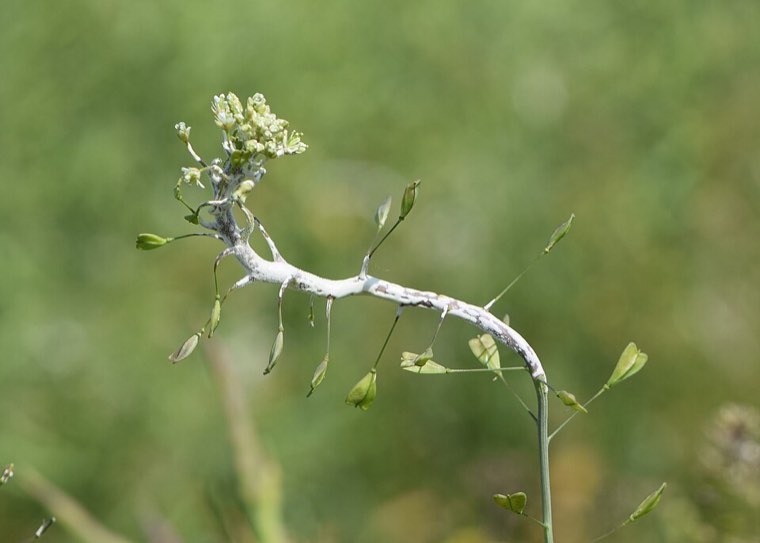
White rust produces raised, chalky-white blisters on the undersides of the leaves of mustard, radish, turnip, cabbage and other crucifers, with yellow patches above them. When the pathogen infects flowering shoots, they swell and twist into distorted, sterile structures called 'stagheads'. It is one of the most important diseases of Indian mustard (Brassica juncea) in South Asia and of some vegetable brassicas elsewhere. Despite the name, it is not a true rust fungus but a water mould.
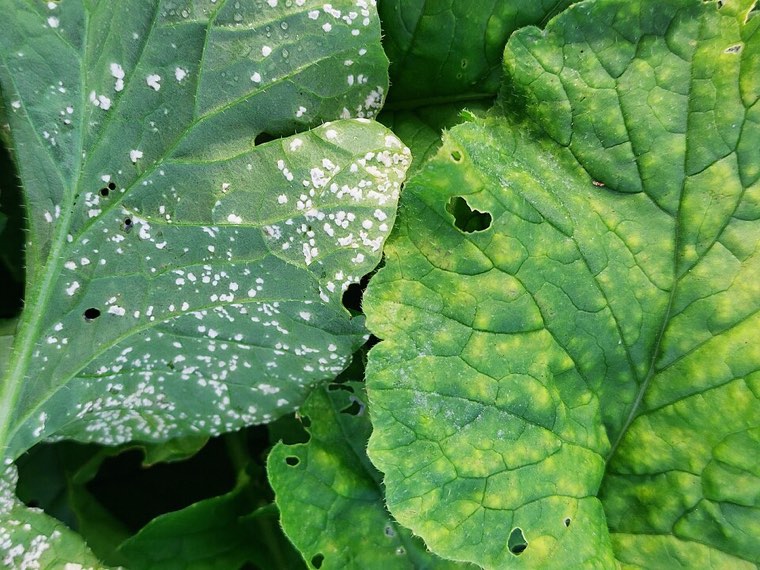
White rust of crucifers is caused by Albugo candida Albugo candida (Pers.) Roussel, 1806, an oomycete (water mould), not a true fungus (order Albuginales, family Albuginaceae).
Older or alternative scientific names: Cystopus candidus.
Found worldwide; most damaging on Indian mustard in South Asia and on some vegetable brassicas and B. rapa oilseeds in other regions.
| Region | Status |
|---|---|
| South Asia | Widespread; major on Indian mustard |
| Europe and North America | Present on vegetables and oilseeds |
| East Asia | Present |
| Oceania | Present; resistant B. juncea germplasm identified in Australia |
A water mould that forms chains of spores (sporangia) under the leaf surface, breaking through as white powdery pustules. Thick-walled sexual spores (oospores) form in stagheads and other distorted tissues and survive in soil and with seed. Downy mildew (Hyaloperonospora) often occurs on the same plants and stagheads. The pathogen depends on living host tissue and cannot be grown on ordinary laboratory media.
| Crop stage | What you see |
|---|---|
| Leaves | Raised, white to cream, blister-like pustules mainly on the lower surface, with yellow patches above; pustules may merge. |
| Stems and flowering shoots | Swollen, twisted, fleshy flower stalks and flowers ('stagheads'), which do not produce seed. |
| Pods | Distorted pods on infected racemes; reduced seed set. |
Oospores in soil, crop debris and seed infect seedlings. Spores from leaf pustules are spread by wind and rain to new leaves, where they release swimming zoospores in water films. Systemic infection of flowering shoots produces stagheads, where large numbers of oospores form and return to the soil. Infection of young seedlings from oospores in soil is the usual start of the season's epidemic.
| Stage | Duration | Notes |
|---|---|---|
| Oospores in soil, debris and seed | Between seasons | Main survival structures. |
| Leaf infection | After leaf wetness | Cool, humid weather. |
| White pustules and spore spread | About 7-14 days | Repeated cycles. |
| Staghead formation | Flowering stage | Many oospores formed. |
Most severe in cool, humid weather (about 10-20 °C) with dew or fog, which is common during the cool-season mustard crop in South Asia.
Several leaf cycles per season and one staghead phase.
Cool, humid or foggy weather; infected seed and debris; continuous cropping of mustard; susceptible varieties; and dense crops. Volunteer mustard and cruciferous weeds near fields keep the pathogen active between seasons.
There is no numeric economic threshold; management is preventive with resistant varieties and seed treatment, and foliar sprays follow local advice when pustules appear.
Thresholds are local. They depend on crop price, control cost, variety and natural-enemy activity, so use the figure your local extension service publishes where one exists.
Leaf infection reduces photosynthesis, and stagheads produce no seed; yield losses in Indian mustard can be large in susceptible varieties in cool, humid seasons. Mixed infections with downy mildew on stagheads make losses worse.
Control works best as a sequence: prevent, monitor, then act only when a threshold or a risk forecast says so, using the least disruptive option that works.
Oomycete-specific seed treatments and foliar fungicides reduce infection. What is registered differs by country and changes over time; follow the label and your local plant-protection authority.
| Scheme | Group | Mode of action | Notes |
|---|---|---|---|
| FRAC | 4 | Phenylamides | Seed treatment and foliar; resistance risk. |
| FRAC | M03 | Dithiocarbamates and relatives (multi-site) | Protectant partner. |
| FRAC | 40 | Carboxylic acid amides (CAA) | Foliar where registered. |
Many plants of the cabbage family, including Indian mustard, rapeseed (B. rapa), radish, turnip, cabbage, horseradish and cruciferous weeds such as shepherd's purse; races differ in which hosts they attack.
How to grow the crop well is the first line of defence. Laisha's free grow guides cover each crop from sowing to harvest:
Written by Laisha from the sources above, in its own words. This page is general reference, not a prescription: confirm identification locally and follow the label and your plant-protection authority.