 Laisha
AI Operating System for Agriculture
Ask Laisha
Laisha
AI Operating System for Agriculture
Ask Laisha
Delia radicum Delia radicum (Linnaeus, 1758) · formerly or also: Hylemya brassicae, Delia brassicae
The cabbage root fly is a small grey fly whose white maggots tunnel into the roots and stem bases of cabbage, cauliflower, broccoli, Brussels sprouts, swede, turnip, radish and oilseed rape. Young transplants wilt, turn bluish and die, and root crops become riddled with tunnels and unsaleable. It is a major pest of brassicas in the cooler regions of Europe, North America and Asia, where its spring generation causes most damage.
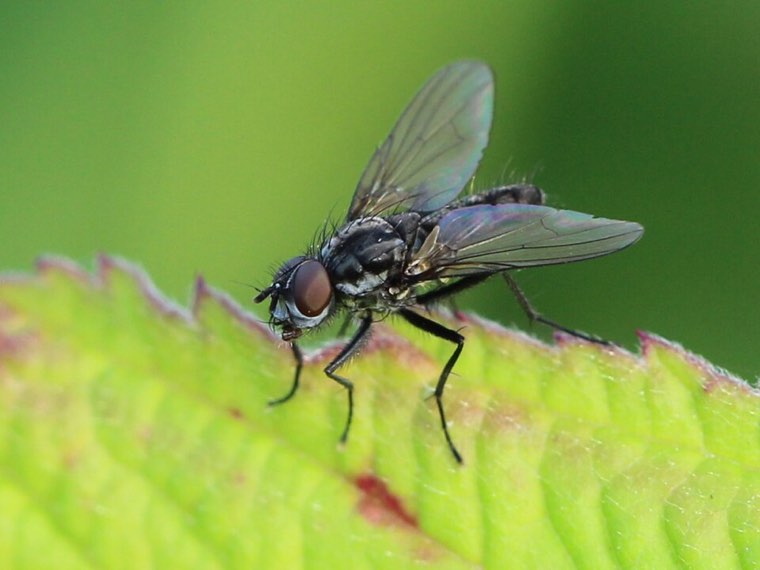
The scientific name of cabbage root fly is Delia radicum Delia radicum (Linnaeus, 1758), in the order Diptera, family Anthomyiidae.
Older or alternative scientific names: Hylemya brassicae, Delia brassicae.
Found in temperate regions of the Northern Hemisphere: Europe, North America and parts of northern Asia.
| Region | Status |
|---|---|
| Europe | Widespread |
| North America | Widespread in the northern US and Canada |
| Northern Asia | Present |
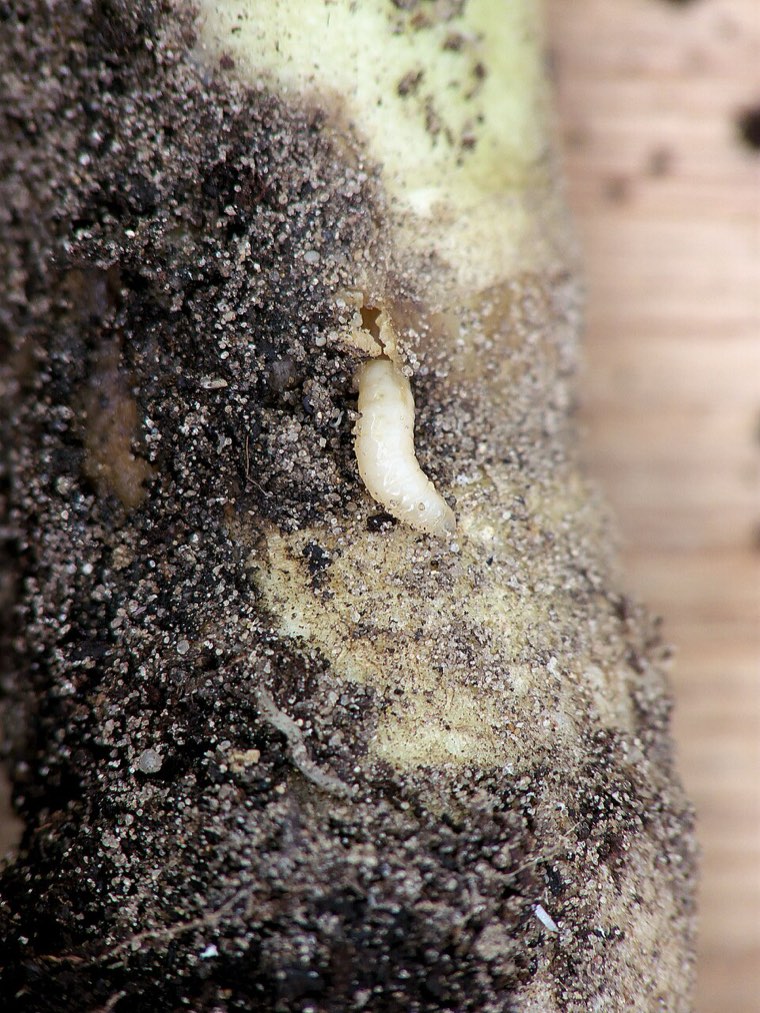
Adults are grey flies about 5-7 mm long, resembling small houseflies. Eggs are white, about 1 mm long, laid in the soil near the stem base. Maggots are white, legless and tapered, up to about 8 mm long. Pupae are brown, barrel-shaped and found in the soil. The closely related turnip root fly (Delia floralis) causes similar damage in northern areas.
| Crop stage | What you see |
|---|---|
| Transplants and seedlings | Wilting on warm days, bluish or purplish leaves, stunting and death; roots eaten away and tunnelled, with maggots present. |
| Older brassicas | Poor growth; tunnels in the stem base and roots; secondary rots. |
| Root crops and Brussels sprouts | Brown tunnels in swede, turnip and radish roots; maggots in the lower buttons of Brussels sprouts late in the season. |
The insect spends the winter as a pupa in the soil. Flies of the first generation emerge in spring and lay eggs in the soil at the base of brassica plants. Maggots feed on the roots for about three to four weeks, then pupate in the soil. Further generations follow in summer and autumn, and the last generation's pupae enter diapause for the winter.
| Stage | Duration | Notes |
|---|---|---|
| Egg (in soil at stem base) | About 3-7 days | Counts guide timing. |
| Maggot (3 instars) | About 3-4 weeks | Feeds on roots. |
| Pupa (in soil) | About 2-3 weeks in summer; months in winter | Overwintering stage. |
| Adult fly | About 2-4 weeks | Feeds on nectar. |
Development speed depends on soil temperature, so emergence of the spring generation can be forecast from accumulated temperatures; very hot, dry soils kill eggs and slow summer generations.
Two to four generations per year depending on climate.
Transplanting during the peak egg-laying of the spring generation, cool and moist soils, continuous brassica growing, and organic matter that attracts egg-laying flies.
There is no single international threshold. Some programmes use egg counts from felt traps or soil samples around plants, combined with temperature-based forecasts, to time treatment; values differ by crop and region.
Thresholds are local. They depend on crop price, control cost, variety and natural-enemy activity, so use the figure your local extension service publishes where one exists.
Plant losses of transplanted brassicas can be high where the spring generation is not managed, and root crops such as swede, turnip and radish lose market value from tunnelling. Even light root damage can make radish, turnip and swede roots unmarketable.
Control works best as a sequence: prevent, monitor, then act only when a threshold or a risk forecast says so, using the least disruptive option that works.
Treatments are mostly applied to seed or transplant modules before planting. What is registered differs by country and changes over time; follow the label and your local plant-protection authority.
| Scheme | Group | Mode of action | Notes |
|---|---|---|---|
| IRAC | 28 | Ryanodine receptor modulators (diamides), seed or module treatment | Where registered. |
| IRAC | 5 | Nicotinic acetylcholine receptor allosteric modulators, site I (spinosyns), module drench | Where registered. |
Plants of the cabbage family, including vegetable brassicas, swede, turnip, radish, oilseed rape and cruciferous weeds.
How to grow the crop well is the first line of defence. Laisha's free grow guides cover each crop from sowing to harvest:
Written by Laisha from the sources above, in its own words. This page is general reference, not a prescription: confirm identification locally and follow the label and your plant-protection authority.