 Laisha
AI Operating System for Agriculture
Ask Laisha
Laisha
AI Operating System for Agriculture
Ask Laisha
Pieris rapae and Pieris brassicae Pieris rapae (Linnaeus, 1758); Pieris brassicae (Linnaeus, 1758) · formerly or also: Artogeia rapae (P. rapae), small white, imported cabbageworm (P. rapae), large white, cabbage butterfly (P. brassicae)
The small white (Pieris rapae, called the imported cabbageworm in North America) and the large white (Pieris brassicae) are white butterflies whose green or yellow-and-black caterpillars eat the leaves of cabbage, cauliflower, broccoli, kale, mustard and other brassicas. The caterpillars chew holes, bore into heads, and foul them with dark droppings. The small white is now found on almost every continent; the large white is mainly a pest in Europe, North Africa and Asia.
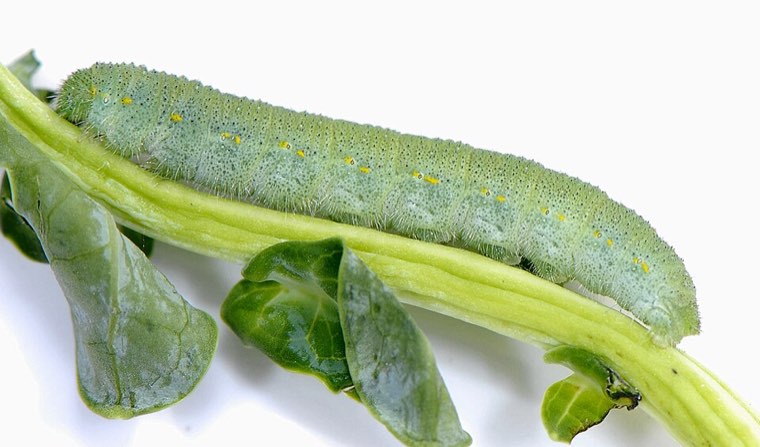
The scientific name of cabbage white butterflies is Pieris rapae and Pieris brassicae Pieris rapae (Linnaeus, 1758); Pieris brassicae (Linnaeus, 1758), in the order Lepidoptera, family Pieridae.
Older or alternative scientific names: Artogeia rapae (P. rapae), small white, imported cabbageworm (P. rapae), large white, cabbage butterfly (P. brassicae).
Both species are native to Europe, North Africa and Asia. The small white spread to North America (about 1860), Australia, New Zealand and elsewhere and is now one of the most widespread butterflies. The large white is found from Europe and North Africa to the Himalayas, and has established in Chile; an incursion in New Zealand was eradicated by 2016.
| Region | Status |
|---|---|
| Europe, North Africa and Asia | Both species native and widespread |
| North America | Small white widespread |
| Oceania | Small white widespread; large white eradicated from New Zealand |
| South America | Small white present; large white established in Chile |
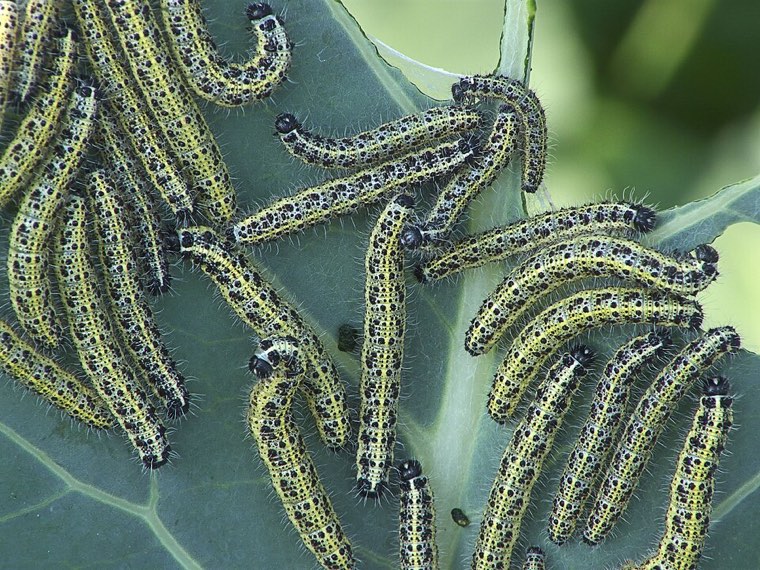
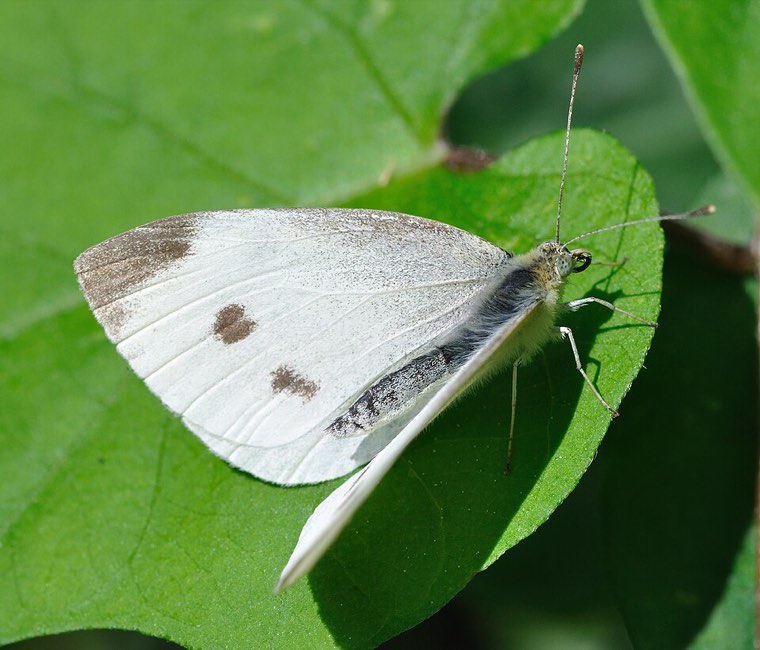
Small white: adults white with black wing tips and one (male) or two (female) black spots on each forewing, wingspan about 4.5-5.5 cm; eggs pale yellow, bullet-shaped, laid singly; caterpillars velvety green with a faint yellow stripe along the back, up to about 2.5 cm. Large white: bigger adults (wingspan about 5.5-7 cm); eggs yellow, laid in clusters of 20-100; caterpillars yellow-green with black spots and short hairs, feeding in groups.
| Crop stage | What you see |
|---|---|
| Young plants | Small irregular holes in leaves; seedlings can be stripped by groups of large white caterpillars. |
| Heading and leafy crops | Large ragged holes; small white caterpillars bore into cabbage heads and broccoli and cauliflower curds; dark green droppings (frass) between leaves. |
| Severe large white attack | Plants reduced to leaf veins and stalks; caterpillars wander and pupate on walls, fences and nearby structures. |
Butterflies lay eggs on the leaves of brassicas. Caterpillars pass through five instars and then form a chrysalis attached to a plant or a nearby surface by a silk girdle. In temperate regions the insects spend the winter as chrysalises in diapause, and butterflies emerge in spring.
| Stage | Duration | Notes |
|---|---|---|
| Egg | About 3-8 days | Single (small white) or clusters (large white). |
| Caterpillar (5 instars) | About 2-4 weeks | Damaging stage. |
| Chrysalis (pupa) | About 1-2 weeks, or the whole winter | Overwintering stage in temperate areas. |
| Adult butterfly | About 2-3 weeks | Feeds on nectar; lays several hundred eggs. |
Egg to adult takes about 3-5 weeks in summer; development stops in cold weather and chrysalises enter diapause as days shorten.
Two to three generations in cool temperate regions, and up to eight or more in warm climates.
Large areas of brassicas through the season, warm sunny weather for butterfly flight and egg laying, and few natural enemies after broad-spectrum spraying.
There is no single international threshold. Extension services use local action levels, often based on the percentage of plants with caterpillars or feeding damage, which are lower near harvest and for heading crops sold fresh; check with your local extension service.
Thresholds are local. They depend on crop price, control cost, variety and natural-enemy activity, so use the figure your local extension service publishes where one exists.
Feeding reduces yield and quality, and caterpillars and droppings in heads and curds make produce unmarketable; large white outbreaks can strip whole crops in gardens and small farms.
Control works best as a sequence: prevent, monitor, then act only when a threshold or a risk forecast says so, using the least disruptive option that works.
Biological insecticides based on Bacillus thuringiensis are usually enough; chemical sprays are used when thresholds are exceeded close to harvest. What is registered differs by country and changes over time; follow the label and your local plant-protection authority.
| Scheme | Group | Mode of action | Notes |
|---|---|---|---|
| IRAC | 11A | Microbial disruptors of insect midgut membranes (Bacillus thuringiensis) | Selective; best on young caterpillars. |
| IRAC | 5 | Nicotinic acetylcholine receptor allosteric modulators, site I (spinosyns) | Selective. |
| IRAC | 28 | Ryanodine receptor modulators (diamides) | Rotate with other groups. |
Plants of the cabbage family (Brassicaceae), wild and cultivated, and a few related plants that contain mustard oils, such as nasturtium (Tropaeolum) and capers.
How to grow the crop well is the first line of defence. Laisha's free grow guides cover each crop from sowing to harvest:
Written by Laisha from the sources above, in its own words. This page is general reference, not a prescription: confirm identification locally and follow the label and your plant-protection authority.