 Laisha
AI Operating System for Agriculture
Ask Laisha
Laisha
AI Operating System for Agriculture
Ask Laisha
Plasmodiophora brassicae Plasmodiophora brassicae Woronin, 1877
Clubroot is a soil-borne disease of cabbage, cauliflower, broccoli, canola, mustard, turnip, radish and other brassicas. The pathogen makes roots swell into large, club-shaped galls that cannot take up water and nutrients, so plants wilt on warm days, yellow and give poor yields. The galls rot and release enormous numbers of resting spores that survive in soil for many years, which makes clubroot very hard to get rid of once a field is infested.
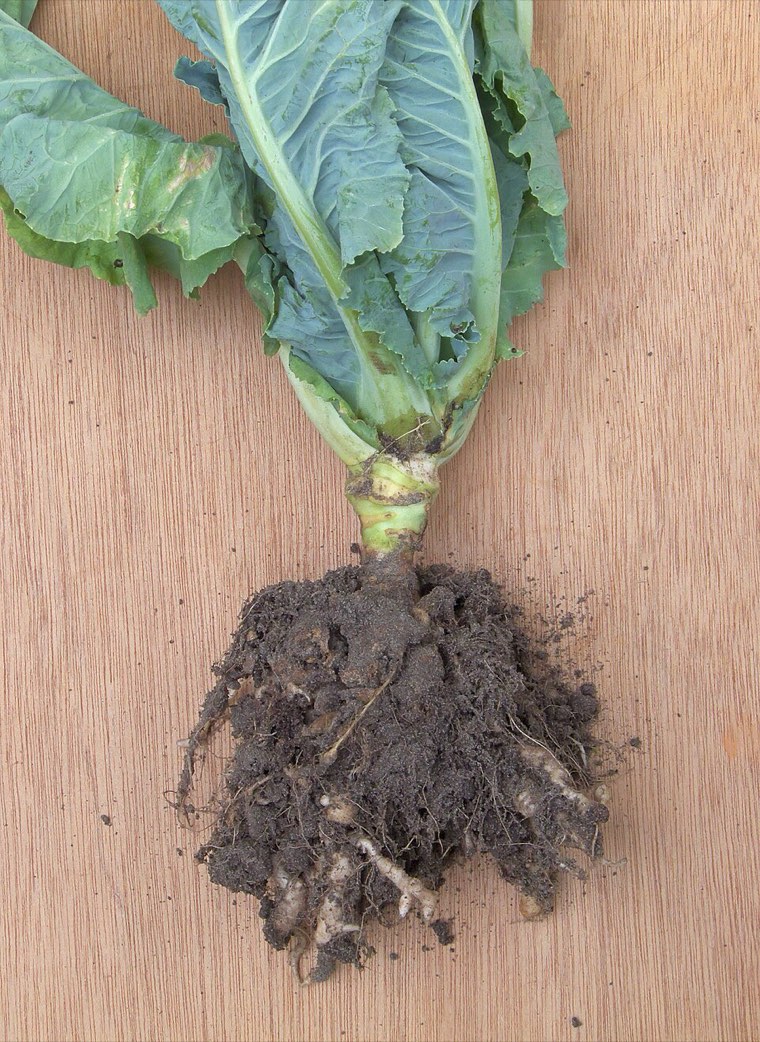
Clubroot of brassicas is caused by Plasmodiophora brassicae Plasmodiophora brassicae Woronin, 1877, a protist (plasmodiophorid; a soil-borne parasite traditionally grouped with fungal diseases) (order Plasmodiophorida, family Plasmodiophoridae).
Found worldwide in brassica-growing areas, especially on acid soils. It has spread widely in canola in western Canada since it was found in Alberta in 2003, and is important in vegetable brassicas in Europe, East Asia and elsewhere.
| Region | Status |
|---|---|
| Europe | Widespread in vegetable and oilseed brassicas |
| North America | Widespread; spreading in Canadian canola |
| East and South Asia | Widespread; major in China, Japan and Korea |
| Africa, South America and Oceania | Present |
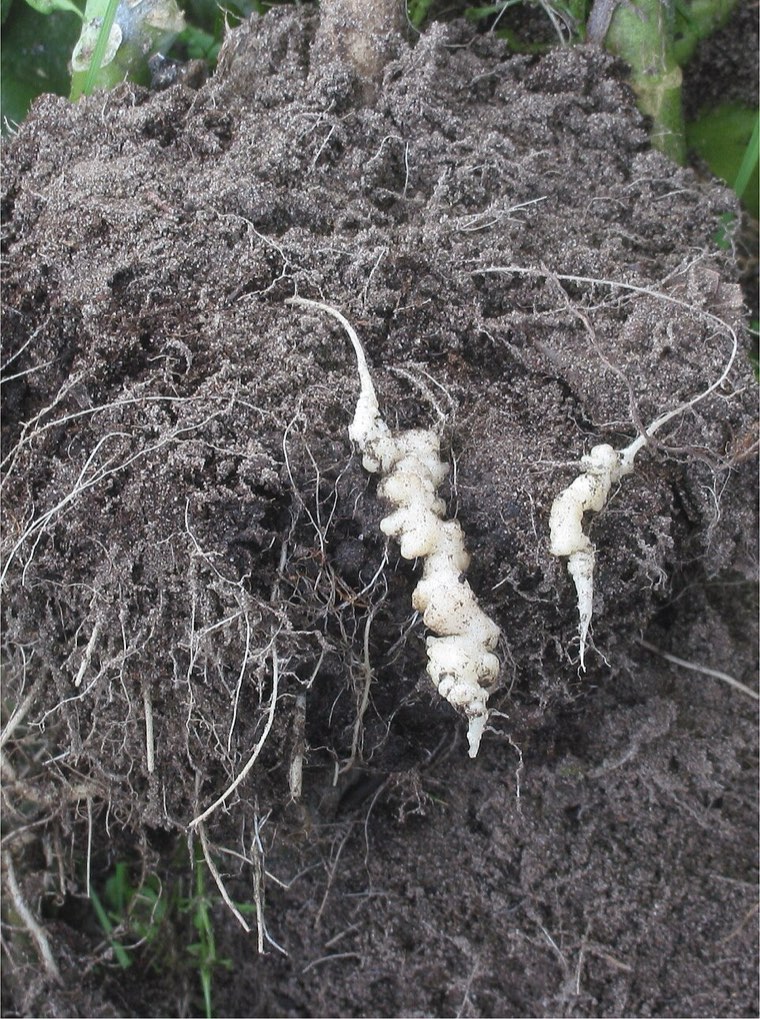
An obligate parasite that lives only inside host roots and forms microscopic resting spores. Spores release swimming zoospores in wet soil, which infect root hairs and then the root tissue, where the pathogen causes cells to multiply and swell. Pathotypes differ in which resistant varieties they can attack. A few heavily infested patches can produce enough spores to contaminate a whole field once soil is moved by machinery.
| Crop stage | What you see |
|---|---|
| Above ground | Wilting on warm, sunny days with recovery at night; yellowing, stunting and early ripening; patches of poor plants, often at field entrances. |
| Roots | Swollen, club-shaped or spindle-shaped galls on main and side roots, firm and white at first. |
| Late stage | Galls turn brown, soft and rot, releasing resting spores into the soil. |
Resting spores survive in soil for many years. In warm, moist soil they release zoospores that infect root hairs. A second phase invades the root cortex and causes galls. As galls decay, billions of new resting spores return to the soil. The pathogen spreads mainly in soil moved on machinery, boots and tools, and in water, and on infected transplants.
| Stage | Duration | Notes |
|---|---|---|
| Resting spores in soil | Many years (half-life a few years) | Survive long without brassicas. |
| Root hair infection | Days | Needs wet soil. |
| Cortical infection and gall formation | Weeks | Main damage. |
| Gall decay and spore release | End of season | Builds up soil inoculum. |
Infection is favoured by soil temperatures of about 20-25 °C, high soil moisture and acid soils (pH below about 7.2).
One main cycle per crop.
Acid soils, wet or poorly drained soils, short rotations with brassicas, cruciferous weeds, and movement of infested soil on equipment or with transplants.
There is no economic threshold; once present, clubroot is managed preventively, and soil tests for spores help assess risk.
Thresholds are local. They depend on crop price, control cost, variety and natural-enemy activity, so use the figure your local extension service publishes where one exists.
Yield losses range from small to complete crop failure in heavily infested patches; infested fields may become unsuitable for brassicas for many years. In vegetable brassicas, galled plants produce small or unmarketable heads.
Control works best as a sequence: prevent, monitor, then act only when a threshold or a risk forecast says so, using the least disruptive option that works.
Soil-applied fungicides are used in some vegetable brassica systems to reduce infection at transplanting; they are not practical in broadacre canola. What is registered differs by country and changes over time; follow the label and your local plant-protection authority.
| Scheme | Group | Mode of action | Notes |
|---|---|---|---|
| FRAC | 29 | Uncouplers of oxidative phosphorylation | Soil-applied in vegetables where registered. |
| FRAC | 21 | Quinone inside inhibitors (QiI) | Soil-applied in vegetables where registered. |
Plants of the cabbage family (Brassicaceae), including vegetable brassicas, oilseed rape and canola, mustards, turnip, radish and cruciferous weeds such as shepherd's purse and wild mustard.
How to grow the crop well is the first line of defence. Laisha's free grow guides cover each crop from sowing to harvest:
Written by Laisha from the sources above, in its own words. This page is general reference, not a prescription: confirm identification locally and follow the label and your plant-protection authority.