 Laisha
AI Operating System for Agriculture
Ask Laisha
Laisha
AI Operating System for Agriculture
Ask Laisha
Thrips palmi Thrips palmi Karny, 1925
Melon thrips is a small yellow thrips that feeds in large numbers on the leaves, stems and fruit of cucurbits, eggplant, pepper, beans, potato and ornamentals. Unlike western flower thrips, it lives mostly on leaves, where it causes silvering, bronzing and stunting, and it scars fruit. It transmits several tospoviruses, resists many insecticides, and is a regulated quarantine pest in Europe and other regions.
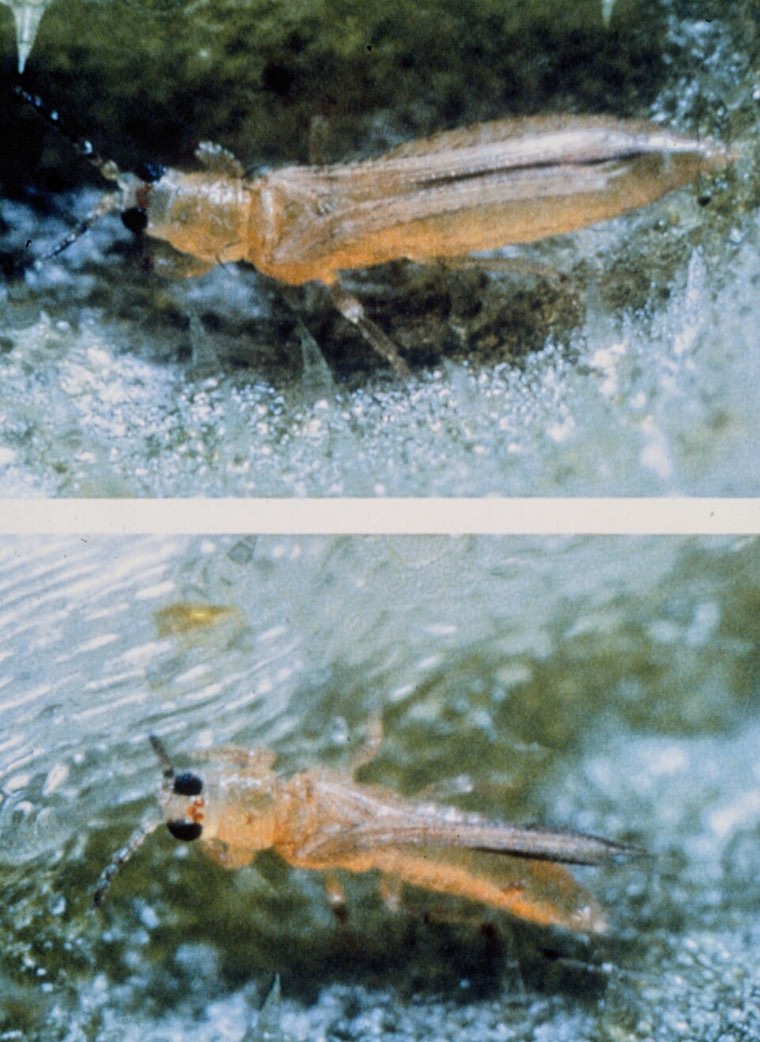
The scientific name of melon thrips is Thrips palmi Thrips palmi Karny, 1925, in the order Thysanoptera, family Thripidae.
Probably native to South and South-East Asia; spread through East Asia (Japan from the late 1970s), the Pacific, the Caribbean, Florida (around 1990), Central and South America, Africa and northern Australia. In Europe it is intercepted on imported plants and produce and outbreaks under glass are eradicated.
| Region | Status |
|---|---|
| South, South-East and East Asia | Widespread |
| Americas | Established in the Caribbean, Florida, Hawaii and parts of Central and South America |
| Africa and Oceania | Present in several countries |
| Europe | Regulated quarantine pest; occasional outbreaks eradicated |
Adults are about 1-1.3 mm long, clear yellow without dark markings on the body, with slender pale wings fringed with hairs and distinct dark bristles. Larvae are pale yellow. Confirming the species needs a microscope and an expert or a molecular test, because several yellow thrips look alike.
| Crop stage | What you see |
|---|---|
| Leaves | Silvery or bronze patches along the midrib and veins on the undersides of leaves; leaves become stiff, curled and die back in heavy infestations. |
| Growing points and flowers | Stunted, distorted shoots and terminal leaves; flower damage. |
| Fruit | Scars, russeting and deformation on cucumber, eggplant, pepper and other fruit, which lower market quality. |
Females insert eggs into leaves, flowers and fruit. Two larval stages feed with the adults on leaf surfaces. Fully grown larvae drop to the soil, where the non-feeding prepupa and pupa develop. Unmated females produce only males. Generations overlap and populations rise very quickly in warm weather.
| Stage | Duration | Notes |
|---|---|---|
| Egg (inside plant tissue) | About 4-7 days at 25 °C | Protected from sprays. |
| Larva (2 instars) | About 4-6 days | Feeds on leaves; acquires tospoviruses. |
| Prepupa and pupa (in soil) | About 3-5 days | Non-feeding. |
| Adult | About 2-4 weeks | Females lay dozens of eggs. |
Egg to adult takes about two to three weeks at 25-30 °C; populations peak in warm, dry periods and in greenhouses.
Many overlapping generations in the tropics and in greenhouses.
Warm, dry weather; continuous cropping of cucurbits and solanaceous crops; heavy use of broad-spectrum insecticides that kill natural enemies and select resistance; and movement of infested plants and produce.
There is no single international threshold. Local action levels, based on thrips per leaf or sticky-card catches, are used in some crops and regions; where tospoviruses are present or the pest is regulated, very low numbers require action.
Thresholds are local. They depend on crop price, control cost, variety and natural-enemy activity, so use the figure your local extension service publishes where one exists.
Heavy infestations stunt plants and cause severe yield and quality losses in cucurbits, eggplant and pepper. Melon thrips transmits tospoviruses such as watermelon silver mottle virus, melon yellow spot virus and groundnut bud necrosis virus, which can cause greater losses than feeding.
Control works best as a sequence: prevent, monitor, then act only when a threshold or a risk forecast says so, using the least disruptive option that works.
Melon thrips has developed resistance to many insecticide groups in several regions; eggs inside tissue and pupae in soil escape sprays, so repeated applications are needed. What is registered differs by country and changes over time; follow the label and your local plant-protection authority.
| Scheme | Group | Mode of action | Notes |
|---|---|---|---|
| IRAC | 5 | Nicotinic acetylcholine receptor allosteric modulators, site I (spinosyns) | Resistance reported in some regions. |
| IRAC | 6 | Glutamate-gated chloride channel allosteric modulators | Translaminar. |
| IRAC | 13 | Uncouplers of oxidative phosphorylation | Contact. |
| IRAC | 28 | Ryanodine receptor modulators (diamides) | Systemic uses. |
More than 200 plant species; most important on cucurbits, eggplant, pepper, beans, soybean, potato, cotton and ornamentals such as chrysanthemum and orchids.
How to grow the crop well is the first line of defence. Laisha's free grow guides cover each crop from sowing to harvest:
Written by Laisha from the sources above, in its own words. This page is general reference, not a prescription: confirm identification locally and follow the label and your plant-protection authority.