 Laisha
AI Operating System for Agriculture
Ask Laisha
Laisha
AI Operating System for Agriculture
Ask Laisha
Phytophthora capsici Phytophthora capsici Leonian, 1922
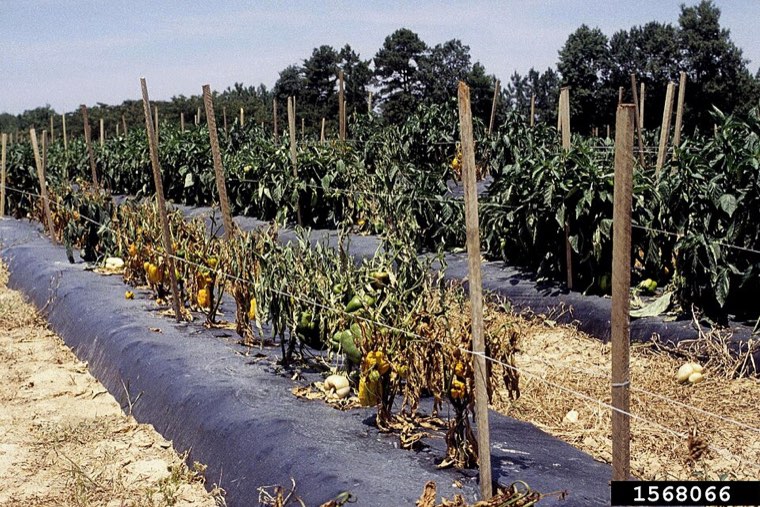
Phytophthora blight is caused by a water mould that rots the roots, crowns, stems, leaves and fruit of pepper and of squash, pumpkin, cucumber, melon and watermelon. Pepper plants wilt suddenly and die, often along wet, low parts of a field, and fruit rots under a white, powdery growth. The pathogen spreads with water and survives in soil for years, so a field once infested stays at risk.
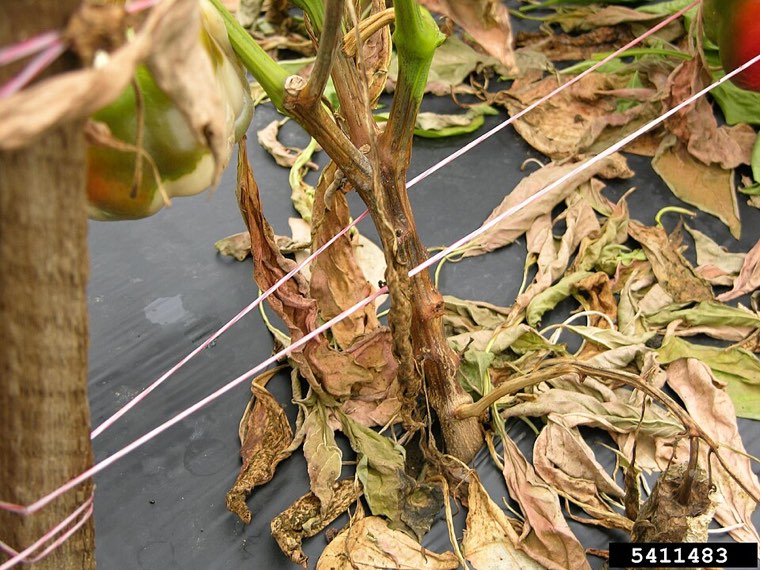
Phytophthora blight of pepper and cucurbits is caused by Phytophthora capsici Phytophthora capsici Leonian, 1922, an oomycete (water mould), not a true fungus (order Peronosporales, family Peronosporaceae).
First described from pepper in New Mexico in 1922; now found in vegetable-growing regions worldwide, especially under irrigation and in warm, rainy seasons.
| Region | Status |
|---|---|
| Americas | Widespread in pepper and cucurbits |
| East and South Asia | Widespread; major disease of pepper in Korea, China and India |
| Europe and the Mediterranean | Present |
| Africa and Oceania | Present |
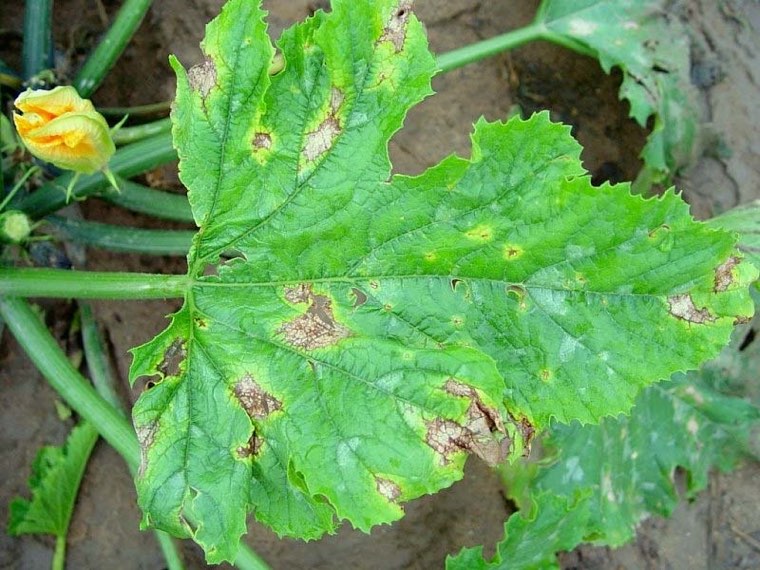
A water mould with lemon-shaped sporangia on long stalks that release swimming zoospores in water. It has two mating types (A1 and A2); where both meet, thick-walled oospores form that survive in soil for many years. Diagnosis is confirmed in the laboratory or with rapid test kits.
| Crop stage | What you see |
|---|---|
| Seedlings | Damping-off and collapse of seedlings in wet beds. |
| Pepper plants | Dark brown to black lesion girdling the stem at the soil line; sudden, permanent wilting and death of plants, often in patches or along rows where water stands; dark, water-soaked leaf spots after splashing rain. |
| Fruit | Water-soaked areas that become covered with white, powdery growth (sporangia); fruit shrivel and stay attached; on cucurbits the fruit rots with the same white growth, also in storage and transit. |
Oospores and infected debris in soil germinate when soil is saturated, producing sporangia that release zoospores. Zoospores swim in soil water to roots and crowns and are splashed onto leaves and fruit. Infected tissue produces new sporangia within days, which move with irrigation and rain water across a field and into ditches and ponds.
| Stage | Duration | Notes |
|---|---|---|
| Oospores and mycelium in soil | Years | Thick-walled resting spores. |
| Sporangia and zoospores | Hours after soil saturation | Swim in water films. |
| Infection and symptoms | About 3-5 days | Roots, crowns, leaves, fruit. |
| New sporangia | Repeated cycles | Spread by water and splash. |
Most severe at about 25-30 °C with heavy rain or irrigation that saturates soil; disease stops spreading in dry weather.
Many cycles in warm, wet periods.
Saturated soil, poor drainage and low spots, heavy rain or overirrigation, irrigation water from contaminated ponds or rivers, short rotations with pepper and cucurbits, and movement of infested soil on equipment.
There is no numeric threshold; because spread is rapid and the pathogen persists in soil, management is preventive in fields with a history of the disease.
Thresholds are local. They depend on crop price, control cost, variety and natural-enemy activity, so use the figure your local extension service publishes where one exists.
Plant deaths and fruit rot can destroy most of a pepper or cucurbit crop in wet seasons; infested fields are often taken out of pepper and cucurbit production for years.
Control works best as a sequence: prevent, monitor, then act only when a threshold or a risk forecast says so, using the least disruptive option that works.
Oomycete-specific fungicides, applied to soil or foliage before and during high-risk periods, reduce losses when combined with cultural measures. Resistance to some groups is common. What is registered differs by country and changes over time; follow the label and your local plant-protection authority.
| Scheme | Group | Mode of action | Notes |
|---|---|---|---|
| FRAC | 4 | Phenylamides | Resistance widespread in P. capsici; test local populations. |
| FRAC | 40 | Carboxylic acid amides (CAA) | Foliar and soil uses. |
| FRAC | 21 | Quinone inside inhibitors (QiI) | Foliar. |
| FRAC | 43 | Benzamides (pyridinylmethyl-benzamides) | Use in mixtures. |
| FRAC | 49 | Oxysterol binding protein inhibitors (OSBPI) | High resistance risk; use in mixtures. |
Pepper and cucurbits are the main hosts; tomato, eggplant, lima and snap beans and some weeds are also infected.
How to grow the crop well is the first line of defence. Laisha's free grow guides cover each crop from sowing to harvest:
Written by Laisha from the sources above, in its own words. This page is general reference, not a prescription: confirm identification locally and follow the label and your plant-protection authority.