 Laisha
AI Operating System for Agriculture
Ask Laisha
Laisha
AI Operating System for Agriculture
Ask Laisha
Verticillium dahliae Verticillium dahliae Kleb., 1913
Verticillium wilt is caused by a soil fungus that enters plant roots and blocks the water-conducting vessels. Leaves yellow between the veins and at the margins, often on one side of the plant or branch, then wilt and die, and the wood inside the stem turns brown. The fungus attacks hundreds of plants, including cotton, olive, potato, tomato, eggplant, pepper, strawberry, lettuce, sunflower and many trees, and its resting structures survive in soil for more than ten years.
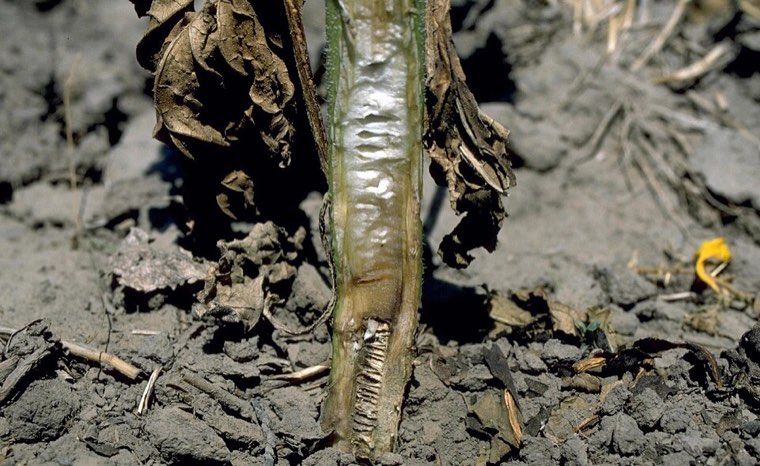
Verticillium wilt is caused by Verticillium dahliae Verticillium dahliae Kleb., 1913, a fungus (ascomycete, soil-borne) (order Glomerellales, family Plectosphaerellaceae).
Found worldwide, most damaging in temperate and Mediterranean climates and in irrigated subtropical regions.
| Region | Status |
|---|---|
| Europe and the Mediterranean | Widespread; major in olive and vegetables |
| Asia | Widespread; major in cotton in China and Central Asia |
| Americas | Widespread |
| Africa and Oceania | Present |
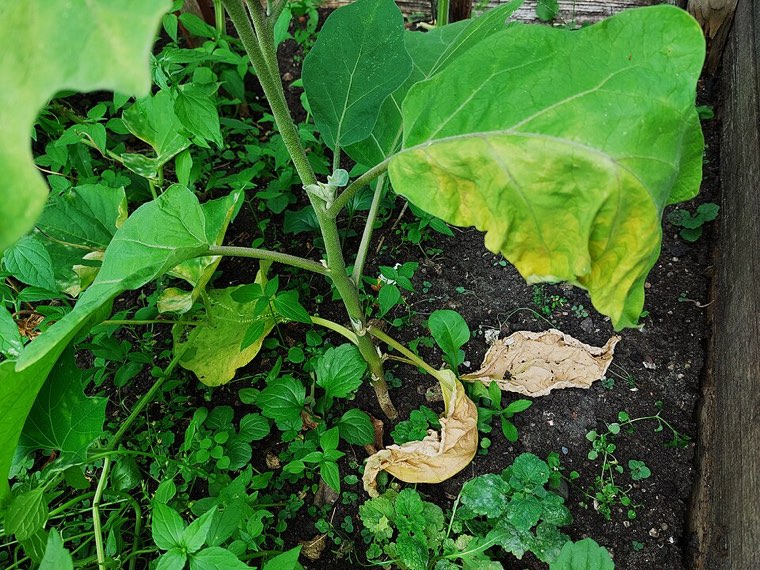
A soil fungus that forms tiny dark resting bodies (microsclerotia) in dying plant tissue; these return to the soil with crop residues and survive for many years. Strains differ in aggressiveness; in cotton and olive, 'defoliating' strains cause sudden leaf drop and are more damaging. Diagnosis is confirmed by laboratory isolation or PCR from stem tissue.
| Crop stage | What you see |
|---|---|
| Early symptoms | Yellowing between veins and at leaf margins of lower or older leaves, often on one side of the plant or one branch; V-shaped yellow patches. |
| Advanced symptoms | Wilting during the heat of the day, browning and death of leaves; in cotton and olive, leaf drop and dieback of shoots or branches. |
| Inside the stem | Brown streaks or discoloration in the water-conducting tissue when the lower stem or branch is cut. |
Microsclerotia in soil germinate when roots grow near them and infect the roots. The fungus grows into the xylem vessels and spreads upward with spores in the sap. As infected tissues die, new microsclerotia form and are returned to the soil with residues. The fungus also spreads in soil moved by tillage, water and equipment, and in infected planting material.
| Stage | Duration | Notes |
|---|---|---|
| Microsclerotia in soil | Survive 10 years or more | Main source of infection. |
| Root infection | During active root growth | Favoured by moderate soil temperatures. |
| Colonisation of the xylem | Weeks | Leads to wilt and vascular browning. |
| New microsclerotia in dead tissue | End of season | Builds up soil inoculum. |
Disease is most severe at moderate temperatures (about 20-25 °C) and is often suppressed during very hot weather.
Usually one cycle per crop season; soil inoculum builds up with each susceptible crop.
Repeated cropping with susceptible hosts, moderate temperatures, heavy irrigation and high nitrogen, root-knot and lesion nematodes, and planting olive or other trees in fields previously used for susceptible crops such as cotton or vegetables.
There is no economic threshold for treatment; some programmes test soil for microsclerotia before planting susceptible crops and use the results to choose fields and varieties.
Thresholds are local. They depend on crop price, control cost, variety and natural-enemy activity, so use the figure your local extension service publishes where one exists.
Losses vary from slight to severe; in cotton and olive, defoliating strains can cause heavy yield loss and tree death, and in strawberry, potato and lettuce it reduces yield and plant survival.
Control works best as a sequence: prevent, monitor, then act only when a threshold or a risk forecast says so, using the least disruptive option that works.
No fungicide cures infected plants; soil disinfestation is used in some high-value crops where permitted. What is registered differs by country and changes over time; follow the label and your local plant-protection authority.
Several hundred species, including cotton, olive, potato, tomato, eggplant, pepper, strawberry, lettuce, sunflower, cucurbits, mint, hop, pistachio, avocado, stone fruit and maple; cereals and grasses are not hosts. Verticillium longisporum, a related species, causes a similar disease of oilseed rape and other brassicas.
How to grow the crop well is the first line of defence. Laisha's free grow guides cover each crop from sowing to harvest:
Written by Laisha from the sources above, in its own words. This page is general reference, not a prescription: confirm identification locally and follow the label and your plant-protection authority.