 Laisha
AI Operating System for Agriculture
Ask Laisha
Laisha
AI Operating System for Agriculture
Ask Laisha
Polyphagotarsonemus latus Polyphagotarsonemus latus (Banks, 1904) · formerly or also: Hemitarsonemus latus
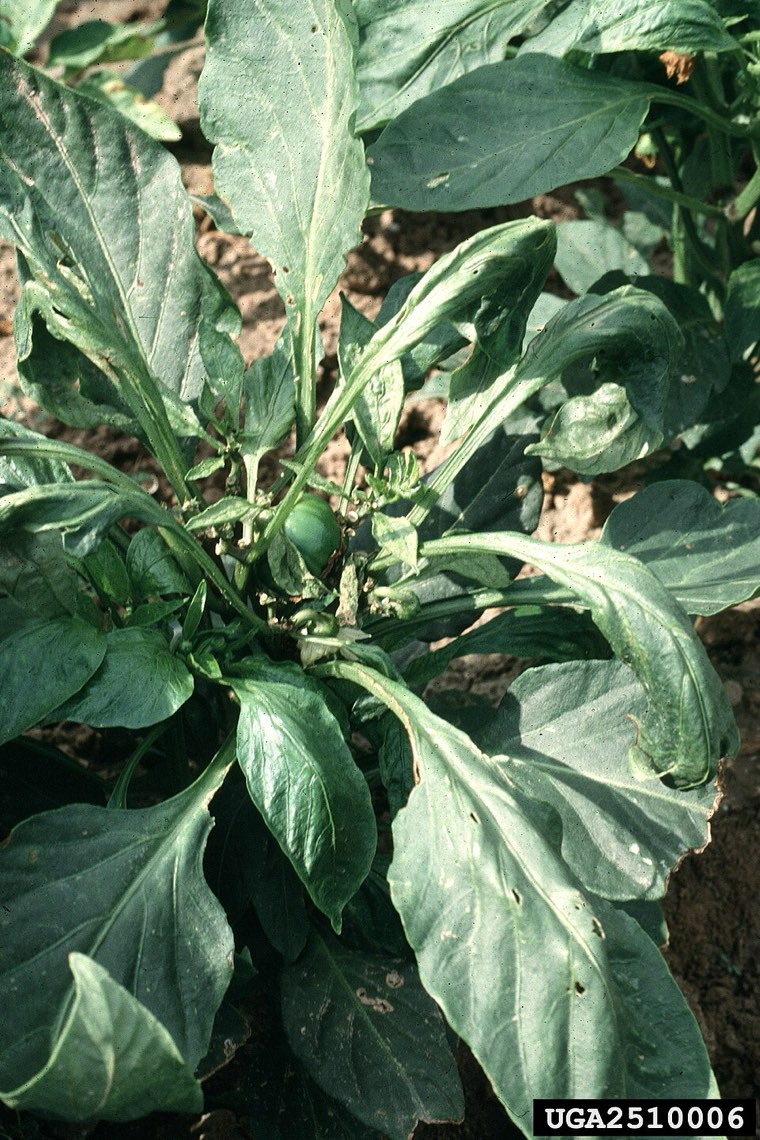
The broad mite is a tiny mite, invisible to the naked eye, that feeds on the youngest leaves, buds and fruit of chilli, pepper, tea, cotton, jute, citrus, beans, potato and many ornamentals. Its saliva is toxic, so a few mites cause leaves to curl down, narrow and harden, shoots to stop growing and fruit to become corky. Because the damage appears while the mites stay unseen, it is often mistaken for a virus, a nutrient problem or herbicide injury.
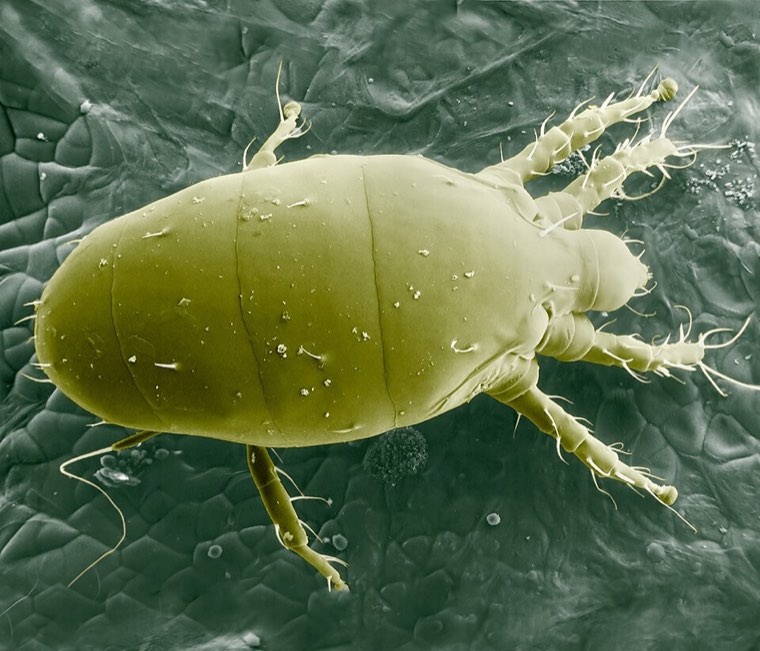
The scientific name of broad mite is Polyphagotarsonemus latus Polyphagotarsonemus latus (Banks, 1904), in the order Trombidiformes, family Tarsonemidae.
Older or alternative scientific names: Hemitarsonemus latus.
Found throughout the tropics and subtropics outdoors, and in greenhouses worldwide.
| Region | Status |
|---|---|
| Asia | Widespread; major pest of chilli, tea and jute |
| Africa | Widespread |
| Americas | Widespread outdoors in warm regions and in greenhouses |
| Europe and Oceania | Mainly in greenhouses; outdoors in warm areas |
Adult females are about 0.2 mm long, oval, translucent to pale yellow or green, often with a faint pale stripe; males are smaller and carry the quiescent female larvae to new leaves. The eggs are distinctive: oval, clear and covered in rows of white bumps, visible with a 20x lens or microscope.
| Crop stage | What you see |
|---|---|
| Young leaves | Leaves curl downward, become narrow, thick, leathery and brittle; undersides turn bronze or purplish; leaf edges roll down. |
| Shoots and flowers | Growing points stop, shoots become bunched and distorted; flowers drop or are deformed. |
| Fruit | Corky, russeted, cracked skin on pepper, citrus, papaya and eggplant fruit; small, deformed fruit. |
Eggs are laid singly on the undersides of young leaves and in buds. The larva feeds for a short time and then rests as a quiescent stage before becoming an adult. Males pick up quiescent female larvae and carry them to fresh growth. Unmated females produce only males. Mites also spread on wind, on people and tools, and by clinging to whiteflies and other insects.
| Stage | Duration | Notes |
|---|---|---|
| Egg | About 2-3 days | White-bumped eggs on new leaves. |
| Larva | About 1-3 days | Six legs; feeds slowly. |
| Quiescent larva | About 1 day | Often carried by males. |
| Adult | About 1-2 weeks | Females lay 30-75 eggs. |
Egg to adult takes only about 4-6 days at 25 °C. Populations grow fastest in warm, humid conditions and shaded, sheltered growth.
Many generations; continuous in the tropics and in greenhouses.
Warm, humid weather; shaded, dense canopies; continuous production of soft new growth; infested transplants or cuttings; and broad-spectrum insecticides that kill predatory mites.
There is no general numeric threshold, because toxic saliva causes damage at very low densities and mites are hard to count; treatment is based on the first symptoms or detection of mites on young leaves.
Thresholds are local. They depend on crop price, control cost, variety and natural-enemy activity, so use the figure your local extension service publishes where one exists.
In chilli and pepper, heavy attack stops growth and causes yield losses of 30-60% or more; in India, leaf curl ('murda') in chilli often results from broad mite and chilli thrips together. Russeted fruit lose market value in citrus and papaya, and tea and jute lose yield and quality.
Control works best as a sequence: prevent, monitor, then act only when a threshold or a risk forecast says so, using the least disruptive option that works.
Miticides should reach the youngest leaves and buds; insecticides that do not affect mites can make outbreaks worse by killing predators. What is registered differs by country and changes over time; follow the label and your local plant-protection authority.
| Scheme | Group | Mode of action | Notes |
|---|---|---|---|
| IRAC | 6 | Glutamate-gated chloride channel allosteric modulators | Translaminar. |
| IRAC | 23 | Inhibitors of acetyl CoA carboxylase | Acts on immature stages. |
| IRAC | 13 | Uncouplers of oxidative phosphorylation | Contact. |
| IRAC | 21A | Mitochondrial complex I electron transport inhibitors (METI acaricides) | Limit to one use per season. |
More than 60 plant families, including pepper, tea, cotton, jute, citrus, potato, eggplant, tomato, beans, cucurbits, papaya, mango and ornamentals such as gerbera, begonia and impatiens.
How to grow the crop well is the first line of defence. Laisha's free grow guides cover each crop from sowing to harvest:
Written by Laisha from the sources above, in its own words. This page is general reference, not a prescription: confirm identification locally and follow the label and your plant-protection authority.