LAISHA
Open Laisha

Is your polyhouse cooking the crop? Vents and pads

Short · · 50 s

Overheating is the number one greenhouse problem in warm climates. Give roof and side vents of about 15–30 % of the floor area; fan-and-pad cooling works best in dry heat (38 °C dry air → about 27 °C); in very hot climates add shade nets or use a net house. The full video covers structures, cooling, CO2, fertigation, pests and when a greenhouse pays.

Controlled-environment agriculture and vertical farms →

Subscribe on YouTube

Transcript

Is your polyhouse cooking the crop?

In warm climates, overheating is the number one greenhouse problem.

A cover lets sunlight in and holds the heat back. So give it vents: roof and side vents of about fifteen to thirty per cent of the floor area. Roof vents let the hottest air out.

Fan-and-pad cooling helps, but mostly in dry heat. At thirty-eight degrees in dry air, a good pad brings the air down to about twenty-seven.

On a humid day, you gain only about three degrees.

In a really hot climate, add shade nets, or choose a net house, which keeps insects out without trapping heat.

The full greenhouse basics guide is in our long video and at laisha.ai.

More videos

Chickpea Pod Borer and Ascochyta Blight: Scouting, Action Levels, IRAC and FRAC Groups

Video ·

Two problems decide whether a chickpea crop pays: the pod borer (Helicoverpa armigera, the cotton bollworm) and Ascochyta blight. This guide covers how the weather tells you which to scout for, recognising the pod borer at every stage, the beat-cloth count and action levels (about 1 larva per metre of row at podding in South Asian studies), control without a spray, resistance-wise spraying by IRAC group, Ascochyta blight symptoms (rings of black dots), how it survives on seed and stubble and spreads with rain, prevention and FRAC groups, and the look-alikes.

How to Grow Chickpea →

Mango Flowering Care: Dry-Season Trigger, Pruning, Pollinators, Mildew and Anthracnose

Video ·

In mango, the season is won or lost at flowering. This guide covers the dry-season flowering trigger and irrigation before bloom, out-of-season flowering, preparing the tree after harvest (pruning, sanitation, feeding), the flower cluster and its fly pollinators, alternate bearing and how to soften it, powdery mildew and anthracnose with FRAC groups and timing, mango hoppers and malformation, why trees flower but set few fruit, and spraying safely around bloom.

How to Grow Mango →

Climate-Smart Farming: Three Pillars, Practices That Work, and an Honest Look at the Numbers

Video ·

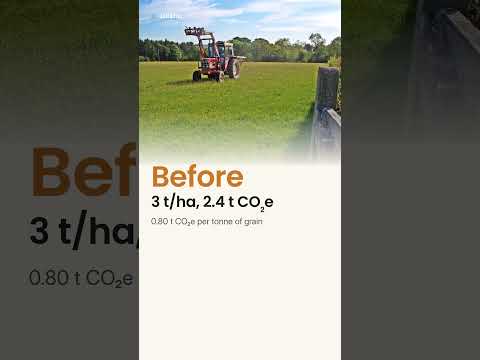
Farming is caught by climate change in both directions: it suffers from heat, drought and floods, and it emits greenhouse gases. This guide covers why farming and climate are linked (IPCC impacts, emission shares and on-farm sources), FAO's three pillars of climate-smart agriculture and why "where possible" matters, practices that adapt (stress-tolerant varieties, water management, climate information, diversification, index insurance), practices that cut emissions while often raising output (nitrogen efficiency, alternate wetting and drying, livestock feeding, manure management, less food waste, no deforestation), practices that serve all three goals (agroforestry, conservation agriculture, soil organic matter, grazing management), a worked emission-intensity example, and an honest look at the criticisms.

Climate-smart agriculture →

Mustard and Canola at Flowering: Mustard Aphid and Alternaria Blight (Scouting, IRAC, FRAC)

Video ·

A mustard or canola field in full flower faces two enemies at once: the mustard aphid and Alternaria blight. This guide covers why flowering is the danger window and why sowing date matters for both, how to recognise the mustard (turnip) aphid and its damage by crop stage, scouting the top 10 cm of the main shoot, natural enemies and field habits, bee-safe spraying by IRAC group, reading the target-ringed Alternaria spots, how the blight survives and spreads, breaking its cycle (seed, rotation, residue, FRAC groups, prompt harvest), and the look-alikes.

Mustard aphid (turnip aphid) →

Rust Diseases of Wheat: Yellow, Leaf and Stem Rust, Resistance, Scouting and FRAC Groups

Video ·

Yellow (stripe) rust, leaf (brown) rust and stem (black) rust are among the oldest and most destructive diseases of wheat, spread by wind-borne spores over hundreds to thousands of kilometres. This video shows how to tell the three apart by pustule, position and weather, then covers each in turn (Puccinia striiformis, Puccinia triticina, Puccinia graminis and the Ug99 race group), how rusts spread and survive (the repeating stage, the green bridge, barberry and meadow rue), resistant varieties and resistance genes (Sr, Lr, Yr; Lr34/Yr18/Sr57), field practices and scouting, fungicides by FRAC group (3, 11, 7) with resistance management and timing to protect the flag leaf, and spray safety.

Yellow rust of wheat (stripe rust) →

Fruit Fly Control: Oriental Fruit Fly, Medfly and Melon Fly (Traps, Sanitation, Baits, IRAC Groups)

Video ·

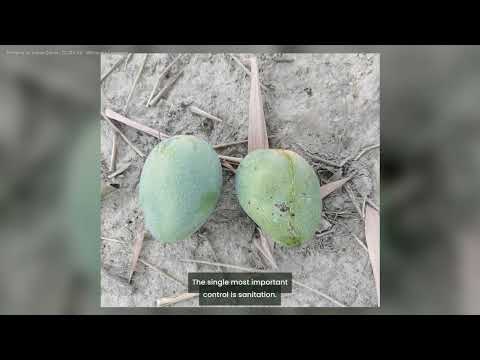
Fruit flies lay their eggs under the skin of ripening fruit, and one maggot makes a fruit unsaleable; for export the tolerance is zero. This video covers the three main species (oriental fruit fly Bactrocera dorsalis, Mediterranean fruit fly Ceratitis capitata, melon fly Zeugodacus cucurbitae) and look-alikes, the life cycle from fruit to soil, signs and reported losses, trapping with male lures and food baits, sanitation (the most important control), bagging, parasitoid wasps, weaver ants and the sterile insect technique, baits and insecticides by IRAC group (5, 3A, 1B) with resistance notes, post-harvest treatments for export, and safe use.

Oriental fruit fly →

Greenhouse Farming Basics: Structures, Cooling, CO2, Fertigation, Pests and When It Pays

Video ·

Greenhouses, polyhouses, net houses and tunnels can lift yields per square metre several times over and grow crops out of season, but only if the structure suits the climate. This video covers the types of structures (glasshouse, polyhouse, Chinese solar greenhouse, net house, tunnels and row covers) and anchoring against wind uplift, how a cover changes light and temperature, ventilation and cooling (vent area, fan capacity, the fan-and-pad sum, fog), humidity and CO2 enrichment, drip fertigation by EC and pH, the main crops, high-wire yields and pollination, pests under cover with insect-proof nets and biological control, working safely in a closed space, and when protected cultivation really pays.

Protected cultivation and greenhouses →

Tomato Early Blight (Alternaria): Symptoms, Look-Alikes, Prevention, FRAC Groups and Safety

Video ·

Early blight (Alternaria solani) makes dark brown target spots on the oldest leaves of tomato and potato and steadily cuts yield in warm regions; on tomato it also rots stems and fruit. This video covers the cause and where it survives, symptoms at each stage (collar rot, target-ring leaf spots, stem and fruit lesions, potato tubers), look-alikes (late blight, Septoria leaf spot, brown spot, and blossom-end rot, which is not a disease), the weather it loves, prevention (rotation, clean transplants, staking and mulch, balanced nutrition and water, dry foliage overnight, residue removal), scouting and forecasting (TOMCAST disease severity values and potato P-days), fungicides by FRAC group (M03, M05, 11, 7, 3, 9) with resistance management, and spray safety.

Early blight of potato and tomato →

Chilli Leaf Curl Virus: Symptoms, Whitefly Spread, Look-Alikes, Nursery Protection and IRAC Groups

Video ·

Chilli leaf curl is the most destructive virus disease of chilli in South Asia and important across Southeast Asia, the Middle East and parts of Africa. It is caused by whitefly-transmitted begomoviruses and has no cure. This video covers the cause and host range, symptoms at each stage (upward cupping, puckering, small leathery leaves, bushy stunted plants, flower drop), how the virus spreads and survives, look-alikes (chilli thrips, broad mites, herbicide drift), why the nursery decides everything (insect-proof net, symptom-free transplants), protecting the field (early roguing, weed hosts, host-free periods, barrier crops, reflective mulch, yellow sticky traps, natural enemies, tolerant lines), insecticides against the whitefly vector by IRAC group (4A, 23, 9B) with resistance management, and spray safety.

Chilli leaf curl disease →

Organic Farming: What Really Works (Fertility, Pests, Certification and Honest Yields)

Video ·

Organic farming is both a way of farming and a legally protected label, now on close to 100 million hectares worldwide. This video covers what really works: the roots and IFOAM's four principles, what organic standards generally prohibit and allow (and why the legal rules are each market's own regulation), the four sources of organic soil fertility with legumes first, a worked nitrogen budget for organic wheat after a clover ley, the prevention-first hierarchy for pests, diseases and weeds (and why permitted products such as copper are restricted), conversion periods and certification routes including grower groups and participatory guarantee systems, the honest numbers on yields, environment and premiums, and common myths.

Organic farming: principles, standards and certification →

Soil pH and Liming: Acid Soils, Aluminium Toxicity, Lime Materials and a Worked Lime Sum

Video ·

Soil pH controls which nutrients roots can reach, which elements become toxic and which microbes work, and acid soils cover roughly a third to a half of the world's potentially arable land. This video covers what pH means and how it is measured (water or calcium chloride), why soils turn acid (leaching, ammonium fertilisers, crop removal, acid sulphate soils), how pH controls phosphorus, micronutrients, molybdenum and aluminium toxicity, acid-loving and acid-sensitive crops, why buffering means a pH test alone cannot give a lime dose, liming materials compared by calcium carbonate equivalent and fineness (and why gypsum is not lime), a worked lime-requirement sum, good liming practice and overliming, safety with caustic materials, and lowering pH.

Soil pH, soil acidity and liming →

Citrus Greening (HLB): How to Recognise It and the Three Pillars of Management

Video ·

Citrus greening, or huanglongbing (HLB), is the most destructive citrus disease in the world, and it has no cure. This video explains the cause (phloem-limited Candidatus Liberibacter bacteria) and spread (Asian and African citrus psyllids, infected budwood, a long hidden period), how to recognise it (blotchy mottle and the fold test vs zinc or manganese deficiency, yellow shoots, small upright leaves, lopsided bitter fruit), how to scout the psyllid on new flush, and the three pillars of management: clean certified trees, area-wide psyllid control by IRAC group with natural enemies such as Tamarixia radiata, and prompt removal of infected trees.

Citrus greening (huanglongbing, HLB) →

Integrated Pest Management (IPM): Prevention, Thresholds, Biological Control and Safe Spraying

Video ·

Integrated pest management (IPM) combines biological, cultural, physical and chemical methods to keep pests below the level that causes economic harm, with the lowest risk to people and the environment. This video covers why calendar spraying failed (resistance, resurgence, secondary pests, residues and cost; the brown planthopper case in Asian rice), the idea behind IPM (prevent first, decide with information, least disruptive method), prevention (host plant resistance by antibiosis, antixenosis and tolerance; cultural practices; habitat management and push-pull; quarantine), monitoring and decision thresholds (economic injury level and action threshold, with a worked example), biological control (conservation, augmentation with Trichogramma, classical control with the vedalia beetle), biopesticides, pheromones and physical methods, chemical control by IRAC, FRAC and HRAC group only when justified, a full season of IPM in cabbage against the diamondback moth, farmer field schools, and pesticide safety.

Integrated pest management →

Mushroom Growing at Home: Oyster Mushrooms from Straw, Spawn, Fruiting, Green Mould and Profit

Video ·

Mushrooms turn farm wastes such as straw, sawdust, cotton waste and corn cobs into protein-rich food in a few weeks, on very little land and often indoors. This video covers what a mushroom is (the fruiting body of a mycelium; primary and secondary decomposers), which species to grow (button, oyster, shiitake, paddy straw and milky mushrooms, with substrates and fruiting temperatures), why oyster mushrooms suit beginners, preparing the substrate (pasteurising straw with hot water or steam, sterilising sawdust for shiitake, composting for button mushrooms), spawn and spawning rates, the spawn run, casing, fruiting triggers, flushes and harvest, green mould (Trichoderma) and other diseases and pests, hygiene, biological efficiency with a worked income example, and safety (never eat wild mushrooms unless identified by an expert).

Mushroom cultivation →

Cotton Pink Bollworm: Rosette Flowers, Boll Checks, Bt Resistance and Control

Video ·

The pink bollworm (Pectinophora gossypiella) hides inside cotton flowers and bolls, eating seeds and staining lint. It is resistant to Bt cotton in parts of Asia, and was eradicated in the United States and northern Mexico after decades of area-wide work. This video covers identification and life cycle, signs of damage (rosette flowers, internal boll damage, stained lint), how it carries over between seasons (resting larvae in seeds, bolls, stalks and gin trash), monitoring with pheromone traps and boll sampling, cultural control (timely sowing and crop termination, residue destruction, cotton-free periods, gin trash), mating disruption, Bt cotton with refuges, and insecticides by IRAC group (3A, 1B, 28, 5, 6, 22A).

Pink bollworm →

Banana Panama Disease (Fusarium Wilt TR4): Recognise It, Biosecurity and Containment

Video ·

Panama disease (Fusarium wilt of banana) destroyed the Gros Michel export trade, and its strain Tropical Race 4 (TR4) now attacks Cavendish across Asia, Australia, the Middle East, Africa and Latin America. There is no cure and no field fungicide, and the spores survive in soil for decades. This video explains how the fungus works (Fusarium oxysporum f. sp. cubense, races, chlamydospores), how to recognise it (yellowing from the leaf edges, the leaf "skirt", discoloured vascular strands inside the pseudostem) and tell it from bacterial wilts, how it spreads (planting material, soil, water), farm biosecurity (clean tissue-culture plants, one entry, boot and vehicle hygiene, water management), what to do if you suspect it (isolate and report; containment), and the tolerant and resistant varieties now available.

Fusarium wilt of banana (Panama disease, TR4) →

Seed Treatment Basics: Seed-Borne Disease, FRAC Groups, Trichoderma, Rhizobia and Safety

Video ·

Seed treatment protects the seed and the young seedling, or puts a helpful microbe on the seed before sowing. This video covers starting with good seed (clean, certified or tested, plump; never saving seed from a field with smut or bunt), what seed treatment is used against (seed-borne smuts and bunts such as Karnal bunt, damping-off by water moulds or true fungi, seedling downy mildews of maize and pearl millet, soil insects and aphid virus vectors), hot-water seed treatment, chemical seed treatments by mode-of-action group (FRAC 3, 4, 12, M03 and 1; IRAC 4A) and their limits, biological seed treatment with Trichoderma, Pseudomonas and Bacillus (with a worked spore-count example), inoculating legumes with the right rhizobia, the right order when combining chemicals and inoculants, formulation codes FS and WS, drill calibration with treated seed, and safe handling of treated seed.

Damping-off of seedlings →

Dairy Cow Nutrition Basics: Rumen, Ration, Minerals, Lactation, Dry Cows and Feeding Safety

Video ·

Feed is usually the largest single cost of producing milk. This video covers how a cow digests (the rumen, volatile fatty acids, microbial protein, rumination and saliva), what a ration must supply (dry matter intake, energy, protein, minerals, vitamins, fibre and water), forage and concentrate (legume and cereal fodders, straws, protein levels, and South Asian thumb rules as one regional example), balancing a feed with the Pearson square (worked example), minerals (common deficiencies, area-specific mixtures, calcium to phosphorus ratio, copper and sheep), feeding through lactation (the energy gap, reading cud, dung, condition and the milk test), the dry period and transition cow (body condition at calving, milk fever, ketosis), feeding when feed is short (urea-treated straw, urea-molasses blocks, fodder reserves) and safety (acidosis, urea toxicity, bloat, feed toxins).

Ration formulation and the Pearson square →

Powdery Mildew: Recognise It, Tell It from Downy Mildew, Prevent and Control It

Video ·

Powdery mildew is one of the most widespread plant diseases: cucurbits, cereals, grapes, peas, tomatoes, peppers, apples, mangoes and more. Unlike most leaf diseases it does not need rain. This video covers how to recognise it (white powder that rubs off; Leveillula taurica on tomato, pepper and onion), how to tell it from downy mildew, how it spreads and survives (host-specific species, wind-borne spores, chasmothecia, buds, volunteer cereals), prevention (resistant varieties such as mlo barley, nitrogen, light and airflow, greenhouse humidity, sanitation, scouting), and fungicides by FRAC group (sulphur M2, potassium bicarbonate, oils, biologicals such as Ampelomyces quisqualis; single-site groups 3, 7, 11, 13, 50, U6, 1) with resistance management.

Powdery mildew of cucurbits →

Poultry Diseases to Watch in Winter: Brooding, Ammonia, Newcastle, Avian Influenza and Biosecurity

Video ·

A poultry house holds thousands of birds sharing air, water and feed, and cold weather adds its own risks: chilled chicks, stale air and ammonia, wet litter, and viruses that survive longer in the cold. This video covers why management comes first, brooding in the cold (warm floors, temperatures, reading chick behaviour and crop fill), ventilation and ammonia, ascites, litter and coccidiosis, the respiratory diseases (infectious bronchitis, Mycoplasma, infectious laryngotracheitis, colibacillosis), Newcastle disease (including village eye-drop vaccination), avian influenza and wild birds, reading mortality records (a worked Gumboro example), biosecurity, why vaccines fail, and safety (zoonoses, reporting, antibiotics and withdrawal periods).

Major poultry diseases →

Weed Control in Wheat: Critical Period, HRAC Herbicide Groups, Resistance and Safe Spraying

Video ·

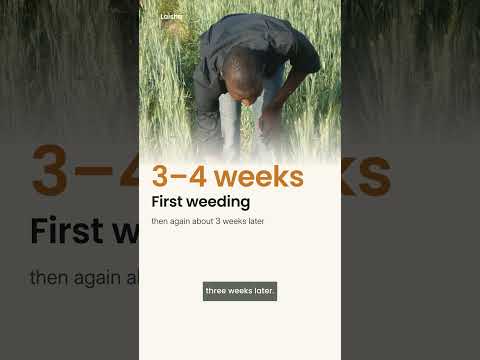
Weeds can take more yield than any other pest group, and in wheat the grass weeds that look like the crop do the most harm. This video covers the two groups of wheat weeds (grass weeds such as little seed canary grass, Phalaris minor, and wild oats; broadleaf weeds), the critical period of crop–weed competition (the first 6 to 8 weeks in wheat), cultural control (clean seed, plump seed, timely and even sowing, stale seedbed, rotation, a closed canopy), hand and hoe weeding at 3 to 4 weeks and again about 3 weeks later, herbicides by HRAC group with example active ingredients (group 1 ACCase inhibitors: clodinafop, fenoxaprop, pinoxaden; group 2 ALS inhibitors: metsulfuron; group 3: pendimethalin, pre-emergence; group 4 synthetic auxins: 2,4-D, MCPA; group 5: isoproturon), the safener cloquintocet-mexyl, label timing and dose, sprayer calibration and the dose sum, rotation restrictions, the Phalaris minor resistance story from north-west India, and safe spraying.

Herbicide selectivity and modes of action →

Maize Nutrient Deficiencies: Read the Leaves (N, P, K, S, Mg, Zn) and Confirm

Video ·

A maize plant shows what it is short of. The one rule that narrows the search (mobile nutrients show on old leaves, immobile ones on new leaves), the signs and causes of nitrogen, phosphorus, potassium, sulphur, magnesium and zinc deficiency, the look-alikes (herbicide injury, leaf diseases, genetic stripes, waterlogging, cold), and how to confirm with tissue and soil tests before you act.

How to Grow Maize →

Rice Brown Planthopper: Hopperburn, Why Outbreaks Happen, and How to Control It

Video ·

The brown planthopper (Nilaparvata lugens) is one of the most destructive insects of rice in Asia, and outbreaks are very often caused by the insecticides meant to stop them. How to recognise the insect, hopperburn and the grassy stunt and ragged stunt viruses, why outbreaks happen, scouting and action thresholds, the natural enemies that keep it down, crop management (resistant varieties, split nitrogen, alleys, alternate wetting and drying), and choosing insecticides by IRAC group while avoiding pyrethroids.

Brown planthopper →

Composting Done Right: The Mix, Moisture, Hot Phase and Fixing a Smelly Heap

Video ·

Composting turns farm waste into organic matter that improves soil structure, holds water and returns nutrients. How composting works (start-up, the hot phase at 55–65 °C, cooling, curing), the right mix of browns and greens (C:N about 25–30:1), moisture and aeration, the hot phase that kills weed seeds and pathogens, fixing smelly and cold heaps, what to keep out (including straw and manure carrying persistent herbicide residues), how to tell when compost is mature, and how to use compost and vermicompost safely.

Soil organic matter, humus and the C:N ratio →

Drip Irrigation Basics: Parts, Emitter Spacing, Run Time, Fertigation and Clogging

Video ·

Drip irrigation delivers water drop by drop to the root zone, with application efficiencies around 90% when well designed and run. The parts of a drip system from backflow preventer and filters to laterals, drip tape and flush valves, choosing emitters and spacing for sandy, loam and clay soils, working out run time from crop water use with a worked example, fertigation, preventing physical, chemical and biological clogging, the one-minute cup test for uniformity, and costs and returns.

Irrigation methods: surface, sprinkler and drip →

Whitefly in Vegetables: Identify, Keep Them Out, and Control by IRAC Group

Video ·

Whiteflies breed fast on tomato, chilli, aubergine, cucurbits and cotton, cover leaves with honeydew and sooty mould, and Bemisia tabaci spreads damaging viruses such as tomato yellow leaf curl. How to tell Bemisia tabaci from the greenhouse whitefly and recognise each life stage, the damage and viruses, scouting with yellow sticky cards and leaf checks, keeping them out with clean seedlings, netting and hygiene, the natural enemies that control them, and choosing insecticides by IRAC group with rotation against resistance.

Silverleaf whitefly (Bemisia whitefly) →

Soil Testing: How to Take a Soil Sample and Read the Report (Save on Fertiliser)

Video ·

A soil test replaces fertiliser guesswork with a measurement. When to sample, how to divide the farm into uniform areas, how to take a representative sample, labelling and choosing an accredited laboratory, how to read the report (pH, lime requirement, EC, phosphorus and potassium, extraction methods, organic carbon, why nitrogen is different), and how to turn it into a fertiliser plan, including grid and zone sampling.

Soil testing and fertiliser recommendation →

Potato Late Blight: How to Recognise It, Prevent It and Control It by FRAC Group

Video ·

Late blight (Phytophthora infestans) caused the Irish potato famine and is still one of the most damaging diseases of potato and tomato worldwide. How to recognise it on leaves, stems, tubers and fruit, tell it from early blight, read blight weather, find where infection comes from, prevent it, choose fungicides by FRAC group with resistance management, and protect tubers at harvest and in store.

Late blight of potato and tomato →

Aphids: How to Identify Them and Control Them by IRAC Group (Without Making It Worse)

Video ·

Aphids are on almost every crop in the world. How to recognise an aphid in seconds, tell it from whiteflies, mealybugs and thrips, why colonies double in days, the three kinds of damage including virus transmission, scouting and action thresholds, the natural enemies that control aphids for free, cultural control before spraying, and choosing insecticides by IRAC group to slow resistance.

Aphids: biology, virus spread and control →

How to Sow Wheat: Sowing Date, Seed Rate Formula, Depth & the First 3 Weeks

Video ·

Most of a wheat crop's yield is decided in its first few weeks. This step-by-step guide covers the sowing window for winter and spring wheat, seedbed or zero-till drilling, seed testing and treatment, the seed rate formula with a worked example, sowing depth and spacing, phosphorus and split nitrogen, the first irrigation, weed control from sowing day, and how to count plants three weeks later.

How to Grow Wheat →

Ask Laisha about this

Opens Laisha's chat with your question ready to send. Sign in or start free.

Go further with Laisha Smarter

US$10 (approx. ₹960) a month · one price worldwide · cancel any time

  • Ask Laisha about what you watched — up to 1,000 questions a month
  • Your own crop calendar and pest alerts
  • Every calculator and tool
10 days free for every new account, no card.