Organic farming is two things at once. It is a way of farming that relies on ecological processes,
biodiversity and natural cycles, instead of synthetic fertilisers,
synthetic pesticides and genetically modified organisms.
And it is a legally protected label: in most major markets, food can only be sold as organic if it was produced to a defined standard and checked by an approved body.
It is practised in almost every country.
Close to one hundred million hectares were managed organically in twenty twenty-two, about two per cent of the world's farmland, by more than four million producers.
Much of that area is extensive grazing land, especially in Australia, while the largest numbers of organic farmers are in Asia and Africa.
In this video: the principles, what the standards allow and forbid, what really builds fertility, a worked nitrogen budget, how organic farms handle pests and weeds, conversion and certification,
the honest numbers on yield, and common myths.
The advice is general and global.
Your certification body's standard always comes first.
Organic farming grew out of several movements of the early twentieth century:
Rudolf Steiner's biodynamic agriculture in nineteen twenty-four,
Albert Howard's work on composting and soil health, drawing on his years in India, and the soil-centred ideas of Eve Balfour and J.
I. Rodale.
The international federation of organic movements, IFOAM, was founded in nineteen seventy-two.
IFOAM sets out four principles.
Health: sustain the health of soil, plants, animals, people and the planet as one.
Ecology: work with living systems and cycles.
Fairness: build fair relationships, with each other and with the environment.
And care: manage in a precautionary and responsible way, for this generation and the next.
Details differ between standards, but the core rules are similar worldwide.
Generally prohibited are synthetic nitrogen and soluble phosphate and potash
fertilisers, synthetic pesticides and herbicides,
genetically modified organisms, growth regulators,
and routine antibiotics for livestock.
Generally allowed are manure, compost, green manures, legumes, rock phosphate and some mined minerals.
For pests and diseases, a short list of natural or traditional products is permitted, such as sulphur, copper with restrictions,
Bt, some botanicals and soaps.
Sick animals can still be treated by a veterinarian,
but with longer withdrawal periods before milk or meat is sold.
Livestock standards also add organic feed, outdoor access, space allowances and animal welfare.
The international reference points are the Codex Alimentarius guidelines and
the IFOAM standards. But what applies legally is each market's own regulation,
in the European Union, the United States, Japan, India and elsewhere.
Countries sign equivalence agreements, so produce certified under one system can be sold as organic in another.
So what really works? Start with the soil, because organic fertility comes mainly from four sources.
First, and most important, legumes.
Grown in rotations, as green manures and as cover crops,
legumes supply most of the nitrogen in many organic systems.
Second, manure and compost, recycled from livestock and crop residues.
Third, diverse rotations, with grass and clover leys, deep-rooted crops and cover crops.
And fourth, permitted mineral amendments, such as lime, rock phosphate and gypsum, guided by soil tests.
Notice what is missing: there is no bag of soluble nitrogen to fix a hungry crop in a week.
Organic fertility has to be planned a season or two ahead.
Here is why legumes matter so much.
Laisha's worked example is an organic wheat crop that needs about one hundred and twenty kilograms of available nitrogen per hectare for its target yield.
The previous crop was a two-year clover ley, which local trials show supplies about seventy kilograms. So the farmer must find the other fifty, with compost containing one point two per cent nitrogen, of which only about fifteen per cent becomes available in the first year.
One tonne of that compost holds twelve kilograms of nitrogen,
but only one point eight kilograms of it is available this year.
Fifty divided by one point eight is about twenty-eight tonnes of compost per hectare. That is a lot to make, haul and spread.
It is why organic systems lean so heavily on legumes. The rest of the compost's nitrogen is not wasted. It is released slowly over later years, building soil organic matter, and its phosphorus and potassium count in the budget too.
For pests, diseases and weeds, organic farming works down a hierarchy,
and prevention comes first.
Rotation, resistant varieties, sowing dates,
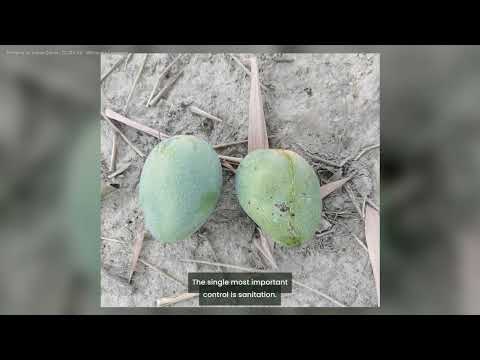
spacing and sanitation do most of the work.
Next comes habitat for natural enemies, such as flower strips and hedges, plus biological control agents and pheromone traps.
Weeds are managed with mechanical and thermal weeding, mulches, and competitive crops that shade them out.
Only then come permitted products, and even these are restricted.
In the European Union, for example, copper is limited to an average of four kilograms per hectare per year, because copper builds up in soil.
If you use any permitted product, check that your standard lists it, and follow the label.
Natural does not mean harmless: wear the protection the label asks for, and respect the pre-harvest interval.
A farm cannot become organic overnight.
It must go through a conversion period, farmed to organic standards but without selling its produce as organic.
Usually that is about two years before sowing for annual crops and grassland,
and about three years before harvest for perennial crops.
In the United States, land must have had no prohibited substances for three years before harvest.
The standard route is third-party certification.
An accredited body inspects the farm at least once a year, reviews records of inputs, sales and field history, and may take samples. So keep records from day one.
Smallholders often certify together, as grower groups with an internal control system, which cuts the cost.
Participatory guarantee systems are a local alternative,
in which farmers, consumers and others check each other's farms.
They are cheaper and suit local markets, and several countries recognise them for domestic sales, though usually not for export.
Now, the honest numbers.
Large analyses found organic yields about nineteen to twenty-five per cent lower on average than conventional yields, with wide variation.
The gap is smaller for legumes and perennials, and under good management with diverse rotations. It is larger for cereals and some vegetables, often because nitrogen supply limits growth.
For the environment, organic farms generally have more biodiversity and higher soil organic matter, and use no synthetic pesticides.
But per kilogram of food, lower yields can mean that land use,
and sometimes nitrogen losses and greenhouse gas emissions, are similar or higher.
And the money?
Price premiums often make organic farming profitable despite lower yields and more labour. But premiums depend on your market and on the cost of certification, so find your buyers before you convert.
A few myths to clear up. Is organic food free of residues?
Not always.
Drift, contaminated soil and permitted products can leave traces,
although surveys generally find synthetic pesticide residues much less often in organic produce.
Can organic farmers use any natural pesticide?
No. Only products on their standard's permitted list,
and generally only when prevention is not enough.
Can a farm be partly organic?
Many standards allow organic and non-organic units on one farm, if they are clearly separated and recorded. Some restrict growing the same crop both ways, to avoid mixing.
To recap.
Organic is both a farming system and a legally protected label.
Fertility comes from legumes first, then manure, compost, rotations and permitted minerals, planned ahead.
A worked budget shows why: replacing a clover ley with compost can take nearly thirty tonnes per hectare.
Pest control runs from prevention to natural enemies to permitted products, used by the label. Conversion takes about two to three years, with yearly inspection and good records. Expect lower yields in cereals, smaller gaps in legumes and perennials, and secure your market first.
For grow guides, the pest and disease encyclopedia,
and more explainers, visit laisha.ai. Thank you for watching.