A mustard or canola field in full flower is the most valuable it will ever be. It is also the moment two enemies arrive together:
the mustard aphid, packed on the flowering shoot tips, and Alternaria blight, the dark ringed spots on leaves and pods.
In this video: why flowering is the danger window, how to recognise the mustard aphid, how to scout it in two minutes per plant, the natural enemies and field habits that keep it down, spraying without harming bees, how to read Alternaria spots,
how the disease survives and spreads, how to break its cycle, and the look-alikes. The advice is general and global.
Your local extension service and the product label always come first.
Rapeseed and mustard are cool-season oilseed crops, from Canada and Europe to Australia and the plains of South Asia.
Laisha's mustard guide puts it simply: the field turns yellow for several weeks, and that is when the crop is most valuable, most visited by bees, and most vulnerable.
Both enemies love the same weather.
Mustard aphids build up fastest at about fifteen to twenty-five degrees, in cool, cloudy, humid spells.
Alternaria blight needs long hours of leaf wetness from rain, dew or fog.
And both hit late-sown crops hardest, because a late crop meets that weather right at flowering and podding.
So the first control for both is not a spray. It is the sowing date. Sow within your local recommended window, so flowering is largely over before aphid numbers peak.
The mustard aphid, also called the turnip aphid, is small: about one and a half to two and a half millimetres long. It is olive to greyish green, with a light dusting of white wax and darker bands on the back.
Winged adults have a dark head and thorax.
Colonies are almost all female, and they give birth to live young without mating.
In the cool season, a new generation takes only about a week to ten days. That is why a few aphids on the shoot tip can become a grey-green sleeve around the whole flowering stem within a couple of weeks.
The damage follows the crop's stages.
On young plants, colonies sit under the leaves and the leaves curl and yellow. At flowering, dense colonies cover the flower stalks and buds, flowers drop, and the flowering shoot stops growing. At podding, pods stay small and shrivelled with few seeds, under sticky honeydew and black sooty mould. In a two-season field study of unprotected Indian mustard, the avoidable seed loss was about twenty-six per cent, and late-sown crops lose more.
Aphids that settle on the flowering tip of the main shoot do the most damage. So that is where you look.
From the time flower buds form, walk the field twice a week. Check the top ten centimetres of the main shoot on a set number of plants,
and count aphids, or count how many plants are infested. Check several places across the field, not just the edge. Write down the count, the date and the weather, because outbreaks follow cool, cloudy, humid spells.
There is no single international threshold for this pest. Programmes in South Asia use action levels based on aphids per shoot tip, or on the share of infested plants, and these differ from region to region.
Ask your local extension service for the number that applies where you farm, and act on counts, not on fear.
While you count aphids, count their enemies too.
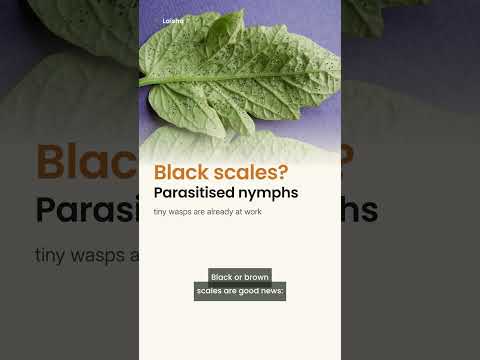
Ladybirds and their larvae, hoverfly larvae, and lacewings eat aphids. A tiny parasitic wasp lays its eggs inside aphids, so parasitised aphids are a good sign.
And in humid weather, insect-killing fungi can collapse a colony.
A field full of these may not need a spray at all.
Field habits matter just as much. Use balanced fertiliser and avoid too much nitrogen, which makes soft, lush growth that aphids love.
Grow early-flowering varieties where you can get them. Avoid sowing next to late-sown fields, which become heavily infested and send winged aphids across.
And on small plots, cut and destroy the heavily infested shoot tips early in the outbreak.
When your counts do reach the local action level around flowering,
the groups listed in Laisha's encyclopedia are IRAC group four A, the neonicotinoids, which are toxic to bees,
so avoid them in full bloom; group nine B, a feeding inhibitor;
and group twenty-nine, a selective group.
Spray in the afternoon, when bees are less active.
Rotate between groups, and never spray on a calendar just in case:
routine broad sprays kill the ladybirds and wasps, and the aphids bounce back faster than their enemies.
Use only a product registered for your crop in your country, at the label dose, with gloves and eye protection.
Now the second enemy.
Alternaria blight starts as small dark spots on the older, lower leaves.
They grow into round brown to black lesions with rings inside them, like a target, often with a yellow halo.
In humid weather, the spots look sooty with spores.
Later, the disease climbs.
Dark, elongated lesions appear on stems, and dark spots on the pods.
Infected pods ripen early, shatter, and carry small, shrivelled seed, so both yield and oil content fall. On cabbage, cauliflower and broccoli, the same spots on heads and curds make them unmarketable.
Two related fungi cause it. One is favoured by cooler weather, about eighteen to twenty-four degrees,
and matters most on oilseed mustard and rapeseed. The other prefers warmer weather, about twenty-five to thirty degrees,
and matters most on vegetable brassicas.
The fungus survives between crops on infected seed, on crop residue, and on wild plants of the cabbage family along field margins.
Seed carries it over long distances.
In the field, spores form mostly at night after warm, humid days, and the next day wind and splashing rain carry them to new leaves.
New spots produce their own spores within about five to ten days,
so one wet week can start several cycles in a season.
And infected pods give infected seed, which carries the disease into next year's crop.
So break the cycle at every point.
Start with healthy, treated seed.
Rotate with crops outside the cabbage family,
and remove or bury the residues.
Sow on time, because late-sown crops meet the humid weather at the stage this disease attacks.
Control cruciferous weeds, avoid overhead irrigation late in the day,
and on small plots remove infected lower leaves.
There is no numeric threshold for Alternaria. Protection begins when the first spots appear on a susceptible crop in humid weather, following local advice.
The groups in Laisha's encyclopedia are FRAC M three, the dithiocarbamates, a multi-site protectant; group three, the demethylation inhibitors; group seven, usually in mixtures; and group eleven, which carries a resistance risk, so use it in mixtures.
Alternate and mix the groups, and always use a registered product at the label dose.
At the end of the season, harvest promptly when the pods turn, before they open.
Infected pods shatter even faster.
Then dry the seed well, because oilseed spoils faster than grain.
Not every grey insect or dark spot is what it seems.
Cabbage aphids are grey and covered with thick white wax, in mealy colonies mostly on the leaves.
Green peach aphids are pale green to pink, without wax, and scattered.
For spots, white rust forms raised white blisters under the leaves and swollen, bent flowering shoots.
Blackleg shows pale lesions with tiny black dots and cankers at the stem base.
And black rot makes yellow, V-shaped patches from the leaf edge, with blackened veins.
Only Alternaria gives dark spots with target rings.
To recap.
Sow in your local window, so flowering escapes the cool, humid weather both enemies love.
From bud formation, check the top ten centimetres of the main shoot twice a week, across the field.
Count the ladybirds, hoverflies and parasitised aphids too,
and act only at your local action level. If you spray aphids, avoid group four A in full bloom, and spray in the afternoon.
For Alternaria, use clean seed, rotation and residue burial, protect from the first spots in humid weather by FRAC group,
and harvest as soon as the pods turn.
For the full guides and the pest and disease encyclopedia, visit laisha.ai.
And before you go: Laisha Lens number one is out, our free guide to November, for every climate zone on Earth.
North of the equator, the cool-season crops go in:
winter wheat and garlic in the temperate north,
wheat, barley and lentil on the autumn rains of the Mediterranean,
and on the plains of South Asia the whole rabi season,
wheat, mustard, chickpea and potato.
South of the equator it is spring, and the tropical south sows soybean, maize, cotton and rice on the first rains.
Lens also covers crop residue without fire, the pests worth walking the field for, and a study plan for agri students.
Open My farm's November, choose your zone and up to three crops, and it builds your field jobs, week by week, with the pests to scout for. It is free, and needs no account. Our free November Lens, with your farm's month plan, is on laisha.ai slash lens.
From all of us at Laisha: may your fields do well this season. Thank you for watching.