Some moulds that grow on crops make poisons.
These mycotoxins are invisible, mostly tasteless, and they survive cooking.
They can be present in grain that looks almost clean.
They harm people and livestock, from acute poisoning to cancer and stunted growth in children, and they cost farmers money when contaminated harvests are rejected.
In this video: the main mycotoxins and the crops they hit, why the field and the store both matter, the conditions that raise the risk, the limits buyers test for and why testing is tricky, how toxins in feed reach milk, and what actually prevents them, from the field to the store. The advice is general and global; your local food-safety rules come first.
Mycotoxins are made by fungi, mainly four groups:
Aspergillus, Fusarium, Penicillium and Claviceps.
A crop can be infected without containing toxin,
and toxin can remain after the fungus has died.
The best known is aflatoxin, made mainly by Aspergillus flavus and a close relative, in maize, groundnuts, tree nuts, spices and cottonseed, especially in warm climates. Aflatoxin B one is the most potent natural liver carcinogen known,
classified by the International Agency for Research on Cancer as causing cancer in humans, and the risk is multiplied in people with chronic hepatitis B.
High doses cause acute poisoning: outbreaks in East Africa in the two thousands killed scores of people. And chronic exposure has been linked to stunting in children.
Fusarium moulds make other toxins.
Fumonisins in maize cause fatal brain disease in horses and lung disease in pigs.
DON, also called vomitoxin, comes with head blight in wheat and barley and ear rot in maize, and causes vomiting and feed refusal, especially in pigs.
Zearalenone causes reproductive problems in pigs.
Ochratoxin, in stored cereals, coffee, cocoa and dried fruit, damages the kidneys.
And ergot replaces rye and grass grains with dark, hard bodies; in the Middle Ages it caused epidemics of gangrene and convulsions.
Fungi are often split into field fungi, which infect before harvest, like Fusarium and ergot, and storage fungi, which grow after harvest, like Aspergillus and Penicillium. But the split is not strict: the aflatoxin mould also infects maize and groundnuts in the field.
The aflatoxin mould lives in soil and crop residues.
Its airborne spores reach maize silks and groundnut pods,
and infection rises sharply when the crop suffers heat and drought during grain or pod filling, at around thirty to thirty-five degrees,
and when insects damage kernels or pods. In storage, toxin production is high at about twenty-five to thirty-five degrees when grain moisture is above about thirteen to fourteen per cent.
So the risk factors are: drought and heat at flowering and grain fill;
insect damage from ear borers, pod borers, weevils and termites;
wet weather at flowering, which favours head blight in wheat and barley;
late harvest, lodging, and leaving the crop in the field to dry;
and then slow drying, damp storage, damaged kernels and condensation in the store.
At maturity, the aflatoxin mould may show as an olive-green to yellow-green powdery growth on and between kernels, often at the ear tip or around insect damage. But usually there is nothing to see while it infects, and contamination can rise in storage without visible mould. Aflatoxin itself is detected only by a laboratory or a rapid test kit, never by eye.
Other ear rots look different, and they make different toxins.
Fusarium ear rot is white to pink mould on scattered kernels,
often with starburst streaks, and it makes fumonisins.
Gibberella ear rot is pink to red mould from the ear tip, with DON and zearalenone.
Penicillium ear rot is a blue-green powder between kernels,
usually on damaged ears.
Any mouldy grain is a warning sign.
Countries set maximum levels for food and feed,
and the Codex Alimentarius sets international standards used in trade.
Examples of Codex levels are fifteen micrograms per kilogram of total aflatoxins in groundnuts meant for further processing,
ten in ready-to-eat almonds, hazelnuts and pistachios,
and zero point five micrograms per kilogram of aflatoxin M one in milk. Some markets set much lower limits, which matters for exporters.
Testing is tricky because the toxin is unevenly spread.
A few highly contaminated kernels can hold most of the toxin in a whole lot. So a small sample can miss it completely, or hit it hard. That is why official sampling plans combine many small samples, then grind and sub-sample them. Rapid test strips and test kits screen lots;
laboratory chromatography confirms.
When dairy animals eat aflatoxin B one, part of it comes out in milk as aflatoxin M one. Here is a worked example from Laisha's guide.
A cow eats ten kilograms of feed a day containing twenty micrograms per kilogram of aflatoxin B one, and gives twenty-five litres of milk. So she eats two hundred micrograms a day. Typical carry-over into milk is about one to three per cent; take two per cent. That is four micrograms a day in the milk.
Divided by twenty-five litres, it is about zero point one six micrograms per kilogram.
That is below the Codex level of zero point five, but three times a stricter limit of zero point zero five used in some markets.
Feed quality controls milk safety. And mouldy grain is not safe for animals either:
livestock are affected by many mycotoxins, often more than people,
and toxins can pass into milk, eggs and meat. Do not feed mouldy grain without testing.
Prevention throughout the chain works far better than trying to remove toxins later.
It starts in the field.
Plant adapted, drought-tolerant varieties at the right time, so grain fill avoids drought, and irrigate during flowering and grain or pod filling where you can.
Control the insects that damage ears and pods, and the termites.
Good husk cover in maize helps. Against Fusarium, rotate crops and manage residues.
And there is a clever biological tool.
Some strains of the aflatoxin mould make no aflatoxin at all.
Applied to fields before flowering, these atoxigenic strains outcompete the toxin-producing ones. In many trials in Africa and the Americas, they have cut aflatoxin in maize and groundnuts by about eighty to ninety per cent, and products based on locally adapted strains are registered in several countries.
By contrast, fungicides do not prevent aflatoxin effectively.
At harvest, pick at maturity, promptly, and avoid damaging the grain.
Then dry it quickly to safe moisture: about thirteen per cent or lower for maize, and about eight per cent for groundnut kernels. Dry on clean tarpaulins, never on bare soil.
Sort out mouldy, damaged, discoloured and shrivelled grain and pods, by hand or by machine.
Because so much of the toxin sits in a small fraction of the grain,
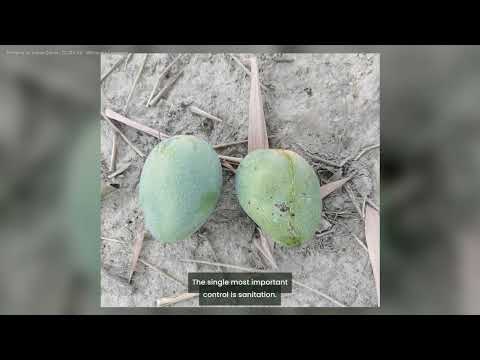
sorting removes a large share of it. Then store dry, cool and clean, protected from insects. Hermetic bags and silos stop insect damage and mould growth in store.
And do not count on the kitchen.
Ordinary cooking does not destroy most mycotoxins,
and roasting groundnuts reduces aflatoxin only partly.
Some processing, such as cleaning, dehulling, and the traditional lime cooking of maize, reduces some toxins.
Contaminated lots may be diverted to safer uses where permitted, but blending to dilute is prohibited for food in many jurisdictions.
In animal feed, clay binders and enzyme products can reduce the absorption of some toxins.
To recap.
Mycotoxins are invisible, tasteless, and survive cooking.
Aflatoxin, in maize, groundnuts and nuts, causes liver cancer and stunting, and passes into milk.
Risk rises with drought and heat at grain fill, insect damage, late harvest, and damp, warm storage.
You cannot see aflatoxin: test, with a proper sampling plan. Prevent it with adapted varieties, irrigation at grain fill, insect control and atoxigenic biocontrol, then harvest promptly,
dry fast to thirteen per cent for maize and eight for groundnut kernels,
sort out damaged grain, and store dry and sealed.
For the full mycotoxin guide, visit laisha.ai.
And before you go: Laisha Lens number one is out, our free guide to November, for every climate zone on Earth.
North of the equator, the cool-season crops go in:
winter wheat and garlic in the temperate north,
wheat, barley and lentil on the autumn rains of the Mediterranean,
and on the plains of South Asia the whole rabi season,
wheat, mustard, chickpea and potato.
South of the equator it is spring, and the tropical south sows soybean, maize, cotton and rice on the first rains.
Lens also covers crop residue without fire, the pests worth walking the field for, and a study plan for agri students.
Open My farm's November, choose your zone and up to three crops, and it builds your field jobs, week by week, with the pests to scout for. It is free, and needs no account. Our free November Lens, with your farm's month plan, is on laisha.ai slash lens.
From all of us at Laisha: may your fields do well this season. Thank you for watching.