December is the turn of the year. North of the equator it is winter, and almost everything is already in the ground: winter wheat, barley, canola and garlic sit through the cold in the temperate north, and the Mediterranean finishes its autumn sowing. On the plains of South Asia the rabi crops are in their second month, wheat, mustard, chickpea and potato, and the nights are cold. South of the equator it is summer. The temperate and Mediterranean south harvest their winter grains, wheat, barley, canola and chickpea, while the tropical south sows soybean, maize, cotton and rice in the wet season.
This issue follows the same pattern as the last. Start with the page for your climate zone, then the pest watch for what to walk the field for. Three features go deeper: Cold nights, on frost, chilling and the winter crop; Winter livestock care, on parasites, vaccines and the feed gap; and The southern harvest: dry it, store it, keep it. You will also find worked examples, printable checklists and a study plan.
New this month is a world commodity price snapshot. Its figures come from the World Bank Pink Sheet, the European Commission's agri-food data portal, India's Agmarknet through data.gov.in and the European Central Bank's exchange rates. They are the only prices in this issue, and each one carries its source and date. They describe world and wholesale markets, not your farm gate; for local prices, your nearest market is the place to ask.
Then open My farm's December at laisha.ai, choose your zone and up to three crops, and it builds this month's checklist for your own fields. It is free and needs no account.
Six broad climate zones, three north of the equator and three south, from Laisha's farming calendar. Inside every zone the real dates move with latitude, altitude, rainfall, irrigation and variety, sometimes by a month or more; your national crop calendar or extension service decides. Find your zone, then turn to its two pages.
Europe, North America, northern China, Korea and Japan, Central Asia
Winter: wheat, barley, canola and garlic are in the ground and nothing is sown or harvested. The watch is on aphids, including bird cherry-oat and Russian wheat aphid, powdery mildew and rusts, and sunn pest where it occurs.
Cold winters and a frost-free summer: most field crops are sown in spring and harvested by autumn; winter cereals and rapeseed are sown in autumn.
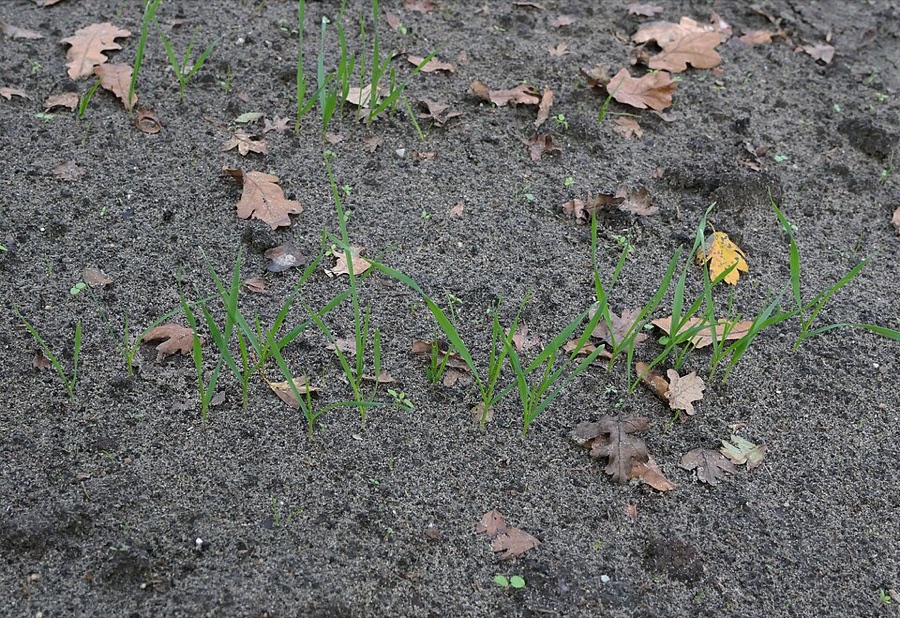
Young wheat coming up evenly. This is what a good, even stand looks like a couple of weeks after sowing.
Sow and plant now
Nothing in the main calendar this month.
Growing: manage and protect
Wheat (winter wheat)· month 4 of about 10: water. Wheat needs the least water of the big grain crops. But there are three moments it must not be dry.Cool weather while it grows, and dry weather while it ripens.
Barley (winter barley)· month 4 of about 10: water. Barley fears wet feet more than drought, but it needs reliable moisture at two real moments: stem extension and grain fill. Wet weather right at flowering is also when Fusarium head blight gets its chance.A cool growing season, well-drained soil that is not strongly acid, and nitrogen applied in the right amount at the right time — too little limits yield, too much (or too late) ruins malting quality and causes lodging.
Rapeseed (winter rapeseed)· month 5 of about 12: water. Water matters most at establishment and again at flowering, and standing water kills this crop faster than drought does.A fine, firm, well-drained seedbed and moisture at establishment. The seed is very small and the crop's whole season is decided in the first three weeks.
Garlic· month 3 of about 9: plant in autumn, at the right moment. Plant late enough that the cloves do not send up top growth before winter, early enough that they root first.Ground that drains. Garlic sits in the soil through winter, and water standing around the base of the bulb is what starts the rots that ruin a crop.
Powdery mildew of wheat and barleyon Wheat, BarleyFavoured by: Dense crops, high nitrogen, mild humid weather, early sowing, volunteer cereals, and susceptible varieties.
Russian wheat aphidon Wheat, BarleyFavoured by: Dry conditions and drought-stressed crops, mild winters, volunteer cereals and grasses near fields, and early-sown winter cereals exposed to autumn flights.
Stem rust of wheat (black rust)on Wheat, BarleyFavoured by: Warm days, dewy nights and rain during stem elongation to grain filling; late sowing; susceptible varieties grown over large areas.
Choose up to three crops and, if they are already in, the date you sowed. My farm's December turns this page into a week-by-week checklist for your fields. Free, no account.
Sources: Laisha farming calendar; tips from each crop's grow guide; pests from the Laisha pest encyclopedia, listed where a host crop is in the field and the pest's recorded distribution includes this zone.
The Mediterranean basin, North Africa, the Middle East and West Asia, California
The last wheat and barley sowings of the window go in with lentil and faba bean, while potato finishes and the olive and orange harvests run. Chickpea and potato sowings are next, so ready the seed and the land.
Mild wet winters and hot dry summers: rain-fed grains and pulses grow through the winter; summer crops need irrigation.
Sow and plant now
Wheat· last month of the sowing window (Oct–Dec)Sowing at the right time. Wheat sown late almost always gives less, no matter what else you do.
Barley· last month of the sowing window (Oct–Dec)Getting nitrogen timing right for malting-quality grain while avoiding lodging, and then getting the crop off the field before wet weather at maturity causes pre-harvest sprouting or Fusarium mould in the ear.
Lentil· Sowing window month 2 of 3 (Nov–Jan)Inoculate seed with the correct living bacteria where the land is new to lentil, then sow shallow and early into a well-prepared bed.
Faba bean· last month of the sowing window (Oct–Dec)Managing chocolate spot, this crop's own most damaging real fungal disease, and making sure everyone who eats this crop, or feeds it to a child, honestly knows about favism first.
Get ready for January
Chickpea (spring-sown)Telling desi and kabuli seed and their two real markets apart before you sow, and staying ahead of Ascochyta blight and the pod borer, this crop's own two most globally significant real disease and pest problems.
Potato (spring crop)Getting clean, healthy seed tubers, and keeping them clean. The potato carries its own diseases inside the seed you plant, so a mistake made once repeats every season until you break it.
Growing: manage and protect
Nothing in the main calendar this month.
Mediterranean and dry north, continued
Harvest now
Potato (autumn crop)· last month of the harvest window (Nov–Dec)Cut or kill the tops about two weeks before digging. This is a real, standard, deliberate step, not an accident.
Olive· Harvest window month 3 of 4 (Oct–Jan)Decide your real target product before you pick a single fruit -- pressed oil, or cured table olives.
Orange· Harvest window month 2 of 6 (Nov–Apr)An orange does not get sweeter after picking, and a green-skinned orange in the tropics can be fully ripe.
Cowpea aphid (black legume aphid)on Lentil, Faba beanFavoured by: Warm, dry spells, drought-stressed crops, late planting, ant attendance, wild legume hosts and loss of natural enemies after broad-spectrum sprays.
Powdery mildew of wheat and barleyon Wheat, BarleyFavoured by: Dense crops, high nitrogen, mild humid weather, early sowing, volunteer cereals, and susceptible varieties.
Russian wheat aphidon Wheat, BarleyFavoured by: Dry conditions and drought-stressed crops, mild winters, volunteer cereals and grasses near fields, and early-sown winter cereals exposed to autumn flights.
Stem rust of wheat (black rust)on Wheat, BarleyFavoured by: Warm days, dewy nights and rain during stem elongation to grain filling; late sowing; susceptible varieties grown over large areas.
Make this plan for your own crops
Choose up to three crops and, if they are already in, the date you sowed. My farm's December turns this page into a week-by-week checklist for your fields. Free, no account.
Sources: Laisha farming calendar; tips from each crop's grow guide; pests from the Laisha pest encyclopedia, listed where a host crop is in the field and the pest's recorded distribution includes this zone.
South Asia, mainland Southeast Asia and southern China, West Africa and the Sahel, Central America and the Caribbean
The dry season: rice, sorghum, cotton, sugarcane, coffee and the main cocoa crop are harvested as dry-season rice, the last wheat, tomato and onion go in. Chickpea, mustard, potato and cassava are growing; South Asia has the next two pages.
A wet season from about June to October and a cooler dry season after it: rain-fed crops follow the rains, and a second, irrigated or residual-moisture crop follows in the cool months.
Sow and plant now
Rice (dry-season irrigated rice)· Sowing window month 2 of 3 (Nov–Jan)Getting water at the right time, and keeping weeds out in the first month.
Wheat (cool dry-season wheat)· last month of the sowing window (Oct–Dec)Sowing at the right time. Wheat sown late almost always gives less, no matter what else you do.
Onion & shallot (dry-season onion)· Sowing window opens (Dec–Jan)Getting the day-length variety right for your own latitude, and giving the harvested bulbs a real, full two-to-four-week curing period before storage rather than rushing them into a sack while the neck is still soft.
Get ready for January
Sugarcane· also planted October to November; cut through the dry seasonLay setts end to end along the furrow with buds facing sideways, cover them at the right depth, and plant in your own real local window rather than by a fixed calendar date.
Growing: manage and protect
Chickpea· month 3 of about 5: weed the short, open canopy early. Chickpea's short, open canopy closes late, so weeds get weeks of light. Control them early. Saskatchewan advises against rolling after emergence, which can spread Ascochyta and bruise the stiff young stems.A genuinely dry, well-drained field more than a wet one, moderate moisture right at flowering and early pod fill, and early, careful watching for Ascochyta blight and the pod borer.
Mustard· month 3 of about 5: weeds and feeding. Keep the field clean for the first six weeks and give the crop its nitrogen early, because after that the crop closes over and you can do very little.A cool dry growing season and enough moisture at flowering. Mustard is a cool-weather crop: it wants cool days while it is growing and dry weather while the pods fill.
Potato (cool-season potato on the plains)· month 3 of about 4: watch for diseases, stage by stage. Late blight is the one that can take the whole field in a fortnight. Know it, and act before it is obvious.Cool weather and healthy seed tubers. Nights around 16 degrees Celsius are when tubers form best, and average days of 18 to 20 degrees give the best yields. Heat is the enemy, not drought.
Cassava· harvested 8 to 24 months after plantingWarmth and a piece of healthy stem. It needs less good soil and less water than almost any other food crop.
Tropical and monsoon north, continued
Harvest now
Rice (wet-season rice)· last month of the harvest window (Sep–Dec)Cut when most of the grain is hard and golden, not before, not long after.
Sorghum· last month of the harvest window (Oct–Dec)Cut when the grain is hard and the head has changed colour, and do not leave it standing.
Cotton· Harvest window month 3 of 4 (Oct–Jan)Wait until a real, meaningful share of bolls across the field have opened and the exposed lint has dried, rather than picking too early into damp or unopened bolls.
Pigeon pea· Harvest window opens (Dec–Mar)From the first flowers onward the crop is under attack from a caterpillar that bores into pods, and this is the stage where a pigeon pea crop is won or lost.
Sugarcane· Harvest window month 2 of 6 (Nov–Apr); also planted October to November; cut through the dry seasonUnderstand ripening as its own real phase, not simply 'the crop getting old'. It commonly occupies roughly the final three months before harvest.
Coffee· Harvest window month 3 of 5 (Oct–Feb)Cherries on one branch ripen at different times.
Cocoa· Harvest window month 3 of 6 (Oct–Mar); main crop; a smaller mid-crop follows in May to August
Scout for this month
Cotton bollworm (Old World bollworm)on Cotton, Chickpea, Pigeon pea, Tomato, SorghumFavoured by: Warm, dry weather; a landscape with a succession of flowering hosts (for example maize, sorghum and chickpea before cotton).
Beet armywormon Cotton, Tomato, Onion & shallot, ChickpeaFavoured by: Hot, dry weather; weedy fields and field edges; large areas of host crops.
Black cutwormon Cotton, Potato, Tomato, Onion & shallot
Fall armywormon Sorghum, Rice, Cotton, WheatFavoured by: Warm weather with dry spells between rains favours outbreaks; heavy rain drowns young larvae in the whorl.
African armywormon Sorghum, Rice, WheatFavoured by: The first heavy rains after a dry period, when fresh grass growth and moth concentration by storm winds coincide.
Broad miteon Cotton, Potato, TomatoFavoured by: Warm, humid weather; shaded, dense canopies; continuous production of soft new growth; infested transplants or cuttings.
Choose up to three crops and, if they are already in, the date you sowed. My farm's December turns this page into a week-by-week checklist for your fields. Free, no account.
Sources: Laisha farming calendar; tips from each crop's grow guide; pests from the Laisha pest encyclopedia, listed where a host crop is in the field and the pest's recorded distribution includes this zone.
Argentina, Uruguay and southern Brazil, south-eastern Australia, New Zealand, the South African highveld
Summer harvest: wheat, barley, canola and garlic come in while the last maize and soybean are sown. Sunflower, potato and tomato are growing through the warm months.
The northern calendar shifted by six months: spring sowing in September to December, winter cereals sown in May to July.
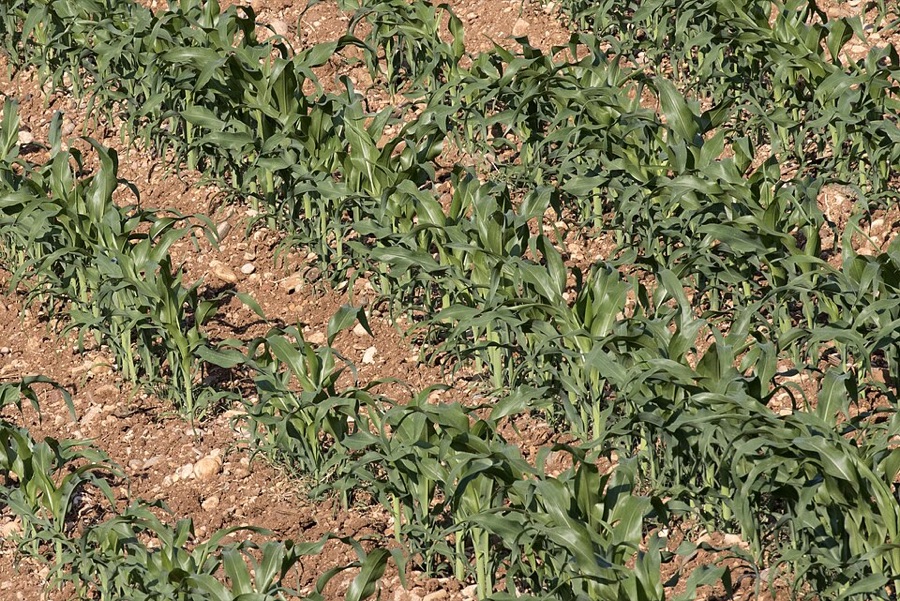
Healthy young maize, evenly spaced in rows. This is what a good stand looks like a few weeks after planting.
Sow and plant now
Maize· last month of the sowing window (Sep–Dec)Caterpillars in the young plants, and keeping the dried grain safe from insects and mould.
Soybean· last month of the sowing window (Oct–Dec)
Growing: manage and protect
Sunflower· month 4 of about 5: diseases, stage by stage. Sunflower's own worst disease, Sclerotinia, infects most readily through open flowers and has no real in-season cure -- genetic resistance, real rotation and careful moisture management are this guide's strongest real defences against it and against this crop's other major diseases.Protect water supply hardest through flowering and seed fill, since a real shortage at this window costs the most yield of the whole season, while leaning on the crop's own real, deep-rooted drought tolerance at other stages.
Potato· month 5 of about 6: harvest the tubers without damaging them. Lift in cool, dry-enough soil, handle every tuber as if it were an egg, and get it out of the sun.Cool weather and healthy seed tubers. Nights around 16 degrees Celsius are when tubers form best, and average days of 18 to 20 degrees give the best yields. Heat is the enemy, not drought.
Tomato· month 4 of about 5: insect pests, stage by stage. Tomato carries a genuinely long real pest list, but three matter more than the rest: Tuta absoluta, a devastating, globally spreading invasive leafminer; whitefly, because of the viruses it carries rather than the sap it removes; and the large, dramatic-looking hornworm caterpillars.Tomato needs real, consistent moisture from transplanting through to the end of harvest, and the single most common water-linked failure in this crop is not too little water overall, but water that swings between too dry and too wet.
Temperate south, continued
Harvest now
Wheat· Harvest window month 2 of 3 (Nov–Jan)Cut when the whole plant has gone golden and the grain is hard, not soft.
Barley· last month of the harvest window (Nov–Dec)Watch the crop through grain fill for the classic ripening sequence: the ear and straw turn from green through gold to a uniform pale straw colour.
Rapeseed· last month of the harvest window (Oct–Dec)Cut or combine as the pods turn but before they open, because this crop drops its seed on the ground the moment it is over-ripe.
Garlic· last month of the harvest window (Nov–Dec)The plant tells you when it is ready, and the signal is counted in leaves rather than dates.
Scout for this month
Black cutwormon Maize, Potato, Tomato, Sunflower, Soybean
Cotton bollworm (Old World bollworm)on Tomato, Maize, Soybean, SunflowerFavoured by: Warm, dry weather; a landscape with a succession of flowering hosts (for example maize, sorghum and chickpea before cotton).
Choose up to three crops and, if they are already in, the date you sowed. My farm's December turns this page into a week-by-week checklist for your fields. Free, no account.
Sources: Laisha farming calendar; tips from each crop's grow guide; pests from the Laisha pest encyclopedia, listed where a host crop is in the field and the pest's recorded distribution includes this zone.
South-western and southern Australia, the Western Cape, central Chile
The dry summer brings in the winter grains: wheat and barley are harvested, and the chickpea harvest finishes this month. Irrigated tomato keeps growing.
Winter rain from about May to October: grains, canola and pulses are sown on the autumn break and harvested in early summer.
Young wheat coming up evenly. This is what a good, even stand looks like a couple of weeks after sowing.
Sow and plant now
Nothing in the main calendar this month.
Growing: manage and protect
Tomato· month 4 of about 5: insect pests, stage by stage. Tomato carries a genuinely long real pest list, but three matter more than the rest: Tuta absoluta, a devastating, globally spreading invasive leafminer; whitefly, because of the viruses it carries rather than the sap it removes; and the large, dramatic-looking hornworm caterpillars.Tomato needs real, consistent moisture from transplanting through to the end of harvest, and the single most common water-linked failure in this crop is not too little water overall, but water that swings between too dry and too wet.
Mediterranean south, continued
Harvest now
Wheat· last month of the harvest window (Oct–Dec)Cut when the whole plant has gone golden and the grain is hard, not soft.
Barley· last month of the harvest window (Oct–Dec)Watch the crop through grain fill for the classic ripening sequence: the ear and straw turn from green through gold to a uniform pale straw colour.
Chickpea· last month of the harvest window (Nov–Dec)Kabuli ripens about two weeks after desi.
Scout for this month
Beet armywormon Tomato, ChickpeaFavoured by: Hot, dry weather; weedy fields and field edges; large areas of host crops.
Cotton bollworm (Old World bollworm)on Chickpea, TomatoFavoured by: Warm, dry weather; a landscape with a succession of flowering hosts (for example maize, sorghum and chickpea before cotton).
Powdery mildew of wheat and barleyon Wheat, BarleyFavoured by: Dense crops, high nitrogen, mild humid weather, early sowing, volunteer cereals, and susceptible varieties.
Russian wheat aphidon Wheat, BarleyFavoured by: Dry conditions and drought-stressed crops, mild winters, volunteer cereals and grasses near fields, and early-sown winter cereals exposed to autumn flights.
Make this plan for your own crops
Choose up to three crops and, if they are already in, the date you sowed. My farm's December turns this page into a week-by-week checklist for your fields. Free, no account.
Sources: Laisha farming calendar; tips from each crop's grow guide; pests from the Laisha pest encyclopedia, listed where a host crop is in the field and the pest's recorded distribution includes this zone.
Central and western Brazil, southern and south-eastern Africa, Madagascar, northern Australia, Java and the Lesser Sunda islands
The wet season is sowing time: soybean, maize, cotton, rice, groundnut, sorghum, common bean and cassava go in on the rains, tobacco is growing, and the mango harvest is under way.
A wet season from about November to March: the main crops are sown on the first rains, and in Brazil a second maize crop follows soybean.
Sow and plant now
Soybean· last month of the sowing window (Oct–Dec)
Maize (first (wet-season) maize)· last month of the sowing window (Oct–Dec)Caterpillars in the young plants, and keeping the dried grain safe from insects and mould.
Rice (wet-season rice)· Sowing window month 2 of 3 (Nov–Jan)Getting water at the right time, and keeping weeds out in the first month.
Groundnut· last month of the sowing window (Nov–Dec)Two things. Lifting at the right time, because you cannot see the crop.
Sorghum· Sowing window month 2 of 3 (Nov–Jan)Birds. Birds are the single biggest reason sorghum farmers lose their crop.
Common bean (rainy-season beans)· last month of the sowing window (Nov–Dec)Two things. Keeping the seedling alive through the first three weeks, and keeping weevils out of the store afterwards.
Cassava· last month of the sowing window (Oct–Dec); harvested 8 to 24 months after plantingGetting clean, healthy planting stems, and using the roots quickly once you dig them.
Sugarcane· cut through the dry seasonLay setts end to end along the furrow with buds facing sideways, cover them at the right depth, and plant in your own real local window rather than by a fixed calendar date.
Growing: manage and protect
Tobacco· month 4 of about 5: harvest by priming or stalk-cutting -- and protect the harvest crew. Harvest by priming, pulling ripe leaves individually from the bottom of the plant upward, or by cutting the whole stalk at once, and protect every harvest worker from Green Tobacco Sickness while doing it.Keep this crop's own real moisture consistent, especially through establishment and rapid leaf growth, without ever leaving the root zone standing in water.
Tropical south, continued
Harvest now
Mango· Harvest window month 3 of 4 (Oct–Jan)Count days from flowering, not from planting. Most varieties take roughly 100 to 150 days from flower opening to a fruit ready to pick.
Cotton bollworm (Old World bollworm)on Cotton, Maize, Sorghum, SoybeanFavoured by: Warm, dry weather; a landscape with a succession of flowering hosts (for example maize, sorghum and chickpea before cotton).
Fall armywormon Maize, Sorghum, Rice, CottonFavoured by: Warm weather with dry spells between rains favours outbreaks; heavy rain drowns young larvae in the whorl.
Make this plan for your own crops
Choose up to three crops and, if they are already in, the date you sowed. My farm's December turns this page into a week-by-week checklist for your fields. Free, no account.
Sources: Laisha farming calendar; tips from each crop's grow guide; pests from the Laisha pest encyclopedia, listed where a host crop is in the field and the pest's recorded distribution includes this zone.
India this month · the tropical north's largest example
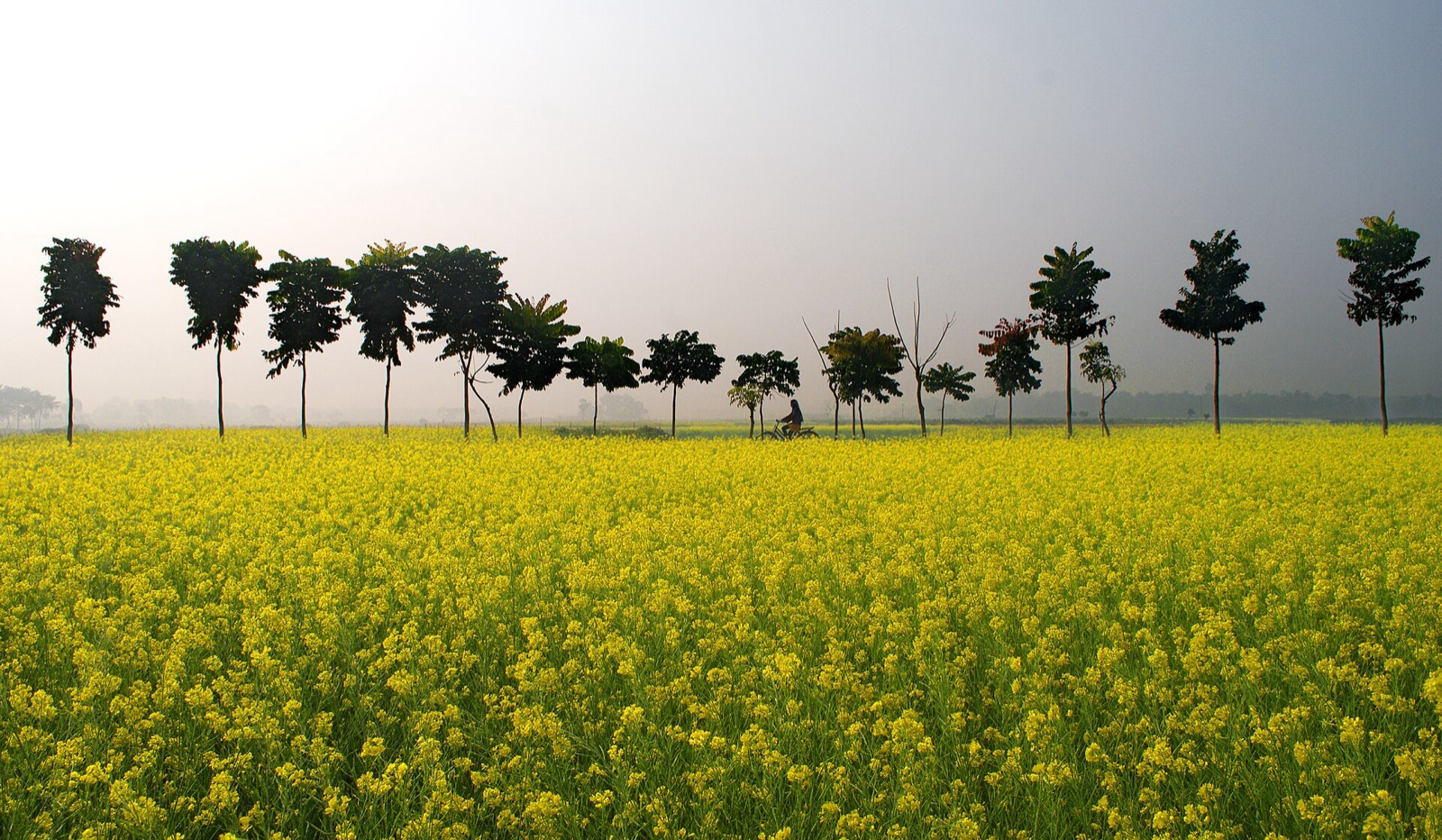
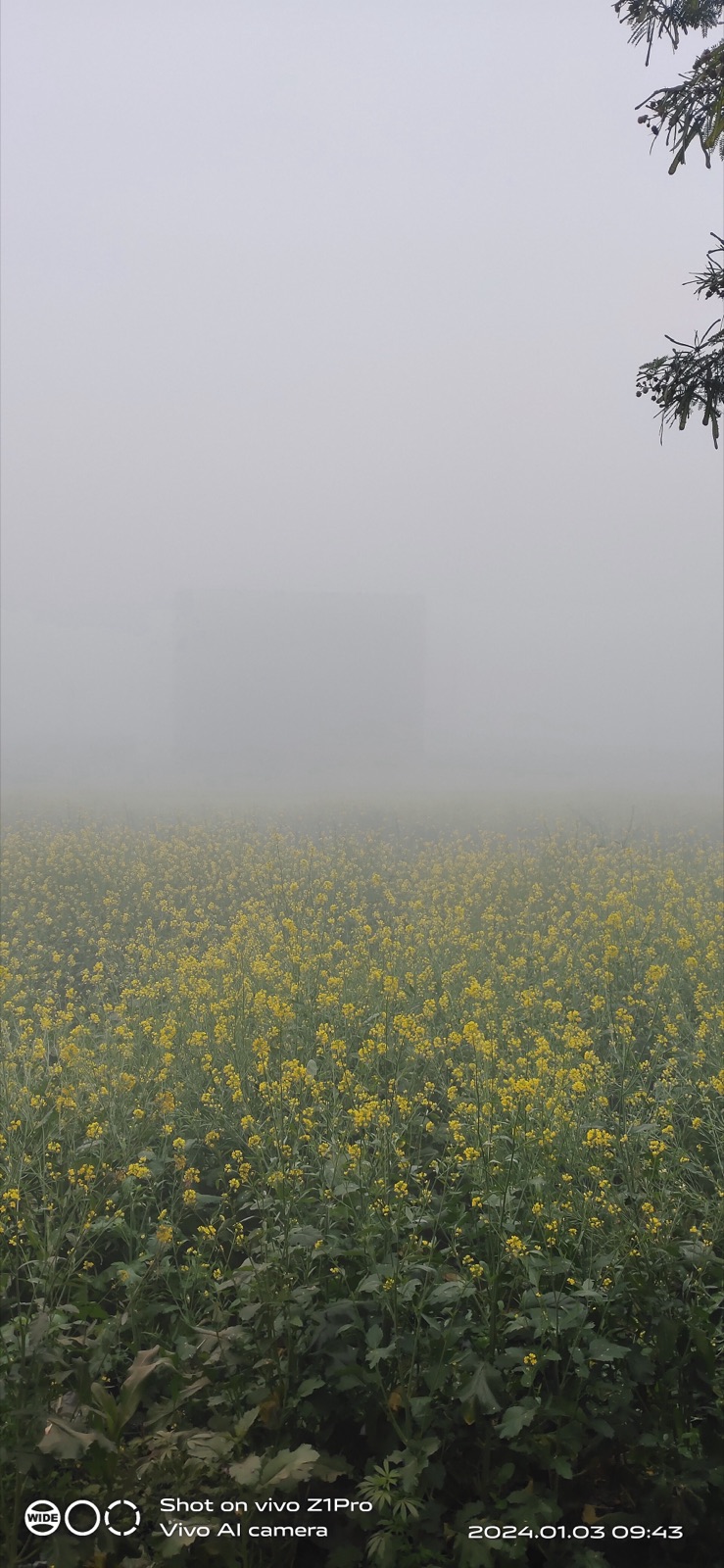
Mustard in flower on a winter morning: the rabi crops are in their second month.
Rabi in its second month
On Laisha's calendar the tropical north, which includes South Asia, is in its dry season. Chickpea, mustard and potato sown in November are growing, and wheat is in the last month of its sowing window. Our Explains article lists all four as rabi crops, grown after the rains on stored moisture or with irrigation. Crop seasons
Wheat that goes in now is late wheat, and late wheat is small wheat. Our wheat guide says every week of delay usually costs grain; our sowing video puts it at around one per cent of yield for each day past the best window in warm wheat regions, because a late crop fills its grain in the heat, above about 30 to 32 °C. Late plants also make fewer tillers, so set a higher target plant stand and work the seed rate from it with the formula in November's issue. Wheat guide · How to sow wheat · Seed rate and plant population · Heat stress in crops and livestock
What to watch. Mustard aphid builds fastest at about 15 to 25 °C in cool, cloudy, humid weather; from the first flowers, look at the top of the plant and under the youngest leaves. Late blight favours long spells of high humidity, fog or dew: water potatoes in the morning and destroy cull piles. Chickpea pod borer lays on flowers and young pods; South Asian studies put action at about one larva per metre of row at podding, and no spray reaches a caterpillar already inside a pod. Mustard aphid · Late blight · Chickpea pod borer
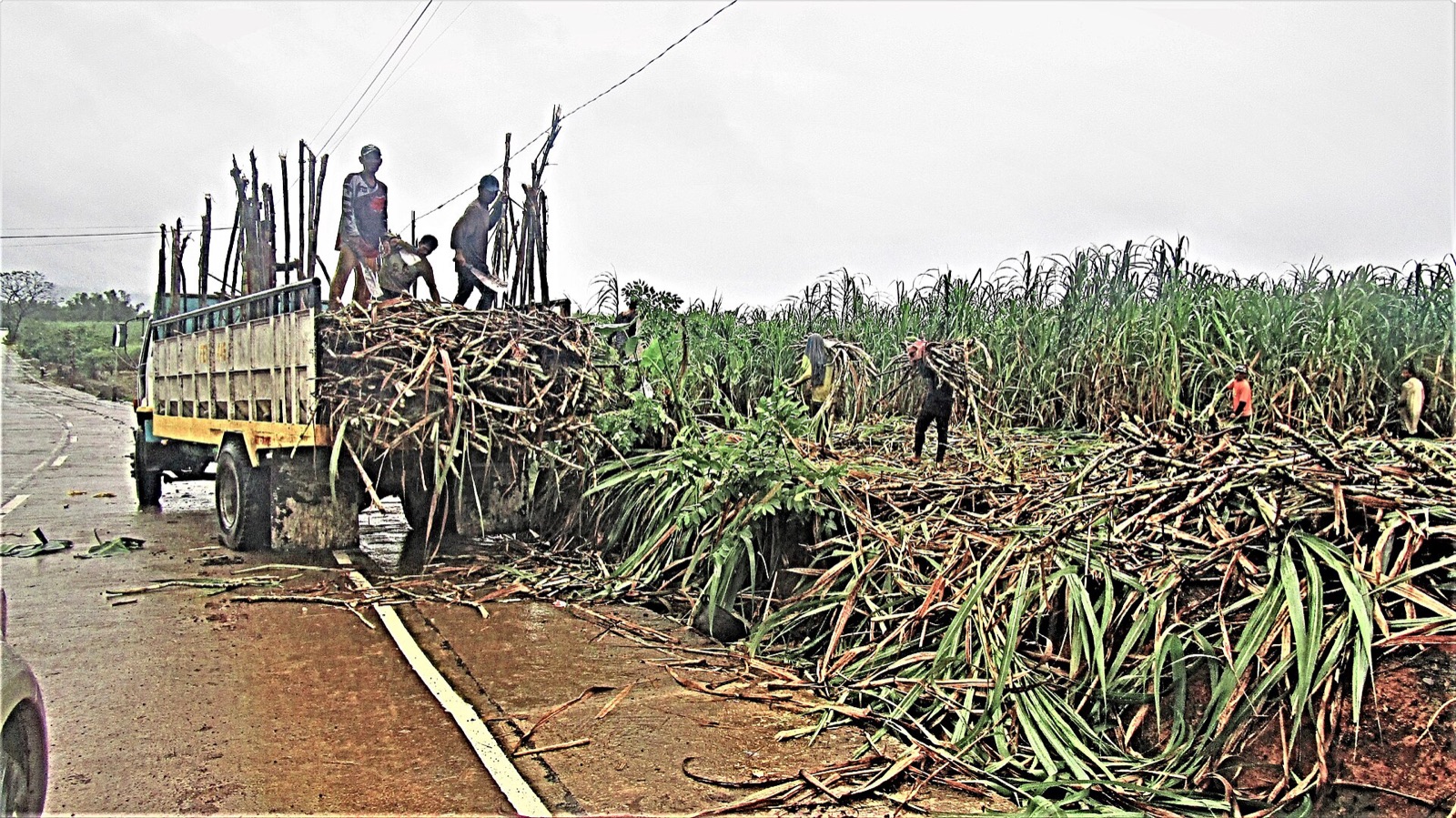
Cutting sugarcane by hand: the harvest runs through the dry season.
Sugarcane and cotton: harvest without fire
Our calendar has the tropical north cutting sugarcane through the dry season, from November to April, with new cane planted in October and November, and picking cotton from October to January. Both crops leave a great deal behind them, and both reward dealing with it quickly and without a match.
Cane. Sucrose in a cut stalk starts turning into less valuable sugars the moment it is cut, faster in heat, so our sugarcane guide's first rule is to reach the mill within hours, not days, and keep waiting cane in the shade. Burning the dry leaf trash first makes hand cutting easier, but the guide records the cost: smoke linked to more respiratory hospital admissions nearby, and no trash left to cover the soil. Several producing countries have moved away from it; Brazil phased it out by state law from 2002 in favour of green mechanical harvesting. Sugarcane guide
Cotton. Cotton is a perennial shrub grown as an annual on purpose: the season is ended deliberately so pests cannot ride over on living stalks. Late in the season, pink bollworm larvae rest inside seed, soil and crop residue and wait for the next crop. Shred and incorporate or destroy the stalks soon after the last picking, never leave late bolls standing or ratoon the crop, and keep stalks with bolls away from fields. Cotton guide · Pink bollworm
In DecemberSown in Temperate south; Tropical south
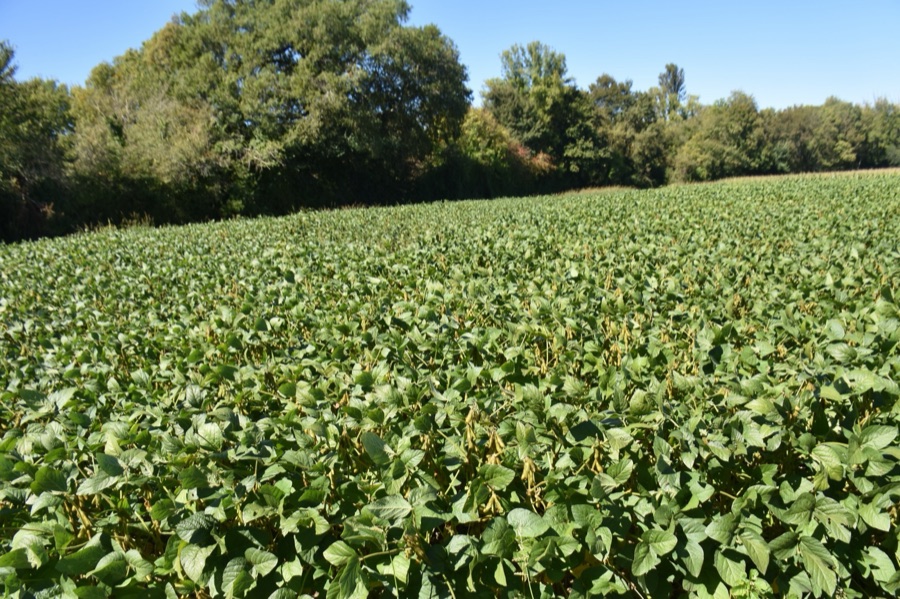
A soybean field, showing the crop's dense, bushy, upright canopy well before flowering.
Planting to harvest
A full annual crop, typically 90 to 150 days from planting to harvest depending on the maturity group chosen — shorter-season Group 000-II varieties commonly mature in 90 to 120 days, while longer-season tropical Group VII-X varieties can take up to 150 days or more.
Needs most
A correctly matched maturity group for your own real latitude, real Bradyrhizobium japonicum inoculation at planting if the land has no recent soybean history, and reliable soil moisture through the flowering and pod-fill window, which is when a shortage costs the most yield of the whole season.
Hardest part
Soybean cyst nematode and Asian soybean rust between them account for some of the largest, quietest yield losses of any pest or disease covered in this library, because the nematode is genuinely invisible above ground until damage is already severe, and the rust can spread and cost tens of percent of yield within weeks of first appearing.
Easiest start
Confirm your own recommended maturity group with a local extension service or seed dealer, buy real, correctly labelled Bradyrhizobium japonicum inoculant if your land lacks recent soybean history, and decide honestly which market — crushing, food-grade or GM/non-GM — this planting is really for before you buy a single bag of seed.
The season, stage by stage
Choose your land and plan the rotationPick well-drained land with a real, honest history of what grew there before, because soybean's own biology genuinely rewards a break from itself and rewards land that has grown it recently for a different reason: the bacteria it needs are probably already there.
Choose your maturity group and varietyMatch a real maturity group to your own real latitude before anything else, because soybean's own photoperiod sensitivity means the wrong group can flower at the wrong time on perfectly good soil, and decide honestly which market this planting is really for.
Source certified seed and inoculate it with the right rhizobiumBuy real, certified seed of your chosen variety, then inoculate it with a correctly labelled Bradyrhizobium japonicum product unless your land has a real, recent soybean history — this single step is the cheapest fertiliser decision most soybean growers ever make.
Prepare the ground and plantPrepare a firm, level seedbed and plant at the right depth and spacing for your chosen variety, timed so the crop's flowering window lands inside your own reliable rainy season rather than at its edges.
Weed and water the young standKeep the young crop weed-free through its early vegetative growth and make sure it never runs short of water in its first weeks, since a small soybean plant loses proportionally far more to competition than a large, established one does.
Flowering and the pod-set windowWatch the crop move into flowering and understand that this window, roughly stages R1 through R3 in the real staging system agronomists use, is when a water shortage costs the most yield of the entire season.
Pod fill: watch for pests and diseaseKeep scouting through the pod-fill window, roughly R4 through R6, since this is when stink bugs, sudden death syndrome and Asian soybean rust do the most real damage, and act early rather than waiting for obvious symptoms.
Harvest at the right moistureWait for the crop to reach real physiological and harvest maturity, roughly R7 through R8, and harvest at the right seed moisture, since harvesting too wet or too dry both cost real yield and quality.
Store the crop safelyDry the crop fully, clean out broken seed and trash, and store it cool, dry and pest-free, since soybean's own real oil content makes stored seed genuinely more prone to rancidity and insect damage than a plain cereal grain.
Soybean, continued
Feeding, as our guide gives it
At sowing, on the seed: Bradyrhizobium japonicum inoculant
Before or at sowing: Phosphorus
Before sowing or split through the season: Potassium
Whenever a soil test is possible: Check nodulation and soil fertility before spending
Problems, and what to do
If you see The field looks patchy and stunted in places for no obvious reason, sometimes with a slight yellowing, but there is genuinely no clear wound, spot or visible pest anywhere on the plant.
It likely means Soybean cyst nematode, a microscopic soil-dwelling worm feeding on the roots, very often the single most damaging soybean pest present without any obvious above-ground symptom at all.
Have soil tested for nematode egg counts where a laboratory service exists, since this pest is genuinely hard to confirm by eye alone in many cases.
Rotate away from soybean for at least one full season where this pest is confirmed present, since it genuinely builds up under continuous soybean cropping.
If you see Small tan, orange-brown or reddish-brown spots appear on the undersides of lower leaves first, sometimes with a fine, powdery texture, before spreading upward through the canopy.
It likely means Asian soybean rust, caused by the fungus Phakopsora pachyrhizi, a real, historically fast-spreading disease capable of severe yield loss within weeks of first appearing.
If you see Pods look normal from the outside but seeds inside are shrivelled, deformed, small or carry small discoloured puncture marks, especially from the flowering-to-pod-fill window onward.
It likely means Stink bugs feeding directly on developing pods and seeds, a real late-season pest capable of lowering both yield and market grade even without destroying the plant itself.
Scout pods directly from the R3 beginning-pod stage onward, since stink bug feeding from R3 through R6 causes the most real seed damage.
Look for a real 'stay green' pattern in patches of the field, where plants delay normal maturity, a genuine sign of a heavier stink bug infestation nearby.
In DecemberSown in Temperate south; Tropical south (first (wet-season) maize) · Get ready to sow in Tropical south (second-crop maize after soybean)
Healthy young maize, evenly spaced in rows. This is what a good stand looks like a few weeks after planting.
Planting to harvest
About 3 to 5 months for dry grain. You can eat it green and soft about 2 to 3 weeks earlier.
Needs most
Rain at the right time, and food in the soil. Maize is a hungry crop.
Hardest part
Caterpillars in the young plants, and keeping the dried grain safe from insects and mould.
The season, stage by stage
Get the land readyLoosen the soil, take out the weeds, and give the water somewhere to go.
Choose and get your seedUse big, whole, clean seed. Know whether your seed can be saved or not.
Plant the seedOne or two seeds per hole, not too deep, in straight rows with room to walk.
WaterMaize can take some dry days. It cannot take dry days when it is flowering.
Weeds and feedingKeep the first six weeks clean. Feed the crop when it is knee high.
Walk your field twice a weekThe cheapest pest control in the world is your own eyes and fingers.
Know when to harvestFor dry grain, wait until the husks are brown and the grain is hard as a stone.
Dry it and store it so you do not lose itDamp maize grows a poison you cannot see.
If you see Ragged holes and torn windows in the young leaves. Wet sawdust looking droppings sitting in the funnel at the top of the plant.
It likely means Fall armyworm, a caterpillar that lives down inside the whorl of young maize and eats it from the middle out.
Walk the field twice a week and crush the egg patches with your fingers before they hatch.
If you see Small pretty plants with bright pink, purple or white flowers growing between your maize, while the maize around them is stunted, yellow and dying even though it has rain.
It likely means Striga, also called witchweed. It attaches to your maize roots underground and drinks from them.
Pull every striga plant out by hand before it flowers and makes seed.
In DecemberSown in Tropical and monsoon north (dry-season irrigated rice); Tropical south (wet-season rice) · Harvested in Tropical and monsoon north (wet-season rice)
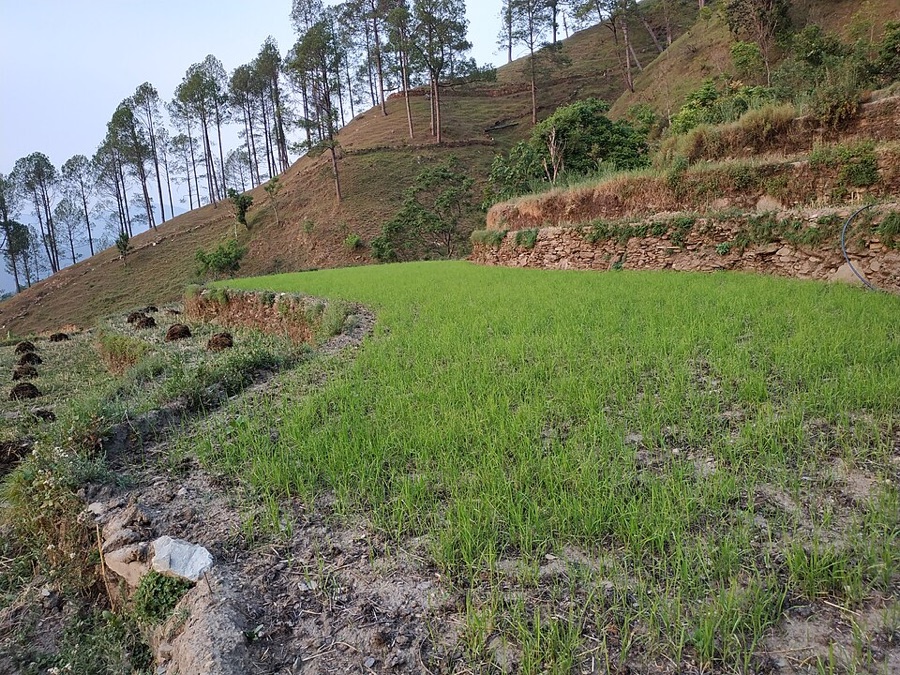
What healthy young rice plants look like when they are ready to move, at about 15 to 20 days old.
Planting to harvest
About 3 to 6 months, depending on the kind of rice you plant.
Needs most
Water. Rice can sit in shallow water. Most other food crops cannot.
Hardest part
Getting water at the right time, and keeping weeds out in the first month.
The season, stage by stage
Get the land readyMake the ground flat, soft and wet, so water sits evenly on it.
Choose and get your seedUse full, heavy, clean seed.
Wake up the seedSoak the seed so it starts to sprout before it goes in the ground.
Grow small plants in a nursery bedGrow the babies close together in a small bed.
Move the small plants into the fieldLift the babies gently and push them into the mud, in straight lines, not too deep.
WaterKeep shallow water on the field most of the time.
Weeds and feedingThe first month decides everything.
Know when to harvestCut when most of the grain is hard and golden, not before, not long after.
Dry it and store it so you do not lose itWet grain rots and grows poison.
If you see The oldest, lowest leaves turn yellow first, starting at the tip, while the young top leaves stay green. The whole plant looks pale and short.
It likely means The plant is hungry. It is short of nitrogen, the main food that makes leaves green.
Spread well rotted manure or compost between the rows now.
If you see Spots on the leaves shaped like a small eye or a boat, grey or white in the middle with a brown edge.
It likely means A fungus disease of rice, usually worse in cool damp weather, on plants that got too much nitrogen fertiliser.
Do not add more nitrogen fertiliser now. Extra nitrogen makes this disease much worse.
In DecemberSown in Tropical and monsoon north (cool dry-season tomato) · Growing in Temperate south; Mediterranean south
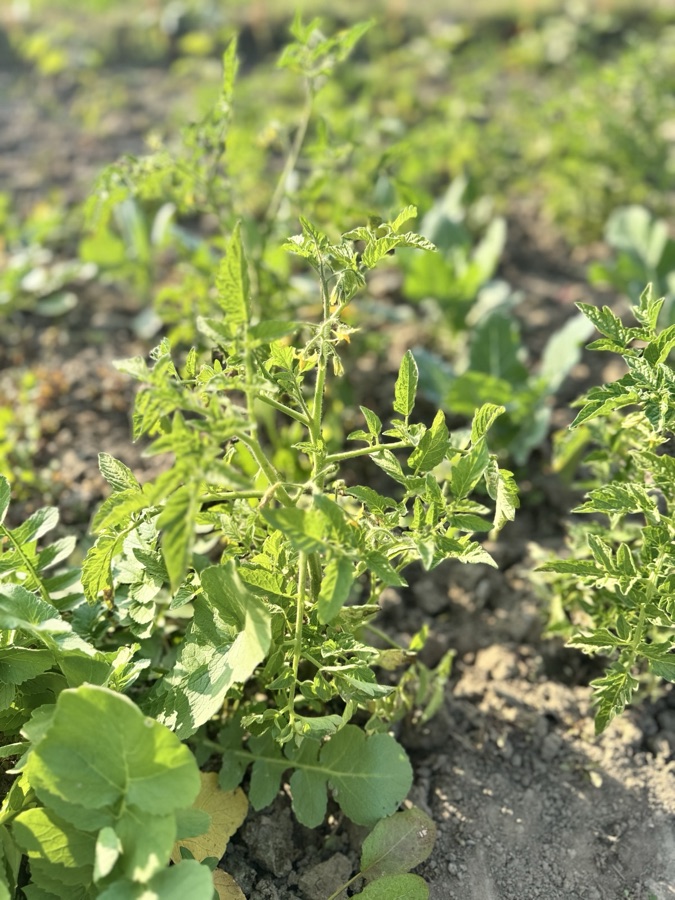
A tomato plant in the field, showing the crop's characteristic compound leaves and small, bright yellow flowers.
Planting to harvest
About 3 to 4 months in total counting the nursery stage: roughly 6 to 8 weeks (42 to 56 days) raising transplants in a protected nursery, then a further 60 to 100 days or so in the field from transplanting to first harvest, depending on variety and climate.
Needs most
Warm days between about 60 and 90 degrees Fahrenheit, a genuinely early decision about determinate versus indeterminate and fresh-market versus processing, and -- for any indeterminate, fresh-market planting -- real, sturdy support to keep fruit up off the ground.
Hardest part
Watching for late blight, the same pathogen genus behind the Irish Potato Famine, in cool, wet weather, and telling apart a real disease from blossom-end rot, a genuine physiological disorder that looks alarming but is not caused by any pathogen at all.
The season, stage by stage
Choose your land, decide your market, and plan the rotation
Raise a real nursery: seed the tray and grow strong transplants
Harden off and transplant into the field
Stake, trellis or leave sprawling — matched to your growth habit and market
Feed the crop
Water
Weeds
Insect pests, stage by stage
Diseases — and the real physiological disorder that is not a disease at all
Harvest, ripen and store without losing quality
If you see Sudden wilting of the whole plant, or of one side of it, with no preceding yellowing of the leaves, often progressing to plant death within days.
It likely means Bacterial wilt, a real, serious soil-borne bacterial disease that blocks the plant's own water-conducting tissue, frequently fatal once established.
Remove and destroy affected plants promptly rather than leaving them to serve as a source of further spread.
If you see The topmost leaves of the plant wrinkle, curl and grow abnormally, with the whole plant's normal growth pattern visibly interrupted, often appearing suddenly on scattered plants across a field.
It likely means Curly top, a real, serious viral disease carried by the beet leafhopper, which transmits the virus while feeding and genuinely interrupts the plant's own normal growth cycle.
Remove and destroy severely affected plants promptly, since a badly infected plant is unlikely to recover its normal growth and yield.
In DecemberSown in Mediterranean and dry north · Growing in Temperate north (winter barley) · Harvested in Temperate south; Mediterranean south
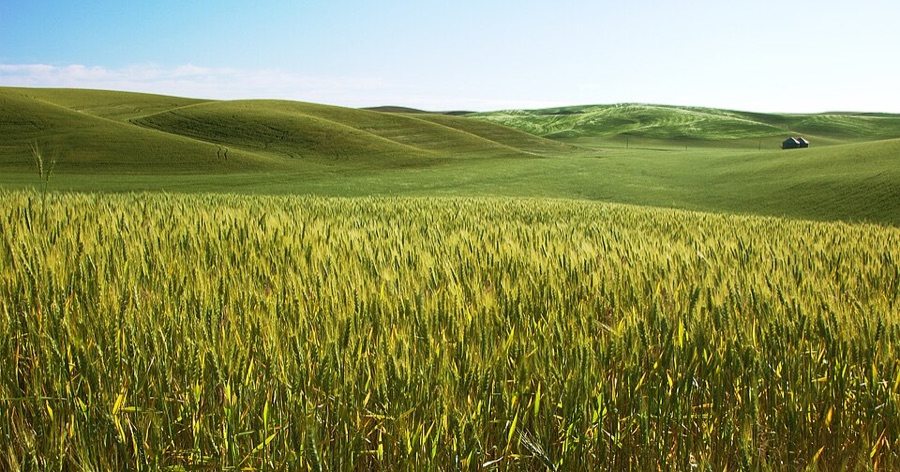
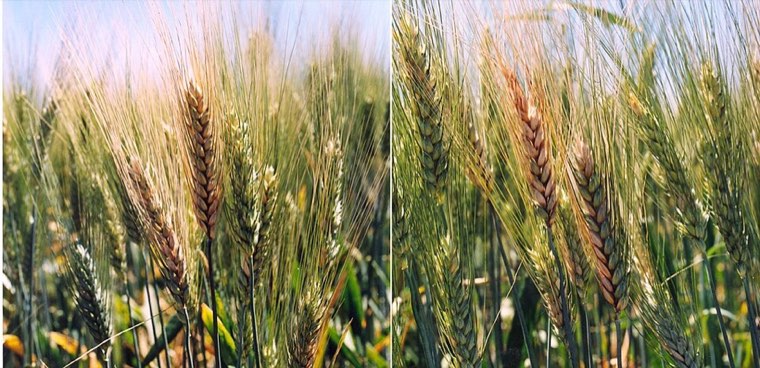
A ripening barley field in the Palouse, USA — one of the world's classic dryland cereal-growing landscapes.
Planting to harvest
Spring barley: about 90 to 110 days. Winter barley: about seven to nine months counting the overwintering period, of which only part is active growth.
Needs most
A cool growing season, well-drained soil that is not strongly acid, and nitrogen applied in the right amount at the right time — too little limits yield, too much (or too late) ruins malting quality and causes lodging.
Hardest part
Getting nitrogen timing right for malting-quality grain while avoiding lodging, and then getting the crop off the field before wet weather at maturity causes pre-harvest sprouting or Fusarium mould in the ear.
The season, stage by stage
Get the land ready
Choose seed and treat it properly
Sow
Feed the crop — and the one thing everyone gets wrong
Water
Weeds
Insect pests, stage by stage
Diseases, stage by stage
Know when to harvest — and the danger of waiting too long
Harvest, dry and store without losing quality
Grade it and sell it well
If you see Hard, dark purple-black to black growths, larger than a normal grain, sticking out of the ear where a grain should be.
It likely means Ergot, caused by the fungus Claviceps purpurea.
Do not eat, sell or feed grain containing these bodies without physically sorting them out first.
If you see Patches of stunted plants with leaves yellowing from the tip inward, the margins often turning a distinctive purple-red, sometimes starting near a field edge or in a broader patch across the field.
It likely means Barley Yellow Dwarf Virus (BYDV), carried by aphids, most importantly the bird cherry-oat aphid. There is no cure for an infected plant.
Nothing will cure this season's infected plants. Note where and when infection appeared for next season's planning.
None of them was in November's issue: six cool-season crops from our grow guides, with what each needs, how long it takes and the problems most worth knowing.
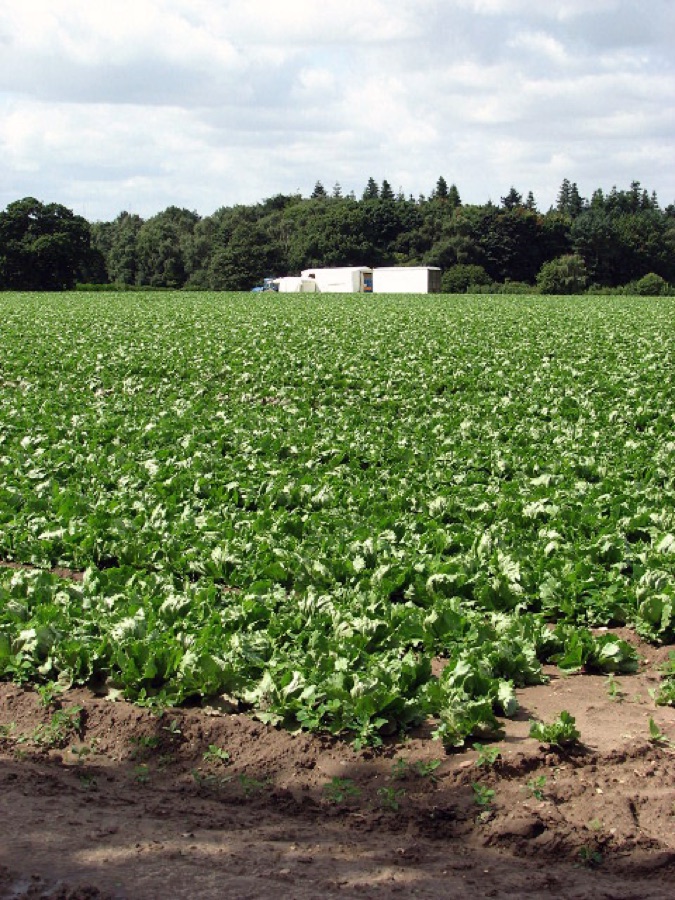
A real, cultivated lettuce field. Lettuce is genuinely grown both direct-seeded and nursery-transplanted, depending on the real market it is grown for (growthHabitAndMethod).
A published source records real harvest maturity anywhere from about 65 to 130 days depending on the real type and market -- a fast baby-leaf cut at the short end, a full crisphead at the long end.
Needs most
8.
Hardest part
Beating the heat.
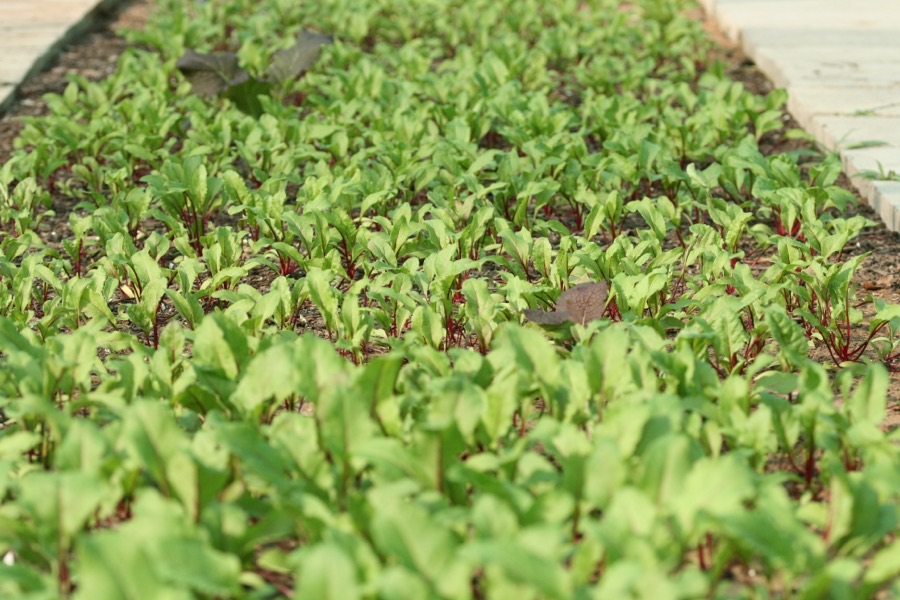
Evenly spaced, one plant to a place. That is what thinning bought.
About two to three months from sowing, with leaves pickable well before that.
Needs most
Loose deep soil and steady water.
Hardest part
Thinning the clumps early enough, and pulling the roots before they go woody.
Clumps of small, twisted, misshapen roots growing into one another. The crop was never thinned.
Roots that are tough and woody with pale rings running through them when cut. Either they were left too long and grew too big, or the watering swung between dry and flooded.
A real, cultivated turnip field. This crop is direct-seeded and thinned in place, never raised in a nursery and transplanted (growthHabitAndMethod).
As little as 55 to 60 days from direct seeding to a harvestable root, genuinely faster than several other root crops in this library, with no nursery stage at all.
Needs most
Cool weather through root development, a genuinely early decision about whether this planting is for the root, the greens, or both, and land with no recent history of clubroot or other brassica cropping.
Hardest part
Watching for flea beetle damage on young seedlings and clubroot in the soil, the same real soil-borne threat this library's cabbage guide names as its own single longest-lived danger, since both crops share this real family threat.
Six more cool-season vegetables, continued
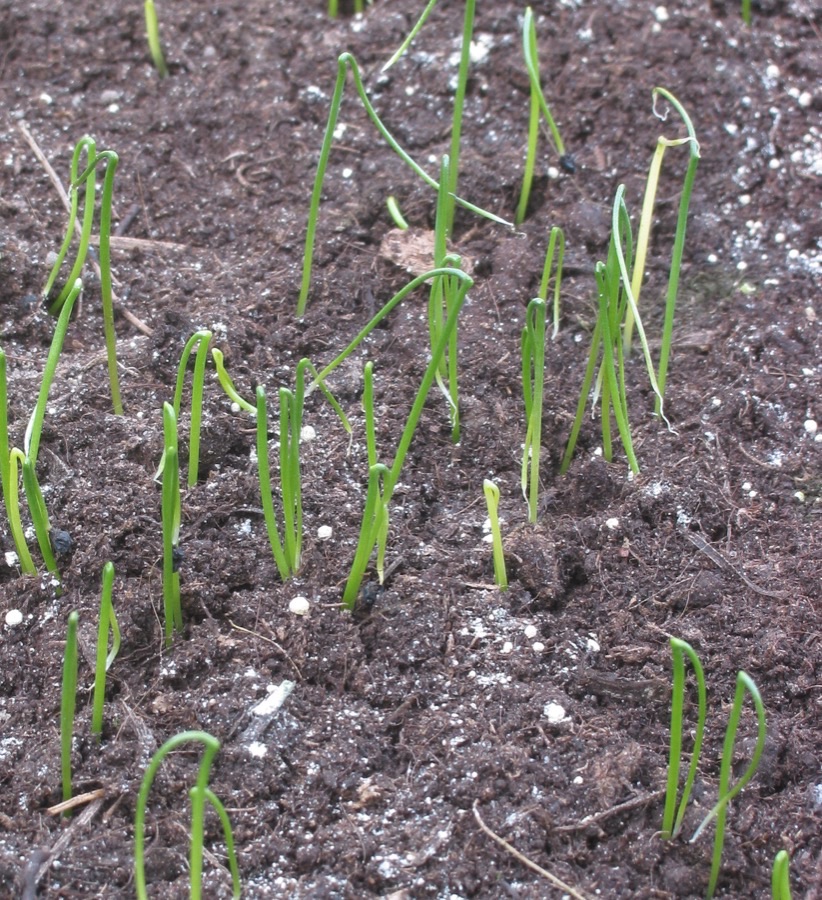
Each one comes up as a hairpin and then stands. That loop is normal, not a fault.
About four to six months from sowing, and then it will wait in the ground for months more.
Needs most
Deep fertile soil, steady water, and darkness around the lower stem.
Hardest part
Growing a long clean white shank instead of a short green one.
Leeks with only a few centimetres of white at the base and a long green stem above it. They were not planted deep enough or not earthed up.
Leeks breaking off at the base as they are harvested, leaving the bottom in the ground. They were pulled instead of lifted. A leek is held firmly and its shank is brittle, so firm ground wins every time.
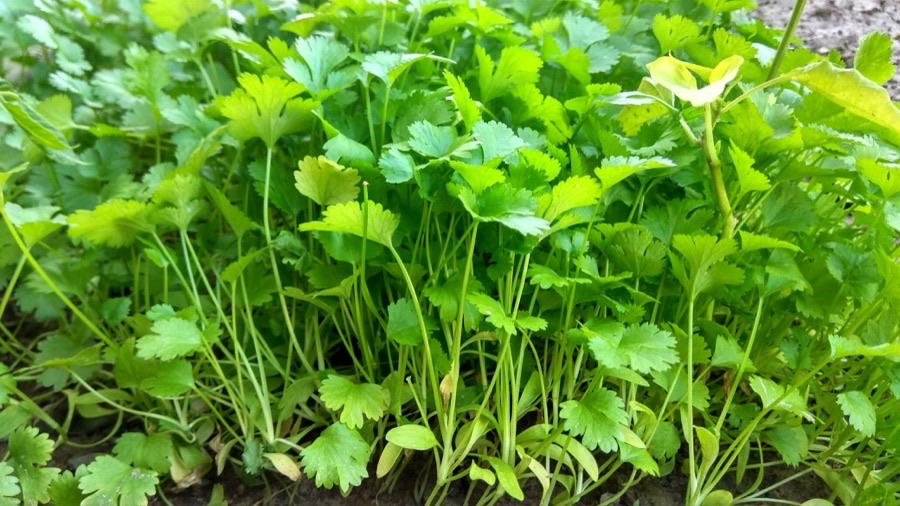
Broad, soft and bright green at about a month. Cut above a stub and water it, and the bed gives a second cutting.
Leaves in about thirty to forty-five days, and dry seed at about ninety to one hundred and twenty.
Needs most
Cool weather. Heat sends it straight to flower before it has made any leaf worth cutting.
Hardest part
Deciding leaf or seed, because a crop cut for leaves will not give much seed and the two want different spacing.
Plants shooting up thin and tall and flowering when they are barely a hand high, with almost no leaf worth cutting. Heat, or a late sowing, or both. Coriander is a cool-season crop and runs straight to flower when it is warm.
Seed lying on the ground under the plants at harvest, and heads that have already split open on the stem. The crop was left too long or was cut in the heat of the day when the heads were brittle.
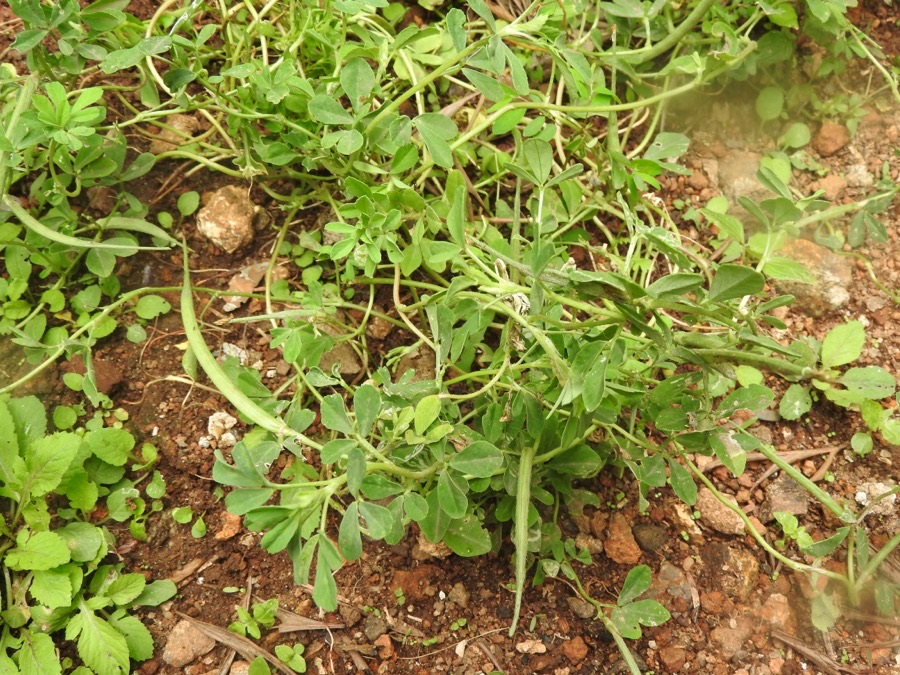
Leaves in threes, stems spreading low, and slender pods among them. Once the pods show, the leaf harvest is over.
Green leaves from about twenty-five to thirty-five days, and dry seed at about one hundred and twenty to one hundred and fifty days.
Needs most
Cool weather, well-drained ground, and moisture in the first month while it is establishing.
Hardest part
Deciding how many leaf cuttings to take, because every cutting you take costs seed later.
Plants shooting up tall and thin and flowering when they are barely a hand high, with very few leaves worth cutting. Heat. Fenugreek is a cool-season crop and runs straight to flower when it is sown too late or into warm weather.
A white dusty coating spreading over the leaves, which then yellow and dry, worst where the bed is thickest. Powdery mildew, the commonest disease of fenugreek. It thrives on crowded soft growth in damp still air.
A pest is on this list when Laisha's calendar has one of its host crops in the field this month, in a zone where our encyclopedia records it, and when it matters to the December crops in this issue. For each one you will find what to look for, the weather that favours it, the action threshold where the encyclopedia gives one, and the controls in the order integrated pest management puts them.
Chemicals appear here only as mode-of-action groups, the way the encyclopedia lists them. Registrations and doses differ between countries and change over time, so the product label and your local extension office have the final word. Integrated pest management
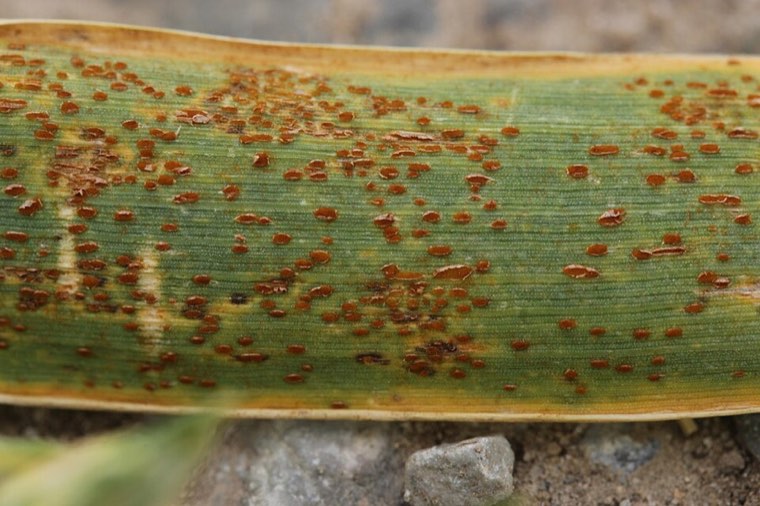
Puccinia graminis f. sp. tritici · Fungus (rust fungus, a basidiomycete)
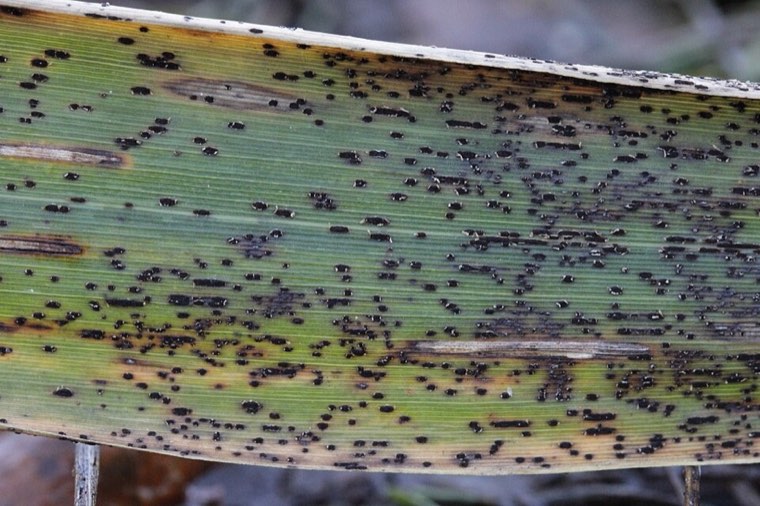
Stem rust (Puccinia graminis) pustules on a grass leaf
Stem rust, or black rust, is historically the most feared disease of wheat: in a warm, humid season it can turn a healthy-looking crop into a tangle of broken, shrivelled stems within weeks.
Scout for it this month in: Temperate north; Mediterranean and dry north; Tropical and monsoon north; Temperate south; Mediterranean south
How to spot it
Tillering to stem elongation: Few early pustules on leaves and sheaths in warm regions; often unnoticed.
Heading to grain filling: Large, elongated, dark reddish-brown pustules on stems, leaf sheaths, leaves and ears, with torn, ragged edges of epidermis.
Maturity: Pustules turn black; stems weaken and lodge or break; grain is shrivelled and light.
Favoured by
Warm days, dewy nights and rain during stem elongation to grain filling; late sowing; susceptible varieties grown over large areas.
Action threshold
There is no general numeric economic threshold, because stem rust can become severe within two or three infection cycles.
Monitor
Inspect stems and leaf sheaths as well as leaves from stem elongation onward, especially in late-sown fields and susceptible varieties.
Report suspected stem rust to national surveillance programmes.
Prevent
Sow at the recommended time; late-sown crops are exposed longer to warm-weather rust.
Destroy volunteer wheat and grasses that bridge the gap between seasons.
Resistance genes are the backbone of control.
Biological and physical
No biological control is used commercially against stem rust.
Puccinia triticina · Fungus (rust fungus, a basidiomycete)
Wheat leaf with orange-brown leaf rust pustules
Leaf rust, or brown rust, is the most common and widespread rust of wheat. It scatters small orange-brown powdery pustules over the leaves, reducing the green leaf area that fills the grain.
Scout for it this month in: Temperate north; Mediterranean and dry north; Tropical and monsoon north; Temperate south; Mediterranean south
How to spot it
Seedling and tillering: Scattered, small orange-brown pustules on leaves of volunteer plants and early-sown crops.
Stem elongation to heading: Many scattered pustules on upper leaves, often with a pale halo; spores rub off on fingers.
Grain filling: Flag and upper leaves yellow and die early; black telia on lower surfaces; lighter grain.
Favoured by
Mild temperatures with dew, mild winters, early sowing, green volunteer wheat between seasons and widely grown susceptible varieties.
Action threshold
There is no universal numeric threshold.
Monitor
Inspect the top three leaves from stem elongation onward and estimate the percentage of leaf area covered by pustules.
Follow regional rust advisories and race surveillance.
Prevent
Destroy volunteer wheat before sowing to break the 'green bridge'.
Sow at the recommended time and avoid excess nitrogen.
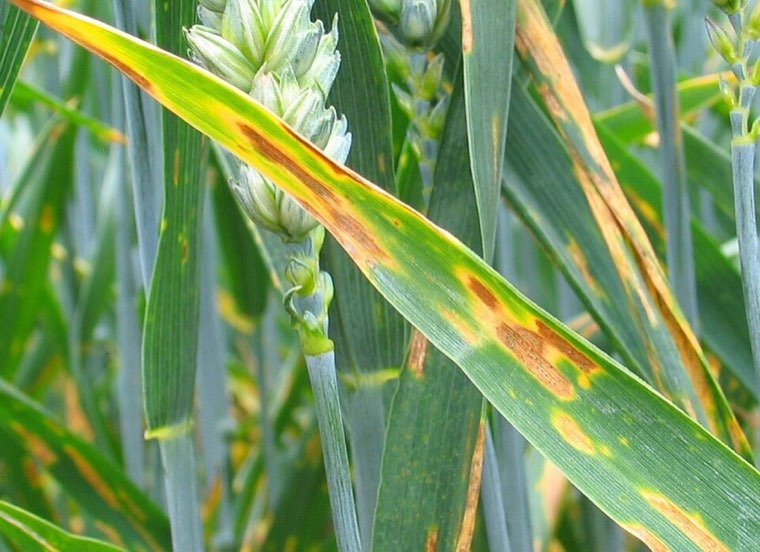
Septoria tritici blotch is the most important leaf disease of wheat in Europe and a major one in other wet temperate regions.
Scout for it this month in: Temperate north; Mediterranean and dry north; Temperate south; Mediterranean south
How to spot it
Autumn and winter (seedling to tillering): Small yellow flecks and brown blotches on the oldest leaves.
Stem elongation: Irregular, elongated tan-to-brown blotches, often limited by veins, with black pycnidia; lower leaves die.
Flag leaf to grain filling: Lesions move up to the top three leaves after rain; leaves die early; smaller, shrivelled grains.
Favoured by
Mild, wet weather in spring and early summer, early sowing (more autumn infection), susceptible varieties, wheat after wheat with stubble retained, and dense canopies.
Action threshold
There is no simple numeric economic threshold; decisions are based on variety resistance rating, rainfall in the weeks before key growth stages, and disease on the lower leaves.
Monitor
Count lesions on the third and fourth leaves from the top at stem elongation.
Record rainfall days in the weeks before flag-leaf emergence; use local risk models.
Prevent
Choose the most resistant variety available; this is the most effective measure.
Delay sowing of winter wheat in high-risk regions to reduce autumn infection.
More than 20 Stb resistance genes are known (for example Stb6 and Stb16q).
Biological and physical
Some biological products (for example certain Bacillus strains) give small reductions in trials; none controls the disease alone.
If a chemical is needed: by group
FRAC 3 Demethylation inhibitors (DMI)
FRAC 7 Succinate dehydrogenase inhibitors (SDHI)
FRAC M04 Phthalimides (multi-site contact)
FRAC M05 Chloronitriles (multi-site contact)
Programmes are preventive and timed to protect the top leaves; mixtures with multi-site protectants reduce resistance risk.
Fusarium head blight (head scab) of wheat and barley
Fusarium graminearum · Fungus (ascomycete)
Wheat ears with bleached spikelets of Fusarium head blight
Fusarium head blight, or scab, bleaches the ears of wheat and barley when warm, wet weather coincides with flowering.
Scout for it this month in: Temperate north; Mediterranean and dry north; Tropical and monsoon north; Temperate south; Mediterranean south; Tropical south
How to spot it
Flowering to early grain fill: One or more spikelets turn pale or bleached while the rest of the ear stays green; water-soaked brown areas on glumes.
Grain filling: Pink-orange spore masses at spikelet bases in humid weather; brown discoloration of the stem just below the ear, which can kill the ear above it.
Harvest: Shrivelled, chalky white or pink 'tombstone' kernels; low test weight; high mycotoxin levels in grain.
Favoured by
Rain or prolonged humidity at flowering, wheat or barley following maize or another cereal, residues left on the surface (minimum tillage), susceptible varieties and delayed harvest in wet weather.
Action threshold
There is no numeric economic threshold based on disease counts, because infection happens within a few days at flowering and mycotoxin limits are set by food and feed regulations.
Monitor
Check local head-blight risk forecasts from heading through flowering.
Inspect ears 2-3 weeks after flowering and record the percentage of ears with bleached spikelets.
Prevent
Avoid planting wheat or barley directly after maize, or bury maize residues by ploughing where erosion allows.
Grow varieties with the best available resistance.
Resistance is quantitative.
Biological and physical
Some antagonists (for example strains of Bacillus and the fungus Clonostachys rosea) applied to residues or ears have reduced disease in trials; none gives reliable control alone.
Gravity tables and optical sorters remove Fusarium-damaged kernels and lower toxin levels in seed and grain lots.
If a chemical is needed: by group
FRAC 3 Demethylation inhibitors (DMI)
FRAC 7 Succinate dehydrogenase inhibitors (SDHI)
FRAC 1 Methyl benzimidazole carbamates (MBC)
Fungicides give partial control (often around 50% reduction in disease and toxin) only when applied at early flowering.
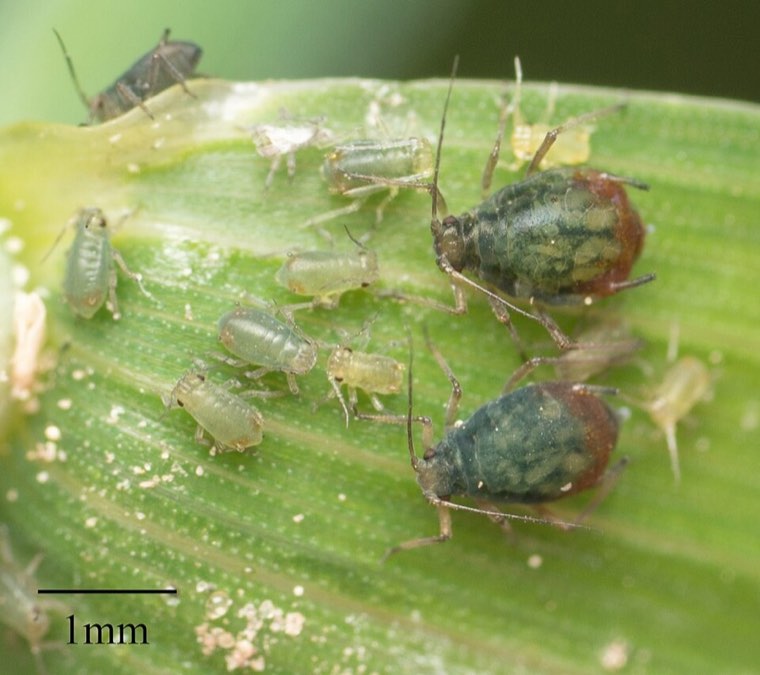
Rhopalosiphum padi · Insect (aphid, a sap-sucking bug)
Bird cherry-oat aphids on a cereal leaf
A dark olive-green aphid of wheat, barley, oats, maize and grasses, recognised by a rusty-red patch around the base of its 'tail pipes'.
Scout for it this month in: Temperate north; Mediterranean and dry north; Tropical and monsoon north; Temperate south; Mediterranean south; Tropical south
How to spot it
Emergence to tillering (autumn or early season): Few aphids on young plants.
Stem elongation to heading: Colonies on lower leaves and sheaths; honeydew; stunted, yellow patches with reduced tillering and short ears if virus infected early.
Grain fill: Large colonies may reduce grain weight; poorly filled, blank ears in early-infected plants.
Favoured by
Early sowing of autumn cereals into warm soils, mild autumns and winters, a 'green bridge' of volunteer cereals and grasses next to new crops, and grass-rich rotations.
Action threshold
For barley yellow dwarf, numeric aphid thresholds are not useful because a few infective aphids are enough.
wheat: Accumulated 170 day-degrees above 3 °C from crop emergence (when aphids are present and untreated seed was used) · Emergence to early tillering, autumn-sown crops (North-western Europe (UK))
barley: Accumulated 170 day-degrees above 3 °C from crop emergence · Emergence to early tillering, autumn-sown crops (North-western Europe (UK))
Monitor
Follow regional aphid bulletins from suction-trap networks for the timing and size of autumn flights.
Inspect young cereals at several points across the field twice weekly in autumn, looking at the base of plants and leaf sheaths.
Prevent
Delay sowing of autumn cereals where barley yellow dwarf risk is high; later-sown crops escape the main flight.
Destroy volunteer cereals and grass weeds at least two weeks before sowing to break the green bridge.
Barley varieties carrying resistance to barley yellow dwarf virus (for example the Ryd2 gene) and wheat varieties with tolerance or resistance (Bdv2 from intermediate wheatgrass and others) are available in some regions.
Biological and physical
Parasitoid wasps (Aphidius and Praon species), ladybird beetles, hoverfly and lacewing larvae, ground beetles and spiders reduce aphid numbers, especially in spring.
Entomophthoralean fungi cause natural epizootics in humid weather.
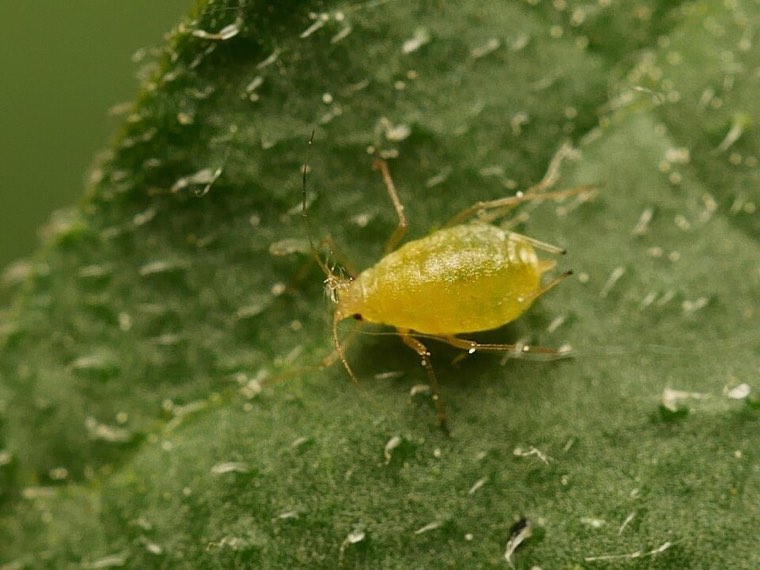
Myzus persicae · Insect (aphid, a sap-sucking bug)
Wingless green peach aphid
A small, soft-bodied aphid found on hundreds of crops worldwide.
Scout for it this month in: Temperate north; Mediterranean and dry north; Tropical and monsoon north; Temperate south; Mediterranean south; Tropical south
How to spot it
Seedling and early growth: Aphids on the undersides of lower leaves and growing tips; slight curling; early virus infection that stunts plants.
Vegetative growth: Yellowing, curled or distorted leaves, honeydew and sooty mould.
Peach in spring: Tightly curled, reddened leaves on new shoots of peach and nectarine trees.
Favoured by
Mild winters (earlier and larger flights), warm springs, lush crops with high nitrogen, protected cropping and broad-spectrum spraying that removes natural enemies.
Action threshold
Where the aphid only feeds, thresholds based on colony counts can be used.
sugar-beet: 1 green wingless aphid per 4 plants · Emergence to 12-leaf stage (North-western Europe (UK))
potato: First colonisation of seed crops · Emergence to haulm destruction (seed crops) (Seed-potato regions generally)
Monitor
Regional suction traps and aphid bulletins report the timing and size of migrations.
Yellow water traps at field edges show when winged aphids arrive.
Prevent
Destroy volunteer potatoes, beet and weed hosts and old crops that act as virus reservoirs.
Plant seed potatoes certified for low virus and destroy haulms early in seed crops to stop late virus spread.
Varieties resistant to the viruses (for example potato varieties with resistance genes to potato virus Y, oilseed rape with turnip yellows virus resistance) reduce losses more reliably than plant resistance to the aphid itself.
Biological and physical
Parasitoid wasps (Aphidius and Aphelinus species), ladybird beetles, hoverfly and lacewing larvae and predatory midges (Aphidoletes aphidimyza) are effective, and are released routinely in greenhouses.
Entomopathogenic fungi (for example Lecanicillium species and Beauveria bassiana) infect aphids in humid conditions.
Fine insect netting on seedbeds, nurseries and greenhouses.
If a chemical is needed: by group
IRAC 9B Chordotonal organ TRPV channel modulators
IRAC 29 Chordotonal organ modulators, undefined target site
IRAC 23 Inhibitors of acetyl CoA carboxylase (tetramic acid derivatives)
Early blight is a common leaf disease of potato and tomato that makes dark brown spots with rings like a target, starting on the oldest leaves. It is worst on stressed or ageing plants in warm weather with alternating wet and dry periods.
Scout for it this month in: Mediterranean and dry north; Tropical and monsoon north; Temperate south; Mediterranean south
How to spot it
Seedling (tomato): Dark lesions at the soil line that girdle the stem ('collar rot'); damping-off of seedlings.
Vegetative growth to flowering: Small dark brown spots on the oldest leaves that enlarge to about 1 cm, with concentric rings (a 'target' pattern), often surrounded by yellowing and limited by veins; leaves yellow and fall.
Tuber bulking and fruiting: Lesions move up the plant; dark sunken lesions with rings on tomato stems and at the stem end of fruit.
Favoured by
Warm weather with heavy dew or frequent short rains, plant stress (low nitrogen, drought, heavy fruit or tuber load, other diseases or pests), long-season varieties, overhead irrigation and short rotations.
Action threshold
Numeric thresholds for early blight are based on forecasting models rather than lesion counts.
potato: About 300 P-days from crop emergence (first spray) · From emergence (North America (Upper Midwest))
tomato: Spray when cumulative disease severity values reach about 15-20 since the last spray · Transplanting to harvest (North America (Great Lakes region))
Monitor
Inspect lower leaves weekly from flowering, and twice weekly in warm, dewy weather.
Use a forecasting model (P-days for potato, DSV/TOMCAST for tomato) where validated locally.
Prevent
Rotate with non-solanaceous crops for at least two to three years and destroy volunteers and solanaceous weeds.
Keep plants unstressed with adequate nitrogen and water; stress makes leaves susceptible.
Varieties differ: late-maturing potato varieties are generally more resistant.
Biological and physical
Some Bacillus and Trichoderma products reduce early blight in trials, mainly at low disease pressure.
Remove infected lower leaves of tomatoes in gardens and small plots.
If a chemical is needed: by group
FRAC M03 Dithiocarbamates and relatives (multi-site)
FRAC M05 Chloronitriles (multi-site)
FRAC 11 Quinone outside inhibitors (QoI)
FRAC 7 Succinate dehydrogenase inhibitors (SDHI)
Protectant programmes start at the forecast threshold or first symptoms; alternate single-site groups and mix with multi-site protectants.
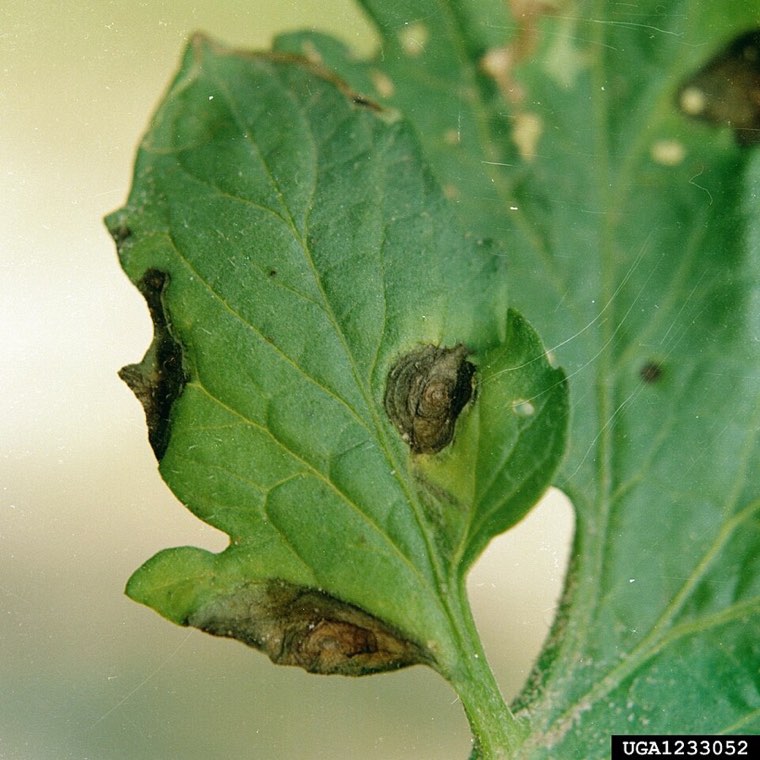
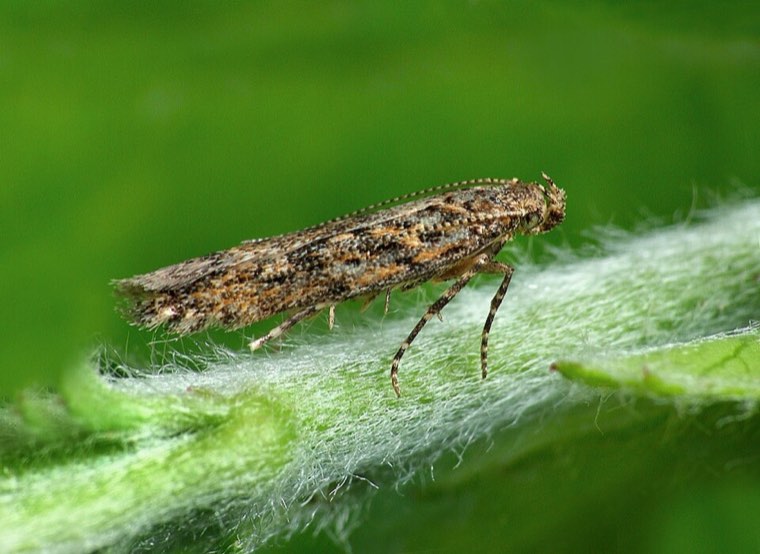
Phthorimaea absoluta · Insect (small moth); larva is the damaging stage
Adult tomato leaf miner (Tuta absoluta)
A tiny moth whose caterpillars tunnel inside tomato leaves, stems and fruit. Within a few generations a crop can look scorched and fruit becomes unsaleable.
Scout for it this month in: Mediterranean and dry north; Tropical and monsoon north; Temperate south; Mediterranean south
How to spot it
Seedling and transplant: Irregular, transparent blotch mines in leaves with dark frass inside; young plants can lose their growing tip.
Vegetative growth: Mines merge until leaflets dry and turn brown, so the crop looks scorched; larvae also bore into stems and apical shoots.
Flowering and fruit set: Larvae enter flowers and young fruit, often under the calyx.
Favoured by
Continuous tomato cropping, overlapping plantings, unscreened greenhouses, nearby abandoned crops and solanaceous weeds, and warm dry weather.
Action threshold
There is no internationally agreed numeric economic threshold.
Monitor
Place pheromone traps (delta or water traps) before transplanting and at greenhouse doors to detect the first moths; check at least weekly.
Inspect leaves in the upper third of the canopy weekly for fresh mines with live larvae, and fruit near the calyx for entry holes.
Prevent
Start clean: use pest-free seedlings, remove crop residues and solanaceous weeds, and leave a crop-free period between tomato crops where possible.
Destroy infested leaves and fruit by sealing them in plastic in the sun or burying them deeply; do not leave culls in heaps.
No commercial tomato has strong resistance.
Biological and physical
Predatory mirid bugs such as Nesidiocoris tenuis and Macrolophus pygmaeus eat eggs and young larvae and are the backbone of biological control in Mediterranean greenhouses; they can themselves damage tomato when prey is scarce.
Egg parasitoids (Trichogramma species) and larval parasitoids such as Necremnus species attack the pest.
Insect-proof netting on greenhouse vents and double doors keeps moths out.
If a chemical is needed: by group
IRAC 28 Ryanodine receptor modulators (diamides)
IRAC 5 Nicotinic acetylcholine receptor allosteric modulators, site I (spinosyns)
Larvae inside mines and fruit are hard to reach, so chemical control works only when timed against eggs and young larvae and integrated with the measures above.
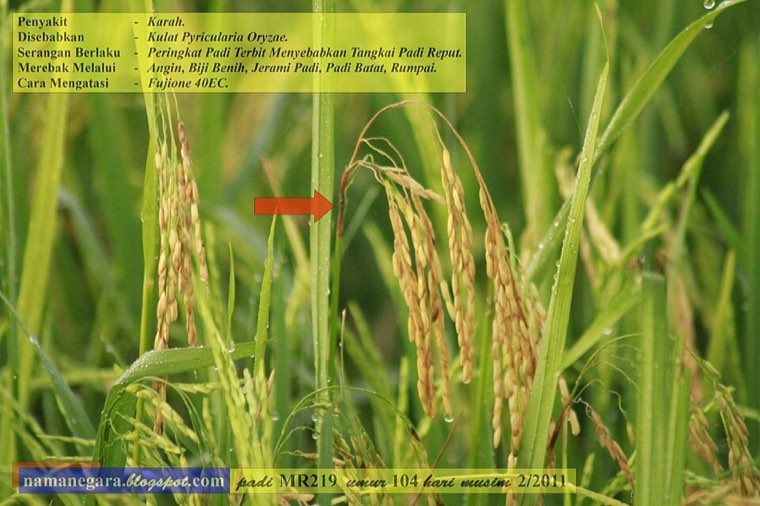
Rice blast is the most important disease of rice worldwide. The fungus makes diamond-shaped grey lesions on leaves and, most damagingly, attacks the neck of the panicle so that grains do not fill ('neck blast' or 'rotten neck').
Scout for it this month in: Temperate north; Tropical and monsoon north; Temperate south; Mediterranean south; Tropical south
How to spot it
Seedling and tillering (leaf blast): Small water-soaked spots that grow into spindle- or diamond-shaped lesions with grey or whitish centres and brown margins.
Booting (collar blast): Brown lesions at the junction of the leaf blade and sheath (the collar), killing the flag leaf.
Heading to grain filling (node and neck blast): Nodes turn black and break; the panicle neck turns grey-brown and rots, so the panicle falls over or stays white and empty.
Favoured by
Long dew periods and high humidity, cool nights, drought-stressed or aerobic (upland) rice, high or late nitrogen doses, dense planting, susceptible varieties and infected seed.
Action threshold
There is no numeric economic threshold based on lesion counts that is used widely.
Monitor
Inspect nurseries and fields weekly from tillering, especially upland and drought-prone fields and after cool, dewy nights.
From booting, check flag leaf collars and the necks of panicles.
Prevent
Use clean, certified seed and treat seed where recommended.
Apply nitrogen in split doses and avoid heavy late nitrogen; add potassium and silicon where soils are deficient, which strengthens leaves.
More than 100 blast resistance (Pi) genes are known.
Biological and physical
Some strains of Pseudomonas fluorescens, Bacillus species and Trichoderma reduce blast in trials and are used as seed or foliar treatments in parts of Asia; their effect is moderate.
Fungicides are most useful on susceptible varieties in high-risk seasons: at first leaf blast, and at late booting and early heading against neck blast.
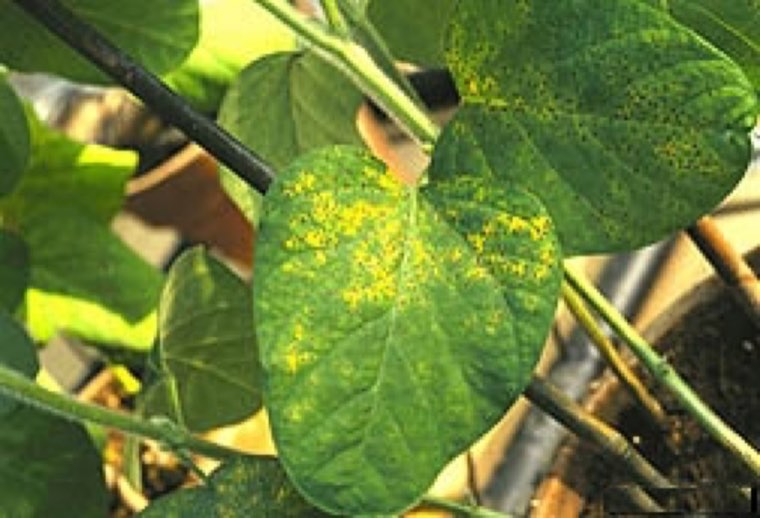
Phakopsora pachyrhizi · Fungus (rust fungus, a basidiomycete)
Soybean leaves yellowing from Asian soybean rust
A rust fungus that can strip soybean plants of their leaves within weeks of first appearing, before the pods have filled.
Scout for it this month in: Temperate south; Tropical south
How to spot it
Vegetative to early flowering: Small grey-green to tan spots on lower leaves; pustules visible on the underside with a lens.
Flowering to pod fill: Lesions turn tan (TAN type) or reddish-brown (RB type, on partly resistant plants) and multiply up the canopy; leaves yellow.
Pod fill to maturity: Premature defoliation; fewer and smaller pods and seeds; early maturity.
Favoured by
Frequent rain and long dew periods during flowering and pod fill, late sowing, soybean grown continuously or in succession (including second crops), volunteer soybean and kudzu between seasons.
Action threshold
There is no numeric economic threshold based on lesion counts.
Monitor
Inspect lower leaves with a 20x lens weekly from flowering onward; confirm suspect pustules on the leaf underside.
Use sentinel plots and regional rust monitoring networks, and spore traps where they exist.
Prevent
Sow early within the recommended window, use short-cycle varieties and avoid a second soybean crop late in the season where rust is common.
Observe soybean-free periods between seasons, which several South American countries mandate by law to reduce inoculum.
Seven Rpp resistance genes (Rpp1 to Rpp7) are known; varieties carrying one or more are available in South America and Africa.
Biological and physical
Some biological products (for example Bacillus-based) are being tested; none gives reliable control alone.
If a chemical is needed: by group
FRAC 3 Demethylation inhibitors (DMI)
FRAC 11 Quinone outside inhibitors (QoI)
FRAC 7 Succinate dehydrogenase inhibitors (SDHI)
FRAC M03 Dithiocarbamates and relatives (multi-site)
Fungicides are the main control in South America, applied preventively or at first detection with repeated applications.
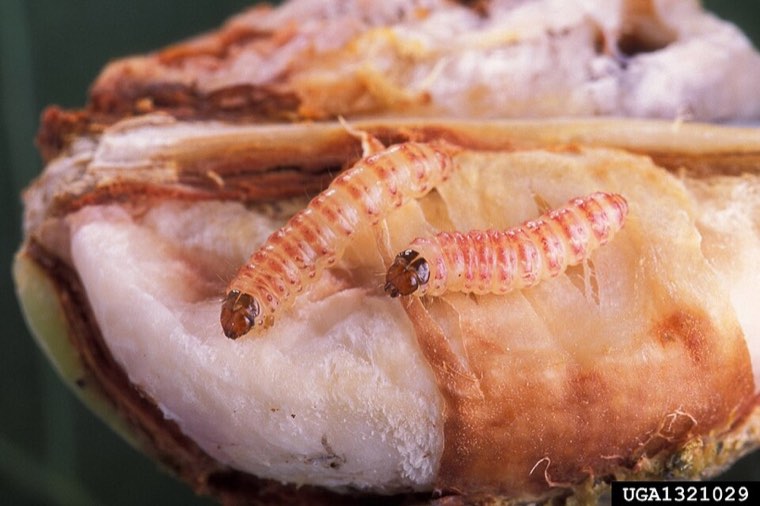
Pectinophora gossypiella · Insect (small moth); larva is the damaging stage
Pink bollworm larvae inside a cotton boll
A small moth whose pink-banded caterpillars live hidden inside cotton bolls, eating the seeds and staining the lint. Because the larvae are inside the boll almost from hatching, damage goes unnoticed until bolls are opened.
Scout for it this month in: Tropical and monsoon north; Tropical south
How to spot it
Squaring and flowering: 'Rosette flowers': petals held together by the larva's silk so the flower cannot open; damaged squares may shed.
Green boll: A pinhole entry mark that soon closes; inside, a tunnel in the boll wall, damaged locules and seeds, and the larva itself.
Boll opening and harvest: Bolls open badly or partly; lint is stained yellow-brown and weakened; 'double seeds' joined by silk contain resting larvae.
Favoured by
Long-duration cotton and late-season crops that keep bolls on the plant, early-sown 'pre-monsoon' cotton that receives moths from carry-over, cotton stalks and unginned seed stored near fields, and ginning mills that release moths.
Action threshold
Because larvae are hidden, thresholds are based on pheromone trap catches, rosette flowers and the percentage of green bolls with live larvae found by opening a sample.
cotton: 8 moths per trap per night on 3 consecutive nights · Flowering to boll development (South Asia)
cotton: 10% · Flowering to boll development (South Asia)
Monitor
Install sex pheromone traps from squaring, about 5 per hectare for detection, and read them at least twice a week.
Count rosette flowers on a fixed number of plants weekly.
Prevent
Sow within a short, area-wide window and avoid very early sowing that bridges the off-season.
Terminate the crop on time; do not ratoon cotton or leave late bolls standing.
Transgenic Bt cotton expressing Cry1Ac or Cry1Ac plus Cry2Ab controlled the pest for years, but resistance to both proteins evolved and spread in South Asia by the mid-2010s; refuges and newer stacks are required where Bt cotton is grown.
Biological and physical
Egg and larval parasitoids (including Trichogramma species, Bracon and Apanteles species) and predators attack eggs and larvae before they enter bolls, but their impact on hidden larvae is limited.
Release of sterile moths, combined with transgenic cotton and pheromones, was central to eradication in North America.
Pheromone mating disruption, using dispensers that release the female sex pheromone across a whole field or area, reduces mating and has been used successfully on large blocks.
Sprays can kill eggs, newly hatched larvae and adults but not larvae inside bolls, so timing against moth peaks matters more than the number of sprays.
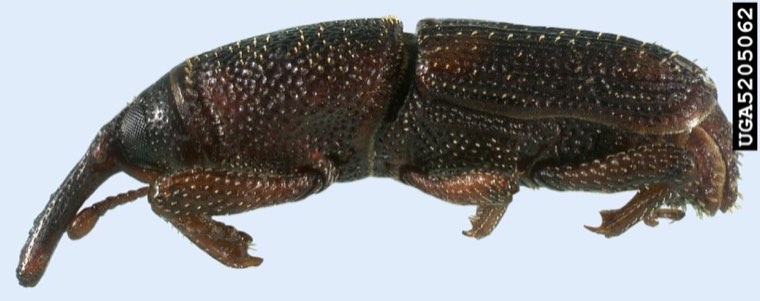
Sitophilus zeamais · Insect (weevil); larva develops inside the grain
Maize weevil adult, side view
A small brown weevil with a long snout whose larvae grow hidden inside individual grains of stored maize, rice, sorghum and wheat, hollowing them out.
Scout for it this month in: Temperate north; Tropical and monsoon north; Tropical south
How to spot it
Pre-harvest (maize in the field): Weevils in cobs with poor husk cover, especially when harvest is delayed.
Early storage: Small round exit holes in grains; adults walking on grain and sacks; slight warmth and fine dust in the store.
Late storage: Hollowed, powdery grains; heating and moisture in bulk grain leading to moulds; grain unfit for food or seed.
Favoured by
Grain stored with more than about 13% moisture, warm stores, carry-over of infested grain or residues from the last season, mixing new and old grain, delayed harvest of maize in the field, and porous bags or granaries.
Action threshold
There is no numeric economic threshold for smallholder storage: any live weevils mean the population will grow.
Monitor
Inspect stored grain every two to four weeks: sieve a sample from several depths and count live insects.
Use probe traps or pitfall traps in bulk grain.
Prevent
Harvest maize promptly at maturity and dry grain to 13% moisture or less before storage (12% or less for long storage).
Clean stores, bags and equipment thoroughly before the new harvest and remove all old grain.
Maize varieties with hard kernels, good husk cover and grain chemistry that reduces weevil development have been bred by public programmes; they reduce but do not prevent losses.
Biological and physical
Parasitoid wasps (Anisopteromalus calandrae and others) attack larvae inside grains and can suppress populations in stores.
Some traditional botanical protectants (for example ash or plant powders mixed with grain) give partial protection.
Hermetic storage: airtight triple-layer plastic bags, sealed metal silos or drums cut off oxygen so insects die.
How cold hurts a plant, why some crops need it, which ones are hardy and which are not, and what to check after a frost night. From Laisha's grow guides and Explains articles.
Ice-covered plant, Dülmen-Hausdülmen, 2021
How cold hurts a plant
Cold does its damage in two different ways, and they need different thinking. Chilling injury happens above freezing, at roughly 0 to 12 °C, and it harms crops from warm climates such as maize, rice, cotton, banana and tomato: their cell membranes stop working properly although no ice has formed. Freezing injury begins when ice forms inside the plant's tissues. Drought, heat and salt stress in crops
That is why the world's crop seasons divide the way they do. Our Explains article on crop seasons separates cool-season crops, which grow best at about 15 to 25 °C and tolerate cold, many of them frost too (wheat, barley, oats, rye, peas, chickpea, lentil, faba bean, mustard and canola, potato, cabbage, onion), from warm-season crops that are damaged by frost and chilling (rice, maize, sorghum, cotton, sugarcane, soybean, groundnut, tomato, pepper, cucurbits). In temperate and high-altitude regions, frost and cold set the limits: warm-season crops fill the gap between the last spring frost and the first autumn one. Crop seasons
Hardy crops are not simply tough; they prepare. Winter wheat cold-acclimates through autumn, building up sugars and protective proteins before the hard weather comes. A crop that enters winter too small, or too soft and forward, has had less chance to do that. Drought, heat and salt stress in crops
Cold nights: frost, chilling and the winter crop, continued
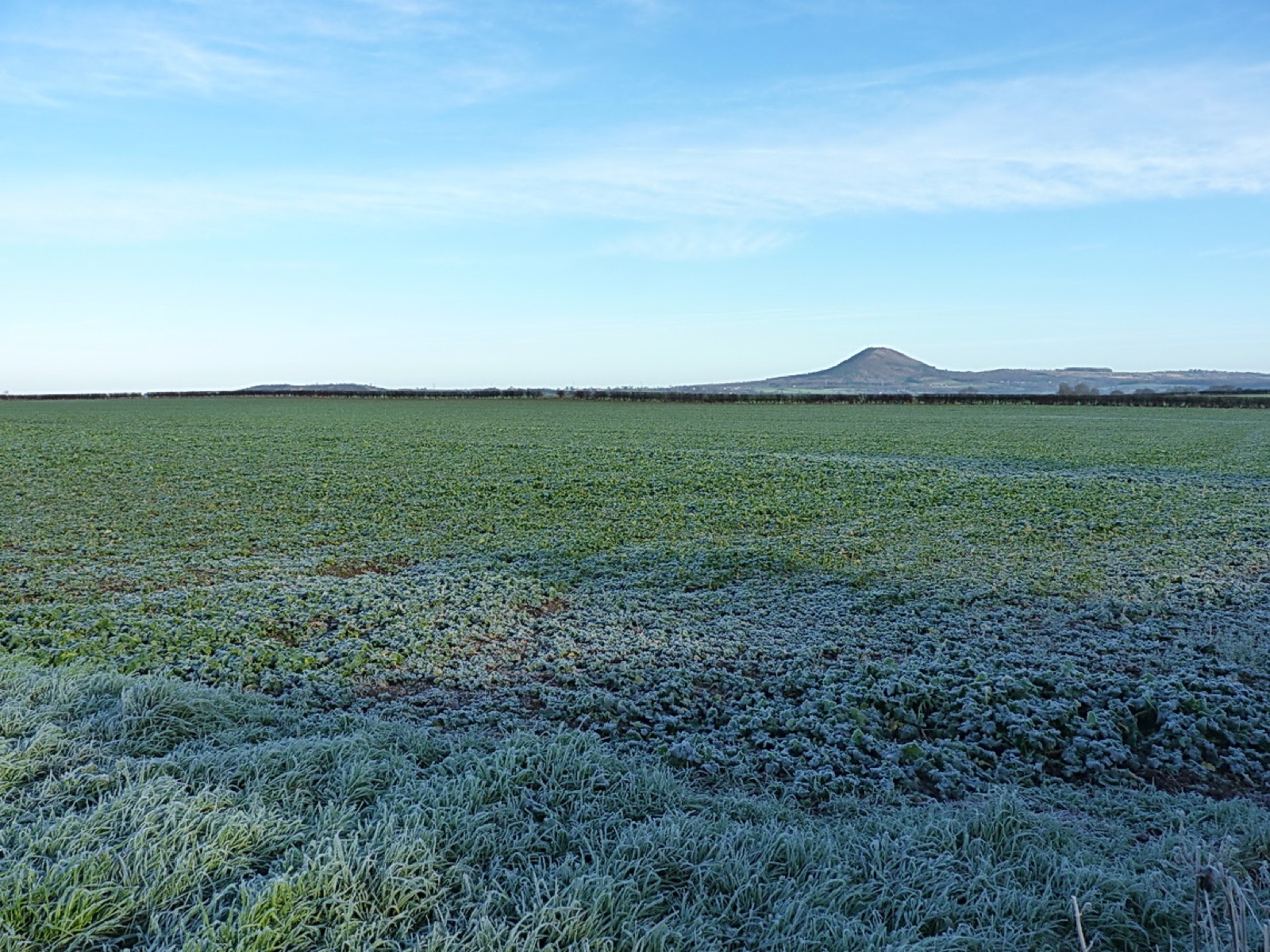
Frost-dusted crops at Cressage
Cold that a crop needs
Some crops need winter as much as they fear it. Vernalisation is the ability to flower gained through a spell of cold, typically about 0 to 10 °C for several weeks. Winter wheat, winter barley and winter rye are sown in autumn, vernalised by winter and flower in late spring; sown in spring instead, an unvernalised winter variety stays leafy or heads very late. Spring varieties have little or no cold requirement. The cold is sensed by the growing tip of the shoot, and heat soon afterwards can undo it. Photoperiodism and vernalisation
Winter triticale needs four to eight weeks above freezing but below 9 °C before it will head. Triticale guide
Garlic needs a cold period to divide into cloves; planted in spring, a clove often makes a single round bulb. Garlic guide
Onion, cabbage, sugar beet and celery show the other side: planted too early and chilled, they can bolt in their first season instead of making a crop. Photoperiodism and vernalisation
Hardy, but only so far
Among the cereals, rye is the toughest: its guide records that winter rye makes antifreeze proteins of its own, and that it needs four to six weeks of growth before hard frost. Barley is more cold-tolerant than wheat. Oat is less so, and is harmed by sustained cold below about −6.7 °C. Rye guide · Barley guide · Oat guide
Among the pulses, hardy faba beans are recorded surviving about −10 °C without serious injury, and seedlings can regrow from lower nodes if the main shoot is killed. Young field peas tolerate mild frost. Faba bean guide · Field pea guide
Hardiness also depends on timing and drainage. Winter canola is lost when it goes into the cold too small, too large and forward, or standing in waterlogged ground. Garlic in wet soil can be lifted clean out of the ground by repeated freezing and thawing, called frost heaving. Canola guide · Garlic guide
Cold nights: frost, chilling and the winter crop, continued
Foggy winter morning with mustard flower field
The tender ones, and the flowering ones
Flowers are the weak point even in a hardy crop. A hard frost while mustard is in flower kills the open flowers outright; the crop flowers again, which delays the harvest and makes it uneven. A frosted strawberry flower turns black in the centre and sets nothing. Cold or rain at flowering also cuts pollinator activity and pollen viability in fruit trees. Mustard guide · Strawberry guide · Unfruitfulness
Some crops have almost no margin at all: mango has essentially no frost tolerance, tomato and cotton are killed outright by a real freeze, and orange stands only light, brief frost. Mango guide · Tomato guide · Cotton guide · Orange guide
Protecting the crop, and measuring the night
Choose the site and date. Avoid frost pockets; match variety and sowing date so flowering misses the coldest weeks. Orchard layout · Crop seasons
Cover. Straw mulch protects garlic from cold and frost heave; cloth or straw over strawberry flowers; plastic film or fleece row covers. Garlic guide · Protected cultivation
Windbreaks and irrigation timing are both listed for cold protection; sprinklers can be used for frost protection. But never irrigate mustard or winter canola just before a cold night: wet soil and frost together damage flowers and lift young plants. Drought, heat and salt stress · Irrigation methods · Canola guide
A minimum thermometer gives the night's lowest air temperature; a grass minimum thermometer just above short grass gives it at plant level, the reading used for frost warnings. Dew point measures the air's moisture. Weather elements and instruments
Winter livestock care: parasites, vaccines and the feed gap
Count worms before you treat, keep vaccines cold, report what must be reported, and carry feed across the lean months. From Laisha's Explains articles and veterinary manuals.
Sheep at supplementary feeding, Baltasound
Parasites in the cool season: count before you treat
Worms, flukes, ticks, mites and lice remain among the costliest problems in livestock everywhere. For decades every animal was dosed several times a year, and that bred anthelmintic resistance: in many sheep and goat flocks some or all of the main worming drugs no longer work. Parasite control and anthelmintic resistance
Treat the animals that need it. Use the FAMACHA eyelid chart for anaemia, body condition and production records, and leave some healthy animals untreated. Those untreated worms, the refugia, dilute the resistant survivors.
Dose correctly. Weigh animals, dose for the heaviest in the group and calibrate the gun. Goats often need different doses from sheep; a veterinarian decides.
Lice rise in winter, when coats are long, animals are crowded indoors and feed is often poor. Part the coat over the neck, back and tail head. Most treatments do not kill eggs, so all in-contact animals are treated together and treatment is repeated or persistent. Veterinary entomology and acarology
Winter livestock care: parasites, vaccines and the feed gap, continued
Trough time
Vaccines, borders and what you must report
A vaccine teaches the immune system to remember. The first dose gives a slow, modest response; a booster some weeks later gives a much stronger one, which is why many vaccines need two doses at the start. Newborn calves, lambs, kids and piglets get almost no antibodies before birth, so they rely on colostrum: a calf needs good-quality colostrum, often about 10 per cent of its body weight, within the first few hours. Vaccinating dams before birth raises the antibodies in that colostrum. Vaccines and vaccination principles
Herd immunity stops spread when enough animals are immune: at least 1 − 1 ÷ R0 of the population. For PPR in goats with R0 of about 4, that is 75 per cent; with a vaccine protecting 90 per cent of those vaccinated, coverage must reach about 83 per cent. Goat flocks turn over fast, so campaigns are repeated. Transboundary animal diseases
Foot-and-mouth disease, PPR, African swine fever and highly pathogenic avian influenza cross borders with animals, meat, vehicles, people and wild birds. Many are WOAH-listed, so outbreaks must be reported. Sudden pig deaths, blisters and lameness in cloven-hoofed stock, or a sharp drop in milk: call your veterinary authority at once. Fair compensation exists so that farmers report early. H5N1 spread through migratory birds from 2020 and has since infected dairy cattle; keep wild birds out of feed and water. African swine fever · Avian influenza and One Health
Winter livestock care: parasites, vaccines and the feed gap, continued
Maize silage clamp
The feed gap: silage, hay and the lean months
Forage grows fastest in the rains or spring and slowest in winter or the dry season. Silage and hay carry the surplus across the gap; done badly, they rot or make animals sick. Good hay is dried to about 15 to 20 per cent moisture; baled too wet it heats, moulds and can catch fire. Good silage reaches a pH of about 3.8 to 4.2. Take at least about 15 cm off the face each day in cool weather, more in warm, and throw mouldy silage away: it can carry mycotoxins and listeriosis. Silage and hay making
Listeriosis is most common in housed sheep, goats and cattle in winter and spring, mostly from poorly fermented silage that stays above about pH 5 to 5.5. Preventive medicine: bacterial diseases
Cold stress hits newborn calves, lambs and kids and newly shorn sheep hardest. Dry bedding, draught-free housing and extra energy protect them. Livestock production and management
Shelter and a comfortable resting area are one of the Five Freedoms; so are fresh water and a diet for full health. Animal welfare
On range, set drought trigger dates in advance and decide then: cull early, sell calves, graze crop residues or buy feed early. A mature sheep counts as 0.20 of an animal unit, a goat 0.15. Rangeland and pasture management
Grain is often cut wetter than is safe to keep. The safe moisture, the shrink sum, drying, storage and the insects and moulds to keep out, from Laisha's Explains articles and grow guides.
Five stainless steel grain bins
Harvest wet, store dry
December brings wheat, barley, canola and chickpea off the fields of the southern temperate and Mediterranean zones, and rice and sorghum in parts of the tropical north. Grain is often cut wetter than is safe to keep, to beat rain, birds and shattering. Left wet, it heats, moulds and sprouts within days. Grain drying
Know the safe number. For long storage in warm climates, cereals such as wheat, maize and paddy keep at about 12 to 13 per cent moisture; oilseeds such as groundnut and sunflower need about 7 to 9. Moisture content basis
Barley for long storage is typically dried to around 12 per cent and cooled below about 12 °C. Barley guide
Chickpea is usually harvested at about 18 per cent seed moisture and dried to about 14 before storage. Chickpea guide
Canola spoils at a lower moisture than grain; seed that feels dry in the afternoon sun can still be too wet. Canola guide
The shrink sum
Moisture is quoted on a wet basis (water ÷ total weight) in trade, and on a dry basis (water ÷ dry matter) in engineering. The dry matter never changes in drying, so:
Final weight = initial weight × (100 − initial moisture) ÷ (100 − final moisture)
Ten tonnes of maize at 25 per cent dried to 14: 10 × 75 ÷ 86 ≈ 8.72 t, so about 1.28 t of water goes. That is 12.8 per cent of the weight, not 11, the classic trap. Moisture content basis
The southern harvest: dry it, store it, keep it, continued
Silo bags, Buenos Aires province, 2008
Drying and the store
Dry promptly: wet grain heats within a day or two. Clean it first, because chaff and fines block the air, then cool it before it goes in, to avoid condensation. Air dries grain only when its humidity is below the grain's own, which is why most dryers heat the air. Keep the air cool enough for the end use: about 40 to 45 °C for seed, often below about 60 °C for milling wheat and paddy, higher for feed grain. Dry paddy gently, with rests between passes, or it cracks. Grain drying
Hermetic storage: sealed triple-layer bags, drums and metal silos. Insects use up the oxygen and die without chemicals, if the grain is dry and the seal intact. Grain storage structures
Silo bags hold about 200 tonnes each for temporary storage in the field; steel bins and silos need aeration with cool air.
Small lots: a plastic liner bag inside a sack, air pressed out and tied tight, stacked off the floor and away from the wall. Wheat guide
Insects and moulds
Weevils, grain borers, the Angoumois grain moth and pulse beetles attack whole grains; flour beetles follow into broken grain and dust. Most store insects multiply fastest at about 25 to 35 °C and barely at all below about 15 °C. Maize weevil development stops in grain drier than about 10 to 11 per cent. Pulse beetles start on ripening chickpea pods and multiply in store. Stored-grain pests · Maize weevil · Pulse beetles
Moulds grow above about 14 per cent moisture in most cereals and bring mycotoxins, which cooking does not destroy. Wet flowering weather favours Fusarium toxins in wheat and barley; warm, moist storage favours aflatoxin. Sort out damaged and mouldy kernels. Fumigation is a last resort, gas-tight and by trained, licensed operators. Mycotoxins
This snapshot sets out reference prices for the main farm commodities in one place. Monthly world averages come from the World Bank's commodity price data (the Pink Sheet); weekly European prices come from the European Commission; daily Indian wholesale (mandi) modal prices come from Agmarknet through data.gov.in; and euro amounts are converted with the European Central Bank's euro reference rates. Every number carries its source and its date. These are reference prices, recorded at one point in time in particular markets. They are not what a farmer will be paid locally, which depends on place, grade, quantity and the costs of getting produce to a buyer. Nor are they a forecast or advice: prices change daily, and the figures here are a guide to the level and direction of a market, not a reason on their own to sell or hold.
Grains, oilseeds and oils
Commodity
October 2026 average, US$/tonne
Also quoted as
vs Sep
vs Oct 2025
13 months
Wheat (US Hard Red Winter, Gulf)
317
8.627 US$/bushel
−8.7%
+37.4%
Wheat (US Soft Red Winter, Gulf)
260
7.084 US$/bushel
−6.6%
+24.4%
Maize / corn (US No. 2 Yellow, Gulf)
227
5.753 US$/bushel
−5.5%
+14.3%
Rice (Thai 5% broken, Bangkok)
489
—
+1.5%
+37.4%
Rice (Viet Nam 5% broken)
414
—
−1.1%
+13.2%
Soybeans (US, c.i.f. Rotterdam)
515
14.02 US$/bushel
−1.7%
+27.5%
Soybean oil (Dutch, f.o.b. ex-mill)
1,546
70.13 US cents/lb
−4.3%
+36.6%
Soybean meal (US, c.i.f. Rotterdam)
453
410.95 US$/short ton
+1.3%
+27.3%
Palm oil (Malaysia, c.i.f. Europe)
1,120
—
−5.1%
+7.9%
Sunflower oil (EU, f.o.b.)
1,413
—
+1.4%
+3.7%
Rapeseed oil (crude, f.o.b. Rotterdam)
1,405
—
−2.6%
+11.2%
Sugar, beverages and fibre
Commodity
October 2026 average, US$/tonne
Also quoted as
vs Sep
vs Oct 2025
13 months
Sugar (world, ISA daily price)
430
19.50 US cents/lb
+4.9%
+26.5%
Coffee, Arabica
7,400
335.66 US cents/lb
+1.9%
−16.9%
Coffee, Robusta
3,630
164.65 US cents/lb
−1.6%
−23.4%
Cocoa (ICCO daily price)
5,750
—
−2.9%
−3.4%
Tea (average of Kolkata, Colombo, Mombasa auctions)
2,880
2.880 US$/kg
+0.7%
−4.3%
Cotton (Cotlook A Index)
2,000
90.72 US cents/lb
−4.8%
+19.1%
Source: World Bank Commodity Price Data (The Pink Sheet), monthly averages for October 2026, data released November 03, 2026 (CC BY 4.0). worldbank.org/en/research/commodity-markets. Changes and the 13-month line are computed from the same series.
Markets · the price snapshot, continued
Fertilisers, world reference prices
Commodity
October 2026 average, US$/tonne
Also quoted as
vs Sep
vs Oct 2025
13 months
Urea (Middle East, granular, f.o.b.)
420
21.00 US$ per 50 kg bag
+3.1%
+6.5%
DAP, diammonium phosphate (US Gulf)
803
40.16 US$ per 50 kg bag
+0.3%
+6.5%
Potash, potassium chloride (muriate)
358
17.88 US$ per 50 kg bag
−2.7%
+1.6%
TSP, triple superphosphate
692
—
+0.3%
+5.1%
Source: World Bank Commodity Price Data (The Pink Sheet), monthly averages for October 2026, data released November 03, 2026 (CC BY 4.0). worldbank.org/en/research/commodity-markets. Changes and the 13-month line are computed from the same series.
European Union: cereals, oilseeds, sugar and fertiliser
Product
EUR/tonne
≈ US$/tonne
Period
Change
vs a year earlier
Milling wheat, EU average
210.54
230.3
week 9 Nov to 15 Nov 2026
+3.0% w/w
—
Feed wheat, EU average
208.45
228.0
week 9 Nov to 15 Nov 2026
+8.7% w/w
+14.8%
Feed maize, EU average
209.91
229.6
week 9 Nov to 15 Nov 2026
−2.2% w/w
+1.1%
Feed barley, EU average
184.38
201.7
week 9 Nov to 15 Nov 2026
+12.2% w/w
+1.6%
Malting barley, EU average
195.83
214.2
week 9 Nov to 15 Nov 2026
−1.4% w/w
+0.9%
Rapeseed, Germany national average
504.13
551.5
week 9 Nov to 15 Nov 2026
−2.5% w/w
+11.6%
Soybeans, Germany national average
480.15
525.2
week 9 Nov to 15 Nov 2026
+1.8% w/w
+25.4%
Sunflower seed, Germany national average
401.46
439.2
week 9 Nov to 15 Nov 2026
−1.0% w/w
−5.0%
Fertiliser K (Potash), EU average
363.00
397.1
September 2026
−0.3% m/m
−1.6%
Fertiliser N (Nitrogen), EU average
469.00
513.0
September 2026
+3.3% m/m
+26.1%
Fertiliser P (Phosphorus), EU average
742.00
811.7
September 2026
+0.4% m/m
+18.5%
White sugar, EU average ex-factory
500.01
547.0
August 2026
+0.1% m/m
—
Source: European Commission, Agri-food data portal, weekly (cereals, oilseeds); monthly (sugar, fertiliser); retrieved 24 November 2026 (Reuse allowed, Commission Decision 2011/833/EU (CC BY 4.0)). agridata.ec.europa.eu. US$ equivalents at the ECB rate below, our calculation.
Exchange rates used
ECB euro reference rate, 23 November 2026: 1 EUR = 1.0939 US$. Per 1 US$:
AUD 1.5113
BRL 5.9979
CAD 1.4362
CNY 6.6647
GBP 0.7649
IDR 18,221.90
INR 92.9148
JPY 159.07
MXN 19.2456
THB 34.0452
ZAR 17.5074
European Central Bank euro reference rates (Free reuse with the source acknowledged); cross rates through the euro, our calculation.
Markets · the price snapshot, continued
India: wholesale (mandi) prices, 24 November 2026
Crop
Median modal price, ₹/quintal
≈ US$/tonne
Markets
Largest reporting states: median ₹/quintal (markets)
Andhra Pradesh 8,325 (18) · Tamil Nadu 7,500 (3) · Rajasthan 7,000 (1)
Pigeon pea (tur)
8,500
914.8
33
Andhra Pradesh 8,500 (21) · Tamil Nadu 13,750 (8) · Uttar Pradesh 12,359 (2)
Groundnut
6,750
726.5
49
Tamil Nadu 6,750 (36) · Andhra Pradesh 7,150 (8) · Uttar Pradesh 7,222 (2)
Onion
6,750
726.5
292
Tamil Nadu 7,750 (250) · Uttar Pradesh 2,500 (8) · Punjab 4,550 (6)
Potato
3,750
403.6
220
Tamil Nadu 4,500 (172) · Uttar Pradesh 600 (19) · Punjab 800 (6)
Tomato
4,250
457.4
169
Tamil Nadu 4,350 (133) · Odisha 2,600 (6) · Uttar Pradesh 1,664 (6)
Median of the modal (most common) price reported by each regulated market that day. Source: Agmarknet via data.gov.in (Ministry of Agriculture and Farmers Welfare), 24 November 2026 (Government Open Data License - India). data.gov.in. US$ equivalents at the ECB rate of 23 November 2026, our calculation.
Reading a price
A world or wholesale price is not the farm-gate price. Between the two lie the price spread: the marketing costs of transport, grading, storage, fees and losses, plus each intermediary's margin. Measure your own net price after your own costs of getting produce to market. A product that needs processing, cold storage or long transport naturally leaves the farmer a smaller share of the final price, because buyers pay for those services; grading matters because it lets quality be paid for. Marketing channels and price spread
Most farmers are price takers: grains, oilseeds and milk at the farm gate come close to perfect competition, so no single seller moves the price. Market structures
Farm prices swing because demand for staples is inelastic, commonly about −0.1 to −0.5. At −0.25, a harvest 10 per cent larger needs a price about 40 per cent lower to sell, and total revenue falls. Where farmers plant on last season's price, a high price can bring next year's glut: the cobweb. Elasticity and the cobweb model · Demand, supply and equilibrium
Today's numbers, refreshed every day from the same official sources: laisha.ai/markets.
Each one uses the method in a Laisha Explains article, step by step. Do them with your own numbers: the method is what carries over.
Example 1
From a nutrient recommendation to bags of fertiliser
A soil test recommends 120 kg N, 60 kg P2O5 and 40 kg K2O per hectare. You will use DAP (18–46–0), urea (46 per cent N) and muriate of potash, MOP (60 per cent K2O). How much of each product do you need per hectare?
Start with the nutrient that has only one source. DAP is the only phosphate here: 60 ÷ 0.46 = 130.4 kg DAP.
Count what that DAP also brings: 130.4 × 0.18 = 23.5 kg N.
Nitrogen still needed: 120 − 23.5 = 96.5 kg N. From urea: 96.5 ÷ 0.46 = 209.8 kg urea.
Potash: 40 ÷ 0.60 = 66.7 kg MOP.
Check: 130.4 + 209.8 + 66.7 ≈ 407 kg of product per hectare. For a small plot, scale by area: a hectare is 10,000 m², so a 100 m² plot needs one hundredth, about 2.1 kg of urea.
About 130 kg DAP, 210 kg urea and 67 kg MOP per hectare (about 407 kg in all).
In the field: Work the nitrogen first and forget DAP's share, and the crop gets 23.5 kg N/ha more than recommended; and always use the grade printed on your own bag, because grades vary between manufacturers and countries.
A 6 m boom carries 12 flat-fan nozzles 0.5 m apart. In the working gear the tractor covers 50 m in 30 seconds. One-minute catches from the nozzles range from 0.76 to 0.83 L, with a mean of 0.80 L/min. The label asks for a spray volume of 200 L/ha. Is the sprayer right, and if not, what do you change?
Speed = distance ÷ time × 3.6 = 50 ÷ 30 × 3.6 = 6.0 km/h.
Uniformity: 0.76 is 5 per cent below the mean and 0.83 is 4 per cent above, both inside the 10 per cent limit, so every nozzle can stay.
> Rate (L/ha) = flow (L/min) × 600 ÷ (speed km/h × spacing m)
Solve for speed instead: 0.80 × 600 ÷ (200 × 0.5) = 4.8 km/h. A 600 L tank then covers 600 ÷ 200 = 3 ha.
The sprayer applies 160 L/ha; drive at 4.8 km/h to apply 200 L/ha, and each 600 L tank covers 3 ha.
In the field: Do not chase the volume with pressure: flow rises only with the square root of pressure, so 3 bar would have to become about 4.7 bar, and the finer droplets drift; change speed or nozzle size, then recheck.
A farmer harvests 10 t of maize at 25 per cent moisture (wet basis) and must dry it to 14 per cent for storage. How much grain will there be after drying, how much water must go, and roughly how much fuel will that take if drying needs about 4.5 MJ per kg of water and diesel holds about 36 MJ per litre?
Dry matter does not change in the drier: 10 × (1 − 0.25) = 7.5 t.
> Final mass = dry matter ÷ (1 − final moisture)
Final mass = 7.5 ÷ (1 − 0.14) = 7.5 ÷ 0.86 ≈ 8.72 t.
Water removed = 10 − 8.72 ≈ 1.28 t (1,280 kg): 12.8 per cent of the harvest, not the 11 points between 25 and 14.
About 8.72 t of dry maize; 1,280 kg of water removed, needing roughly 160 litres of fuel.
In the field: Dry to the safe level for your store and climate (around 12 to 13 per cent for cereals in warm climates) and no further: overdrying wastes fuel, cracks kernels and sells less weight.
A partial budget: two hectares of onion instead of wheat
Using the method in Farm budgeting, in currency units per hectare: wheat brings in 1,250 (grain and straw) for 600 of variable costs; onion brings in 3,750 (25 t at 150 a tonne) for 2,400. Should the farmer switch 2 ha from wheat to onion, and at what onion price does the switch stop paying?
Gains. A, added returns: onion income 2 × 3,750 = 7,500. B, reduced costs: wheat costs saved 2 × 600 = 1,200. A + B = 8,700.
Losses. C, added costs: onion costs 2 × 2,400 = 4,800. D, reduced returns: wheat income given up 2 × 1,250 = 2,500. C + D = 7,300.
Net change in profit = 8,700 − 7,300 = +1,400 units.
Break-even: onion income can fall by 1,400, to 6,100, before the switch stops paying. Over 50 t of onions, 6,100 ÷ 50 = 122 units a tonne.
The switch adds about 1,400 units of profit, and breaks even at an onion price of about 122 units a tonne.
In the field: Count only what changes, and ask the questions money cannot answer: is there family labour for transplanting and harvest, and storage and a buyer for 50 t of onions?
Four checklists built from this issue's features and the Laisha pages behind them. Print this page from the PDF, or from your browser on the web edition.
Winter livestock check
A walk round the housed or lean-season herd and flock, once a week.
Score sheep and goats with the FAMACHA eyelid chart and treat only the pale, anaemic ones.
Run a faecal egg count before deciding to worm, and a second one 10 to 14 days after.
Leave some healthy animals untreated so susceptible worms survive as refugia.
Part the coat over neck, back and tail head to look for lice.
Give newborn calves, lambs and kids dry bedding and draught-free housing.
Give young stock and newly shorn sheep extra energy in cold weather.
Remove at least 15 cm from the silage face daily; throw mouldy silage away.
Keep fresh water available every day, even when it is cold.
Keep wild birds out of feed and water stores.
Report sudden deaths, blisters or lameness in many animals to your veterinary authority at once.
Drip irrigation: the most water reaches the root zone for each millimetre pumped.
Water in a dry month
In a dry month the soil is the crop's only reservoir. Irrigate when the crop has used its readily available water, not on a fixed day, and refill the root zone to field capacity. Our worked example: a loam holding 120 mm between field capacity and wilting point, of which half (60 mm) is readily available, lasts 10 days at 6 mm a day; a sandy soil holding only 50 mm needs water every four days. Shallow-rooted vegetables can use less of the store before stress begins. Crop water requirement
When water is short, protect the sensitive stage. Our guides:
Barley: stem extension and grain fill; keep the field from standing wet at flowering. Barley guide
Onion: bulb formation; ease off as the tops yellow, stop once most have fallen. Onion guide
Lentil: flowering and early pod fill, before any other point. Lentil guide
Tomato: flowering and fruit set; keep watering even. Tomato guide
White crusts that appear as fields dry are usually saline: too much soluble salt (ECe above 4 dS/m), which makes the crop act droughted in wet soil. A sodic soil (exchangeable sodium percentage above 15, pH often 9 to 10) looks different: a dark, hard crust and water standing on the surface, because sodium disperses the clay. An SAR of about 13 in the saturation extract corresponds roughly to an ESP of 15. Test before you treat: the two need opposite first steps.
Saline: drain, then leach with good water. Leaching a field with no drainage only raises the water table. Once reclaimed, add a leaching fraction to each irrigation.
Sodic: replace the sodium with calcium first, usually gypsum (elemental sulphur in calcareous soils), then leach.
Saline-sodic: gypsum before water, or the soil turns sodic.
Tolerance varies: barley and cotton are tolerant, wheat moderately so, beans and onions sensitive. Saline and sodic soils
Tool spotlight
Post-Harvest Loss Prevention
December puts the southern harvest into store, and storage is where a grown crop can still be lost. This free library is organised by what is being stored, cereal grain, legume, root and tuber, fruit and vegetable, and gives safe moisture by crop, the pests that find each one, the storage methods that work at a smallholder's scale, and a section of its own on aflatoxin.
December's fields are a good classroom: cold nights and frost, grain going into store, animals housed or grazing short winter pasture, and harvests being sold. Plant stress, drying and storage, livestock health and farm prices are standard exam topics in every agriculture, veterinary and agribusiness syllabus, and all four can be seen outside this month. This plan uses Laisha's free Explains articles and exam-practice pages. It gives no exam dates: check your exam body's own website for those.
Do: Sort ten crops of your area into chilling-sensitive and cold-hardy; explain why a winter wheat sown in spring may never head; classify four made-up soils from their ECe and ESP.
Do: Convert 15, 20 and 25 per cent wet basis to dry basis; work the final mass of three lots dried to 14 per cent; explain in two lines how a hermetic bag kills insects.
Do: Compute a faecal egg count reduction from made-up counts and judge it against the 95 per cent line; work the herd-immunity coverage 1 − 1 ÷ R0 for R0 of 2, 4 and 10.
Do: Work a price spread and producer's share for a chain you know; draw a cobweb; build one partial budget; then sit the twelve questions below, timed and without notes, and mark them.
Original practice questions from Laisha's question banks, written to each exam's published syllabus; not past papers. Answers and explanations follow each one.
1. Agriculture for Statisticians
Some winter wheat varieties fail to flower when sown in spring. Which requirement explains this?
AVernalisation, a period of cold needed before flowering
BPhotoperiod insensitivity
CA requirement for high summer temperature
DDormancy of the seed caused by drought
Answer A. Winter types need prolonged cold to become competent to flower; sown in spring they may stay vegetative. Photoperiod sensitivity is a separate control on flowering.
2. Post-Harvest Engineering of Horticultural Crops
Pitting, water soaking and failure to ripen in banana or mango held at 5 degC are symptoms of
Atissue freezing injury
Bexcess-CO2 injury
Cchilling injury
Dsunscald from field heat
Answer C. Chilling injury occurs in tropical and subtropical produce at temperatures above freezing but below a crop-specific threshold. Freezing injury needs temperatures below the tissue freezing point, well below 5 degC.
3. Protected Cultivation & Greenhouse Engineering
Floating row covers of light spunbonded non-woven polypropylene are laid directly on a crop mainly to
Ablock all light so that weeds die, in the same way as black polyethylene mulch
Bhold a carbon dioxide-rich atmosphere around the crop so that it is enriched during the day without burners
Cgive a few degrees of frost protection and exclude insects while passing light, air and water
Dcarry the full weight of snow, replacing a greenhouse in regions with heavy winters
Answer C. Row covers trap some heat, shelter from wind and keep out insects while staying permeable. They transmit most light, are far too porous to hold enrichment, and are not structural.
4. Post-Harvest Engineering of Cereals, Pulses & Oilseeds
An elevator receives 50.0 t of maize at 18% wet-basis moisture and dries it to 15% wet basis. Ignoring handling losses, the dried mass is
A48.50 t
B51.83 t
C48.17 t
D48.24 t
Answer D. Dry matter = 50 × 0.82 = 41.0 t; dried mass = 41.0/0.85 = 48.24 t. 48.50 t subtracts 3% of the initial mass; 48.17 t divides the moisture drop by (1 − M_initial) instead of (1 − M_final); 51.83 t inverts the ratio and gives a mass larger than the wet lot.
5. Storage Engineering, Material Handling & Packaging
Hermetic storage of grain controls insects mainly because
AThe sealed container is heated by solar gain to about 60 °C, killing all insect stages
BRespiration of grain, insects and moulds in a sealed container depletes O2 and raises CO2
CA fumigant tablet is always added
DLight is excluded inside the sealed container, and insects cannot feed or breed in total darkness
Answer B. In a gas-tight container biological respiration consumes O2 and produces CO2 until insects die or become inactive; no chemical is required. Heating and darkness are not the mechanism.
6. Sector-specific Agribusiness Electives
Which mycotoxin is of greatest concern in maize and groundnut meal stored under hot, humid conditions?
ATannin
BSolanine
CAflatoxin
DGossypol
Answer C. Aflatoxins are produced by Aspergillus moulds in warm, humid storage. Gossypol is a natural compound of cottonseed, solanine of potato, and tannins of sorghum and other plants; none is a mycotoxin.
Agri student corner · worked questions
7. Applied Animal Nutrition I: Ruminants
Why is colostrum essential for the newborn calf, lamb or kid?
AColostrum is the only source of iron, which the calf lacks entirely
BMilk alone would close the oesophageal groove and cause rumen bloat
CThe ruminant placenta passes almost no immunoglobulins to the foetus
DThe newborn's rumen needs colostrum fat to begin its first fermentation
Answer C. The synepitheliochorial placenta of ruminants blocks transfer of immunoglobulins, so the newborn depends on absorbing them from colostrum before gut closure. The other options misstate calf physiology.
8. Veterinary Clinical Practice (Veterinary Clinical Complex)
On a farm visit, several cattle drool and have vesicles on the tongue and feet. What should the veterinarian do?
ATreat the lesions, take samples back to the clinic for testing and report to the authority next week
BAdvise the farmer to sell the herd quickly before the price falls
CStop, keep animals and samples on the farm, report to the authority and await orders
DMove the affected cattle to the clinical complex for isolation and tests
Answer C. Vesicles and drooling suggest foot-and-mouth disease, a notifiable disease. Moving animals or samples spreads it; the official veterinary authority directs sampling and control.
9. Applied Animal Nutrition I: Ruminants
The pH of well-preserved maize silage is usually about:
A3.7 to 4.2
B5.5 to 6.0
C6.5 to 7.0
D2.0 to 2.5
Answer A. Lactic acid fermentation brings well-fermented maize and grass silage of ordinary DM to about pH 3.7 to 4.2. Drier silages can be stable at somewhat higher pH; pH 5.5 or more in wet silage suggests poor fermentation.
10. Agricultural Marketing & Price Analysis
Consumers pay 3000 currency units per 100 kg and the farmer's net price for the equivalent quantity is 2150 currency units. The price spread is:
A850 currency units
B71.7%
C5,150 currency units
D2,150 currency units
Answer A. Price spread = consumer price - producer's net price = 3000 - 2150 = 850 currency units per 100 kg. 71.7% is the producer's share, not the spread. 5,150 currency units adds the two prices instead of subtracting.
11. Agricultural Marketing & Price Analysis
The price elasticity of demand for onions is -0.25. Using the approximate reciprocal relationship, by how much would price be expected to fall if the quantity marketed rises by 5%?
AAbout 5%
BAbout 4%
CAbout 1.25%
DAbout 20%
Answer D. Price flexibility is about 1/elasticity = 1/(-0.25) = -4. A 5% rise in quantity gives about -4 x 5 = -20% change in price. Multiplying by the elasticity (1.25%) uses the wrong direction of causation.
12. Farm Management
A partial budget shows added returns of 40,000 currency units, reduced costs of 10,000, added costs of 25,000 and reduced returns of 15,000. The net change in profit is
A-10,000 currency units
B20,000 currency units
C50,000 currency units
D10,000 currency units
Answer D. Net = (added returns + reduced costs) − (added costs + reduced returns) = (40,000 + 10,000) − (25,000 + 15,000) = 50,000 − 40,000 = 10,000. 50,000 currency units is the credit side alone; −10,000 reverses the sides. 20,000 currency units puts reduced costs and reduced returns on the wrong sides.
Practise all 1,333 questions in these ten subjects
Twelve here, all of them in the app with full working, timed papers and progress by unit. Try Laisha Smarter free for 10 days, no card needed.
Choose your zone and up to three crops. If they are already sown, add the date. In a second you get December week by week: field jobs from our guides, the irrigation that matters at your crop's stage, and the pests to scout for each week, with links. Free, and no account needed.
A dated season plan for your crop and location, pest and disease alerts, Ask Laisha about what you see in your field, every calculator and every practice question. No card needed; subscribe only if it earns its place.
Lens comes out at the start of every month; the January issue follows at the start of January.
If this issue helped, the next step is to make it about your own fields. My farm's December is free and needs no account. If you want a dated season plan for your crop and location, pest alerts, answers about what you see in your field, and every practice question in the banks, Laisha Smarter can be tried free for 10 days, no card needed.
Pass it on
Lens is free to share whole and unchanged. Send the link to your farmer group or your class: laisha.ai/lens/2026-12. The web edition has a share button on every zone and pest, and the at-a-glance and pest watch are also in Hindi at laisha.ai/lens/2026-12/hi.
Get next month's Lens in your inbox: sign up free at laisha.ai/lens. One email when a new issue is out; confirm once, unsubscribe in one click.
Laisha Lens · Monthly
Get next month's Lens in your inbox
One email when a new issue of Lens or Laisha Review is out, from Laisha's free monthly magazine list. Lens comes at the start of each month.
We will first email you a link to confirm; nothing is sent until you do. Every email has a one-click unsubscribe link. We use your address only to send the magazine. Privacy
Credits & sources
Where everything in this issue comes from
Sources, section by section
At a glance and zone pages
Laisha farming calendar (built from the USDA FAS, FAO and GEOGLAM crop calendars); crop tips from the Laisha grow guides; pests by the calendar's rule from the Laisha pest encyclopedia.
India this month
Laisha grow guides for wheat, mustard, chickpea, potato, sugarcane and cotton; Explains: crop seasons, seed rate, heat stress, crop water requirement, cropping systems, conservation agriculture, soil organic matter; the Laisha video "How to sow wheat"; pest pages for mustard aphid, late blight, cotton bollworm and pink bollworm.
Crop spotlights and vegetables
The Laisha grow guides for each crop, quoted from their quick facts, stages, troubleshooting and feeding sections.
Pest & disease watch
The Laisha pest encyclopedia (identification, favourable conditions, thresholds, monitoring and management, chemicals by IRAC/FRAC/HRAC group only); Explains: integrated pest management.
Cold nights
Explains: abiotic stress physiology, crop seasons, photoperiodism and vernalisation, weather elements and instruments, irrigation methods, protected cultivation; the grow guides for rye, barley, oat, triticale, faba bean, field pea, canola, garlic, mustard, strawberry, mango, tomato, cotton and orange.
Winter livestock care
Explains: parasite control, vaccination principles, transboundary animal diseases, African swine fever, avian influenza and One Health, silage and hay making, rangeland management, animal welfare; Laisha veterinary manuals.
The southern harvest
Explains: grain drying, moisture content, grain storage structures, stored-grain pests, mycotoxins; grow guides for wheat, barley, chickpea and canola; pest pages for maize weevil and pulse beetles.
Markets: the price snapshot
World Bank Commodity Price Data (the Pink Sheet), CC BY 4.0; European Commission Agri-food data portal; Agmarknet via data.gov.in (Government Open Data License, India); European Central Bank euro reference rates. Dates are printed beside every table. Explains: marketing channels and price spread, market structures, elasticity and the cobweb model.
Farm maths and checklists
Explains: fertiliser calculations, sprayer calibration, moisture content, grain drying, farm budgeting and cost concepts; the features in this issue and the pages they cite.
Soil & water and student corner
Explains: crop water requirement, irrigation efficiency, saline and sodic soils; the grow guides' water stages; Laisha question banks (public practice pool only).
The only prices in this issue are in the markets snapshot, each with its source and its date; they are reference prices, not the price at your farm gate, and not a forecast. There are no minimum support prices, weather forecasts or exam dates. Ask your local extension office, market or exam body. Every pesticide and veterinary medicine decision follows the product label, local law and, for animals, a veterinarian.
Photographs
Harvesting wheat (CSIRO ScienceImage 4486) — John Coppi, CSIRO, CC BY 3.0, source
Young green wheat seedlings coming up in rows in a field. — Rasbak, CC BY-SA 3.0, source
Rows of young maize seedlings a few weeks old growing in a field. — Zeynel Cebeci, CC BY-SA 4.0, source
The mustard field and the winter morning — Abhijit Kar Gupta from Kolkata, India, CC BY 2.0, source
Sugarcane harvesting in Batad — Dandy1022, CC BY-SA 3.0, source
A green soybean field growing in rows, plants at a mid-vegetative growth stage. — Renhour48, CC0, source
Bundles of young green rice seedlings pulled from a nursery bed, ready to be moved to the field. — Nirajan pant, CC BY-SA 4.0, source
A tomato plant with yellow flowers growing in an open field. — EarthyVibes, CC BY-SA 4.0, source
A field of ripening golden barley in the Palouse region of the United States. — Victor Szalvay, CC BY-SA 2.0, source
A field of lettuce plants with pale green leaves growing in close, even rows, ready for harvesting. — Evelyn Simak, CC BY-SA 2.0, source
Rows of young beetroot plants growing in a bed, with green leaves on bright red stalks. — Dbxsoul, CC BY-SA 3.0, source
A field planting of turnip crops with broad green leaves growing close to the ground in rows. — Philip Halling, CC BY-SA 2.0, source
Thin leek seedlings emerging from dark soil, each bent over in a loop before straightening. — Rasbak, CC BY-SA 3.0, source
A dense bed of young coriander plants with broad bright green leaves divided into rounded scalloped lobes on thin upright stalks. — ShahadatHossain, CC BY-SA 4.0, source
A low spreading fenugreek plant growing on red soil, its stems carrying leaves divided into three toothed leaflets, with several slender pointed pods standing among the leaves. — Yercaud-elango, CC BY-SA 4.0, source
Stem rust (Puccinia graminis) pustules on a grass leaf — bjoerns, CC BY-SA 4.0, source
Wheat leaf with orange-brown leaf rust pustules — bjoerns, CC BY-SA 4.0, source
Wheat leaves with Septoria tritici blotch — Maccheek, Public domain, source
Wheat ears with bleached spikelets of Fusarium head blight — division, CSIRO, CC BY 3.0, source
Bird cherry-oat aphids on a cereal leaf — Jesse Rorabaugh, CC0, source
Wingless green peach aphid — Alexis, CC BY 4.0, source
Early blight target-spot lesion on a leaf — Clemson University - USDA Cooperative Extension Slide Series, CC BY 3.0 US, source
Adult tomato leaf miner (Tuta absoluta) — Patrick Clement from West Midlands, England, CC BY 2.0, source
Rice panicles with neck blast (arrow) — Namanegara, CC BY-SA 3.0, source
Soybean leaves yellowing from Asian soybean rust — USDA, Public domain, source
Pink bollworm larvae inside a cotton boll — Peggy Greb, USDA Agricultural Research Service, Bugwood.org, Public domain, source
Maize weevil adult, side view — Natasha Wright, Florida Department of Agriculture and Consumer Services, Bugwood.org, CC BY 3.0 US, source